
In this guide
At a glance.
- Texas was the #1 hail state for the 11th straight year in 2025, with 902 major hail events (Insurance Information Institute). State Farm alone paid about $1.4 billion on roughly 95,200 Texas hail claims, an average of about $15,000 each, up 27% year over year.
- A 2% wind and hail deductible is now the dominant standard across most of Texas. On a home insured for $400,000, that is an $8,000 out-of-pocket cost before coverage begins.
- Effective April 1, 2026, the Texas Department of Insurance adopted the 2024 IRC and IBC for the windstorm catastrophe area, and new shingle reroofs in that coastal zone now require double underlayment.
- Texas does not issue a state roofing license. Anyone can call themselves a roofer, which makes contractor vetting the single most important decision you make.
- A UL 2218 Class 4 impact-resistant roof can cut the dwelling portion of your premium by 20% to 35% with most North Texas carriers, often $700 to $1,500 per year on a $500,000 home.
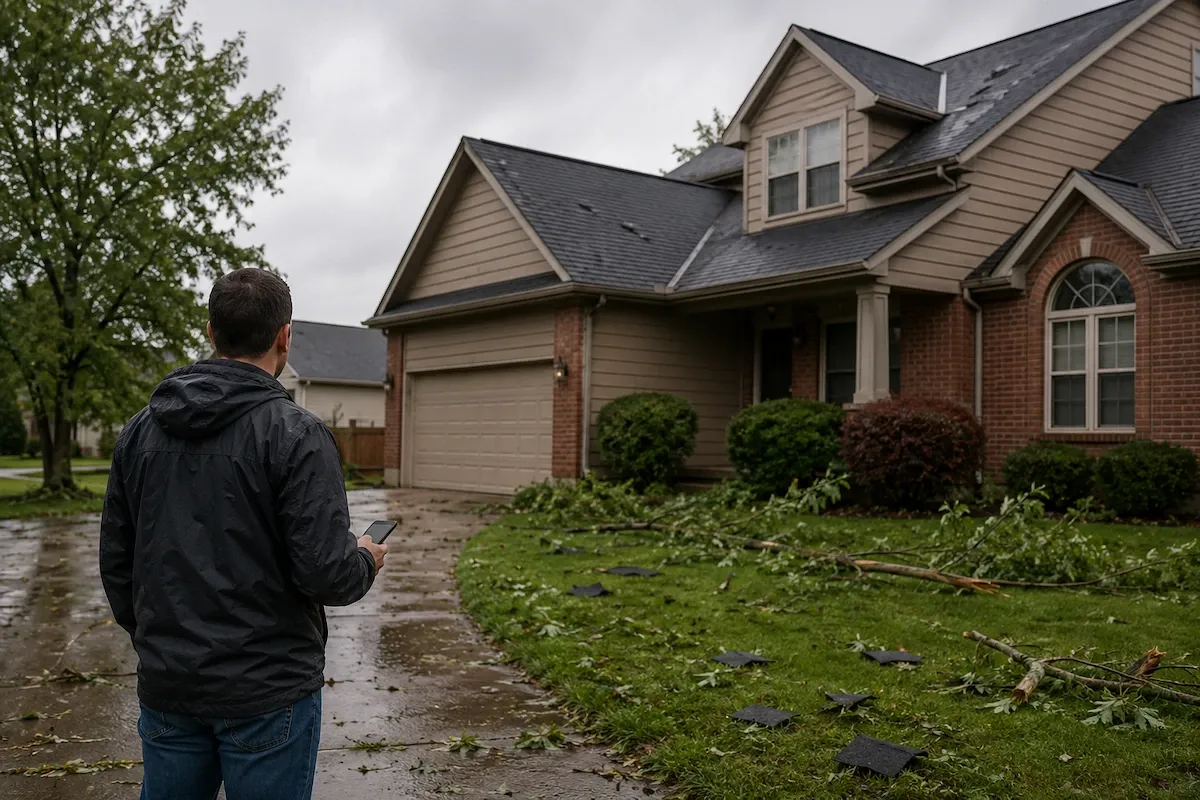
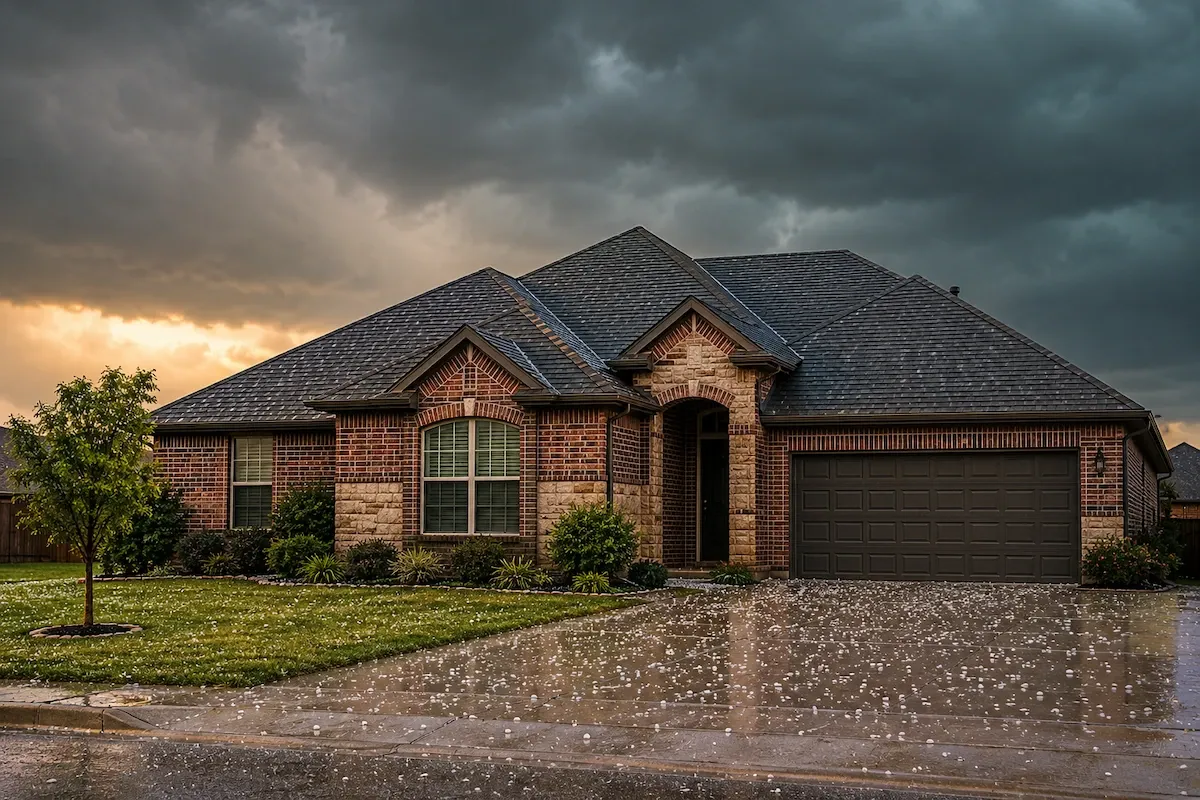
Texas is the hail capital of the United States, and it has been for more than a decade. In 2025, for the 11th straight year, Texas recorded more major hail events than any other state: 902 of them, according to the Insurance Information Institute, more than double second-place Illinois. State Farm, the largest home insurer in the state, paid about $1.4 billion on roughly 95,200 Texas hail claims that year, an average payout near $15,000 and up 27% from the year before. And that is one carrier covering about one in five Texas homes.
That is the backdrop for every roofing decision in Texas. Hail in the north, hurricanes and wind on the coast, brutal UV and heat statewide, a 2% deductible that puts thousands of dollars of risk back on you, and a roofing market with no state license that lets anyone with a ladder call themselves a contractor.
This guide covers what actually matters for a Texas roof in 2026: the hail and wind reality by region, how Texas (barely) regulates roofers, the building code change that took effect April 1, the insurance mechanics that decide what you pay and recover, and the materials worth installing.
The Texas Hail and Wind Reality in 2026
Texas roofs fail for three reasons, and which one matters most depends on where you live.
Hail. North Texas is the epicenter. The Dallas and Fort Worth metros sit in the heart of hail alley and carry a Very High storm risk score on Roofer Directory, with NOAA records showing thousands of severe weather events over the period of record. Central Texas markets like Austin and San Antonio see frequent hail as well. Hail is what drives the claim volume, the rising deductibles, and the insurance discounts that reward impact-resistant materials.
Wind and hurricanes. The Gulf Coast, including Houston, faces hurricane and tropical-storm wind as the dominant threat. Wind uplift, not hail, is what the coastal building code is written to resist, and it is why the state runs a separate windstorm insurance system for coastal counties.
Heat and UV. Statewide, Texas sun shortens asphalt shingle life. A shingle rated for 30 years in a mild climate often delivers closer to 20 to 25 years under sustained Texas UV and attic heat. Reflective materials and proper attic ventilation matter more here than in cooler states.
For a national view of how each material’s lifespan compares, see how long a roof lasts by material type. For pricing, our Texas roof replacement cost guide breaks down what each metro actually pays, and the national cost guide covers the broader framework.
How Texas Regulates Roofers (It Mostly Doesn’t)
This is the part that surprises homeowners from other states. Texas does not issue a statewide roofing license. The Texas Department of Licensing and Regulation does not administer one, and there is no state exam, no state background check, and no state registration required to perform roofing work. Anyone can legally call themselves a roofer in Texas.
A few things fill that gap, none of them a substitute for your own diligence:
- RCAT voluntary license. The Roofing Contractors Association of Texas runs a voluntary “Licensed Roofing Contractor” program. To qualify, a principal must show Texas experience, carry insurance (residential applicants need at least $300,000 in general liability or a $100,000 bond), and pass business, safety, and roofing exams. An RCAT license is a genuine signal of professionalism, but its absence does not automatically condemn a contractor.
- City rules. Some municipalities, including Austin and San Antonio, require local registration or permits to perform roofing work inside city limits. Confirm the local requirement for your jurisdiction.
- A failed state license attempt. In the 2025 legislative session, HB 3344 proposed a mandatory reroofing contractor license administered by TDLR. It advanced out of a House committee on a 7-1 vote in spring 2025 but never received a House floor vote and did not become law. As of 2026, statewide licensing remains a proposal, not a requirement.
What this means in practice: in Texas, contractor vetting is the most important decision you make, more so than in licensed states. Verify general liability insurance and workers’ compensation directly with the carriers, confirm a permanent local address (not just a P.O. box or out-of-state plate), and read multi-year review history. Our guide on how to choose a roofing contractor covers the full vetting process, and Roofer Directory lists contractors with verified addresses and real review history.
The 2026 Code Change Every Coastal Texan Should Know
On April 1, 2026, the Texas Department of Insurance adopted the 2024 International Residential Code (IRC) and 2024 International Building Code (IBC) as the minimum construction standards for structures insured through the Texas Windstorm Insurance Association in the coastal catastrophe area.
The change that matters most to homeowners is the underlayment requirement. The entire windstorm catastrophe area is treated as a high-wind zone, and new asphalt shingle or modified bitumen reroofs in that zone must now follow one of the 2024 IRC double-underlayment methods. In plain terms:
- Two layers of mechanically fastened underlayment (No. 30 felt or a qualifying synthetic), or
- A self-adhering polymer-modified bitumen membrane over the deck joints plus a single layer, or
- A full self-adhered membrane over the deck.
The goal is a stronger secondary water barrier so that if wind strips the shingles, water still does not pour into the house. A roof installed without the required underlayment in the catastrophe area can fail inspection.
Two important clarifications. First, this requirement applies to the windstorm catastrophe area (the 14 designated coastal counties and parts of Harris County), not to the entire state. Inland, building codes are adopted at the municipal level, and most Texas cities enforce a recent edition of the IRC. Second, if you are reroofing on or near the coast in 2026, confirm in writing that your contractor is quoting the new double-underlayment assembly. A bid that still assumes single-layer felt is either out of date or cutting a corner you will pay for later.
Texas Insurance: Deductibles, TWIA, and the Impact-Resistant Discount
Insurance is where Texas roofing gets expensive, and where the right material choice pays you back.
The wind and hail deductible
Most Texas homeowners now carry a separate wind and hail deductible expressed as a percentage of insured value, not a flat dollar amount. A 2% deductible has become the dominant standard, especially in North Texas. The math is not trivial:
| Home insured value | 2% wind/hail deductible |
|---|---|
| $300,000 | $6,000 |
| $400,000 | $8,000 |
| $500,000 | $10,000 |
| $750,000 | $15,000 |
That is your out-of-pocket cost before the policy pays a dollar on a hail or wind claim. It is the reason a single moderate hailstorm may not even exceed your deductible, and the reason chasing small claims can do more harm than good. For the full claims playbook (ACV vs. RCV, documentation, deadlines), see our hail damage insurance claim guide.
TWIA on the coast
If you live on the Texas coast, your wind coverage may not come from a standard carrier at all. The Texas Windstorm Insurance Association (TWIA), created in 1971 and regulated by TDI, is the insurer of last resort for wind and hail in 14 coastal counties and parts of Harris County. As of September 30, 2025, TWIA insured 283,333 coastal properties with about $125.3 billion in total insured value. TWIA covers wind and hail only, so coastal owners typically stack it with a separate homeowners policy and a flood policy.
The impact-resistant roof discount
Here is the lever most Texans underuse. TDI allows carriers to offer premium credits for roofing tested to UL Standard 2218, the impact-resistance standard. Materials are graded Class 1 through Class 4, and Class 4 (the highest) earns the largest credit. Most North Texas carriers discount the dwelling portion of the premium by 20% to 35% for a verified Class 4 roof, often $700 to $1,500 per year on a $500,000 home.
The discount is not automatic. You generally have to submit documentation to your agent: the manufacturer’s UL 2218 certification, a detailed invoice naming the specific Class 4 product, and in many cases an impact-resistant roofing installation form. TWIA offers its own impact-resistant credit, and after January 1, 1999 the product must carry a proper UL label to qualify.
One catch worth knowing: some carriers attach a cosmetic damage exclusion when they apply the Class 4 discount. That endorsement means the insurer will not pay for purely cosmetic hail damage (for example, dents in metal panels that do not affect performance) while still covering functional damage. Ask your agent whether a cosmetic exclusion is attached before you accept the credit, particularly on a metal roof.
The Best Roofing Materials for Texas Homes
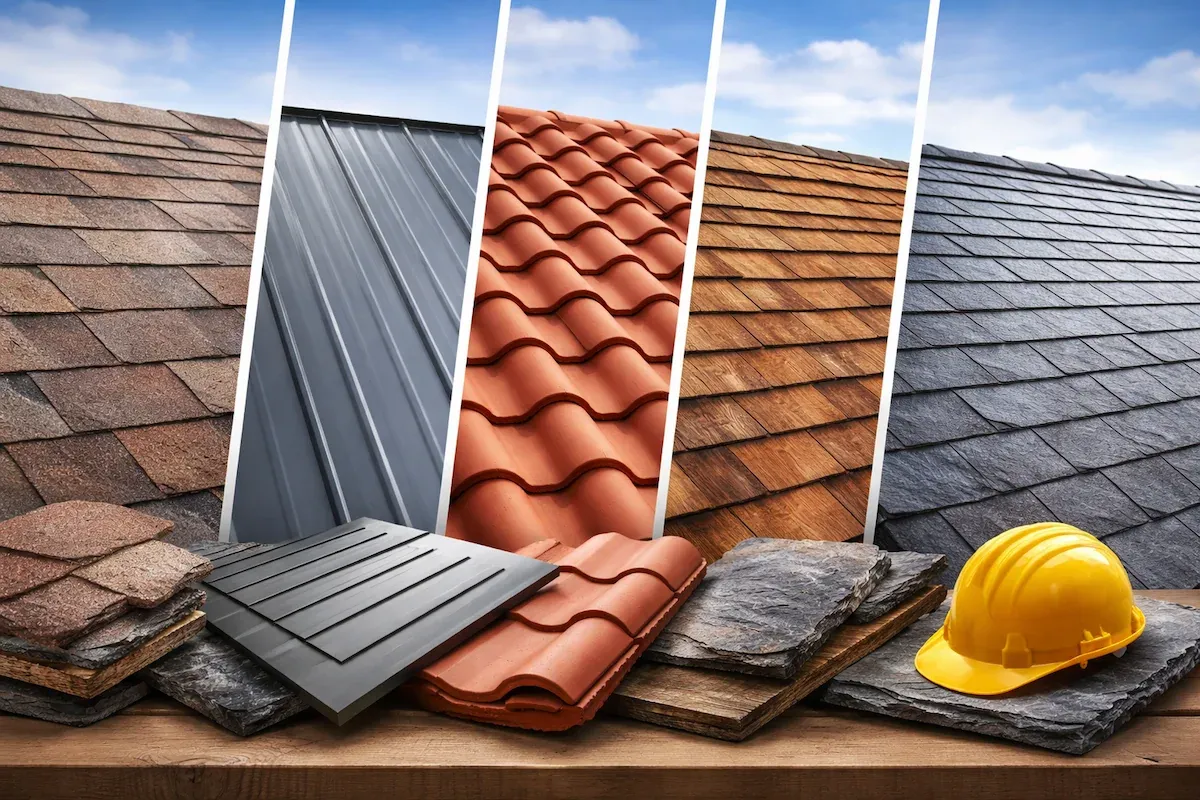
Ranked for Texas-specific performance, insurance impact, and value over the roof’s service life. All meet code when installed to spec. Your region, budget, and time horizon determine the right pick.
1. Class 4 Impact-Resistant Architectural Asphalt Shingle
The practical default for most Texas homes. Major manufacturers (GAF Timberline AS II, Owens Corning Duration FLEX, Malarkey Legacy, CertainTeed) make Class 4 SBS-modified shingles that flex rather than crack under hail impact. They carry the UL 2218 Class 4 rating that unlocks the 20% to 35% dwelling discount, and the discount typically offsets the modest cost premium within a few years.
- Cost installed: $5 to $9 per sq ft
- Texas lifespan: 20 to 30 years (UV shortens the upper end)
- Best for: The majority of Texas homes, especially in hail-prone North and Central Texas
2. Standing Seam Metal
The strongest long-term play in hail country. Concealed-fastener standing seam panels resist hail and wind, last decades, and reflect heat to cut summer cooling load in the Texas sun. A Class 4 metal roof earns the maximum impact-resistant credit. The trade-offs: higher upfront cost and the fact that very large hail can leave cosmetic dents, which some carriers exclude.
- Cost installed: $10 to $18 per sq ft
- Texas lifespan: 40 to 70 years
- Best for: Long-term owners in hail alley, modern and ranch architecture, energy-conscious homeowners
For the full metal breakdown (panel types, oil canning, 30-year cost math), see metal roofing in 2026.
3. Concrete Tile
Common in Hill Country, San Antonio, and Spanish or Mediterranean style homes. Concrete tile handles UV and heat extremely well and lasts decades, but it is heavy and may require structural verification, and individual tiles can crack under direct large-hail impact.
- Cost installed: $10 to $18 per sq ft
- Texas lifespan: 40 to 60+ years
- Best for: Spanish and Mediterranean architecture in Central and South Texas where structure supports it
4. Synthetic (Composite) Shingles
Polymer shingles engineered to mimic slate or shake while achieving Class 4 impact resistance at a fraction of the weight. A strong middle option for homeowners who want premium looks and hail resistance without tile weight or metal aesthetics.
- Cost installed: $9 to $15 per sq ft
- Texas lifespan: 30 to 50 years
- Best for: HOA neighborhoods and homeowners wanting a slate or shake look with Class 4 performance
Quick comparison
| Material | Cost/Sq Ft (Installed) | Texas Lifespan | Hail Performance | Insurance Impact |
|---|---|---|---|---|
| Class 4 Architectural Asphalt | $5–$9 | 20–30 yrs | Good (Class 4 SBS) | 20%–35% dwelling credit |
| Standing Seam Metal | $10–$18 | 40–70 yrs | Excellent (functional) | Max credit; check cosmetic exclusion |
| Concrete Tile | $10–$18 | 40–60+ yrs | Good (can crack on big hail) | Eligible if Class 4 rated |
| Synthetic Composite | $9–$15 | 30–50 yrs | Excellent | Class 4 credit |
What NOT to Install in Texas
- 3-tab asphalt shingles: No meaningful impact rating, short life under Texas UV, and they forfeit the impact-resistant discount. Architectural is the floor.
- Non-Class-4 shingles in hail country: If you are paying for a new roof in North or Central Texas and skipping the Class 4 upgrade, you are leaving a 20% to 35% annual discount on the table.
- Exposed-fastener corrugated metal on primary homes: The exposed fasteners and gaskets are the failure point in high wind. Fine for barns, not for hurricane-coast residences.
- Single-layer underlayment on coastal reroofs in 2026: No longer code-compliant in the windstorm catastrophe area.
Regional Roofing Priorities Across Texas
North Texas (Dallas, Fort Worth): Hail is the dominant threat. Prioritize a Class 4 roof and the impact-resistant discount above almost everything else. Review the local hail history on the Dallas and Fort Worth storm sections before you buy.
Central Texas (Austin, San Antonio): Frequent hail plus intense heat. Class 4 plus reflective color and good attic ventilation. Tile is common and appropriate where structure allows. Check city registration rules for Austin and San Antonio contractors.
Gulf Coast (Houston and the coastal counties): Wind and hurricane resistance lead. Confirm the new 2024 IRC double-underlayment assembly, consider TWIA eligibility, and treat wind ratings as the priority. See Houston storm history.
West Texas (El Paso, the Rio Grande Valley): Lower hail frequency, high heat and sun. Reflective materials and UV durability matter most. Browse El Paso and McAllen listings.
What to Watch After a Texas Hail Storm
After every major North Texas hailstorm, the same pattern repeats: out-of-state crews flood the neighborhood within days and pressure homeowners into signing on the spot. The Texas-specific warnings:
- There is no such thing as a free roof. Any contractor offering to waive or “eat” your deductible is proposing insurance fraud. RCAT and Texas insurers warn against it directly, and it is illegal.
- Do not pay in full up front. Pay on a schedule tied to completed work so you keep leverage.
- Document before you sign. Photograph damage, report to your insurer promptly, and get an independent inspection rather than relying solely on a door-knocker’s assessment.
For the full post-storm playbook, see our guide on storm chasers and roofing scams.
A Texas Roofing Decision Framework
- Know your dominant risk. Hail (North and Central), wind and hurricane (coast), or heat and UV (statewide and West). It drives material priority.
- Go Class 4 in hail country. The 20% to 35% dwelling discount usually pays for the upgrade within a few years and protects you from the next storm.
- Confirm the 2026 code on the coast. New shingle reroofs in the windstorm catastrophe area need double underlayment. Get it in the written scope.
- Check your deductible. Know your wind and hail percentage and what it means in dollars before a storm, not after.
- Vet the contractor hard. No state license means insurance, local address, permits, and review history are on you to verify.
- Never sign in the 48 hours after a storm, and never accept a deductible waiver.
For homeowners weighing a repair against full replacement on an existing roof, our repair vs replacement guide walks through the decision.
Find a Roofer in Your Texas Metro
Roofer Directory features local roofing contractors across every major Texas market, each with a verified address, real review history, and a minimum rating threshold. Browse contractors where you live:
- Dallas roofers
- Houston roofers
- San Antonio roofers
- Austin roofers
- Fort Worth roofers
- El Paso roofers
- McAllen roofers
Or find top-rated roofers anywhere on the Roofer Directory homepage. To get a free written estimate from local contractors, request a quote and we will connect you with roofers serving your zip code.
For more, our deeper guides cover hail damage insurance claims, metal roofing costs and ROI, how to choose a roofing contractor, and the FAQ and glossary for everything else.
A few more answers.
What is the best roofing material for a Texas home in 2026?
Start with your roof slope, local wind and hail exposure, budget and code requirements. Impact-resistant shingles and suitable metal systems can be worth comparing, but performance varies by product and installation. Ask for independent ratings and confirm any insurance credit for the exact roof before buying.
Does Texas require roofers to be licensed?
No. Texas does not issue a statewide roofing license, and the Texas Department of Licensing and Regulation does not regulate the trade. Anyone can legally call themselves a roofer in Texas. A bill to create a state license (HB 3344) advanced out of a House committee in 2025 but did not become law. Some cities, including Austin and San Antonio, require local registration or permits. Because the barrier to entry is so low, verify general liability insurance, workers' comp, a permanent local address, and reviews before hiring.
What is the RCAT license in Texas?
The Roofing Contractors Association of Texas (RCAT) runs a voluntary licensing program since the state does not require one. To qualify, a principal of the company must show experience, carry insurance (residential applicants need at least $300,000 in general liability or a $100,000 bond), and pass business, safety, and roofing exams. An RCAT license is a useful signal that a contractor has chosen a higher standard, but it is not a legal requirement and its absence does not by itself mean a contractor is unqualified.
What changed in the Texas roofing code on April 1, 2026?
Effective April 1, 2026, the Texas Department of Insurance adopted the 2024 International Residential Code and 2024 International Building Code as the minimum construction standards for structures insured through the Texas Windstorm Insurance Association in the coastal catastrophe area. The most significant change for homeowners: new asphalt shingle and modified bitumen reroofs in that high-wind coastal zone must now use double underlayment (two layers, or an approved self-adhered membrane system) to create a stronger secondary water barrier. The requirement applies to the designated windstorm catastrophe area, not the entire state.
How much is a hail deductible in Texas?
Read the wind and hail deductible on your policy. It may be a dollar amount or a percentage of the insured dwelling value. For example, a 2% deductible on $400,000 of dwelling coverage is $8,000. That is an illustration, not a statement about your policy.
What is TWIA and do I need it?
The Texas Windstorm Insurance Association (TWIA) is the state-created insurer of last resort for wind and hail damage, established in 1971 under Texas Insurance Code Chapter 2210 and regulated by the Texas Department of Insurance. It covers properties in 14 designated coastal counties and parts of Harris County that cannot get wind coverage in the private market. As of September 30, 2025, TWIA insured 283,333 coastal properties. TWIA covers wind and hail only, not flood, so coastal owners typically combine it with a separate homeowners policy and flood insurance.
Do impact-resistant shingles lower insurance in Texas?
Some insurers offer credits for qualifying impact-resistant roofs. The amount and requirements vary. Get written confirmation for the exact product and installation, and ask whether cosmetic-damage exclusions or other terms change. A Class 4 rating does not automatically mean a particular discount.
What is a cosmetic damage exclusion on a Texas roof policy?
Some Texas carriers attach a cosmetic damage exclusion endorsement when they apply an impact-resistant roof discount. The endorsement means the insurer will not pay for purely cosmetic hail damage, such as dents to metal panels that do not affect the roof's ability to keep water out, while still covering functional damage. It is a recognized Texas endorsement. Before accepting a Class 4 discount, ask your agent whether a cosmetic exclusion is attached and weigh the trade-off, especially if you have a metal roof where large hail can leave aesthetic dents.
How much does a new roof cost in Texas?
A standard architectural asphalt shingle roof in Texas typically runs $4.50 to $7.50 per square foot installed, or roughly $9,000 to $15,000 for a 2,000 square foot roof, which is near or slightly below the national average. Impact-resistant Class 4 shingles add a modest premium that the insurance discount usually offsets within a few years. Standing seam metal runs about $10 to $18 per square foot installed, and concrete tile is similar. Steep pitches, decking repairs, and the new coastal underlayment requirement can add to these figures.
Which Texas cities get the most hail?
North Texas leads. The Dallas and Fort Worth metros sit squarely in hail alley and record some of the highest severe-storm event counts in the country, which is why they carry a Very High storm risk score on Roofer Directory. Central Texas markets like Austin and San Antonio also see frequent hail. The Gulf Coast, including Houston, faces hurricane and wind risk more than routine hail. You can review local NOAA storm history on each city's page on Roofer Directory.
Are metal roofs good for Texas?
Yes, particularly in hail-prone North and Central Texas. A standing seam metal roof with a UL 2218 Class 4 rating resists hail damage better than asphalt, lasts 40 to 70 years, reflects heat to lower cooling bills in the Texas sun, and earns the maximum impact-resistant insurance credit. The main trade-offs are higher upfront cost and the fact that very large hail can leave cosmetic dents, which some carriers exclude from coverage. For long-term Texas homeowners in hail country, the lifetime math often favors metal.
More questions? Browse the roofing FAQ & glossary.
Selected FAQ answers reviewed .
Published by RooferDirectory. Learn about our sources and methods, or suggest a correction.