
In this guide
At a glance.
- Asphalt shingles, the most popular roofing material in the U.S., last 20 to 30 years depending on the product tier.
- Metal roofs offer one of the best value propositions, with standing seam systems lasting 40 to 70 years with minimal maintenance.
- Slate is the longest-lasting roofing material available, with a proven lifespan of 75 to 150 years when properly installed.
- Poor attic ventilation can cut your roof's lifespan by up to 50%, regardless of material quality.
- Regular maintenance and timely repairs can add 5 to 15 years to virtually any roofing system's useful life.
Every roof has a clock on it. The material sitting on top of your house right now started aging the day it was installed, and at some point, patching and repairing stops making financial sense.
The question most homeowners ask is simple: how long do I actually have? The answer depends almost entirely on what your roof is made of. An asphalt shingle roof and a slate roof are on completely different timelines, with completely different maintenance demands and replacement costs.
This guide breaks down realistic lifespan expectations for every major residential roofing material, based on manufacturer data and established industry standards. We’ll also cover the factors that shorten those lifespans, the warning signs that your roof is nearing the end, and what you can do to get every possible year out of what’s already up there.
Roof Lifespan by Material
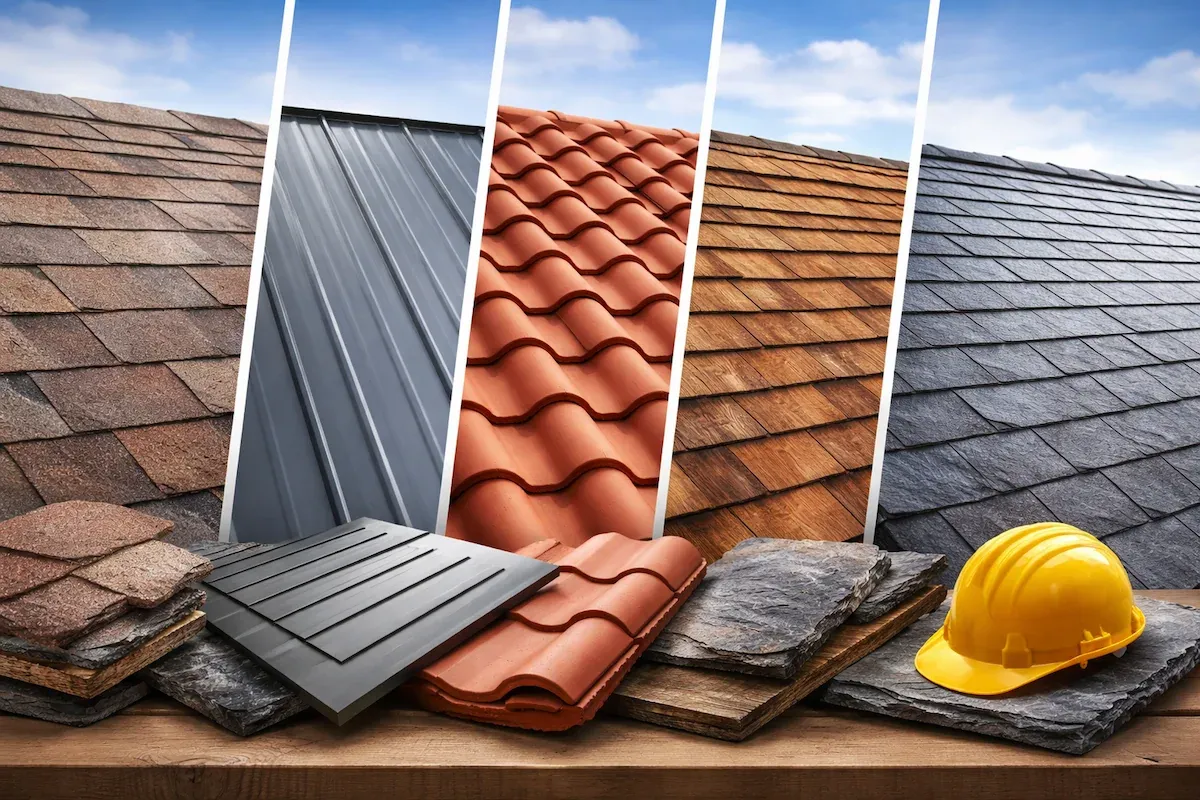
Here’s a quick comparison before we get into the details. These ranges assume professional installation and average climate conditions.
| Material | Expected Lifespan | Relative Cost |
|---|---|---|
| 3-Tab Asphalt Shingles | 15–20 years | Low |
| Architectural Asphalt Shingles | 25–30 years | Low–Medium |
| Metal (Standing Seam) | 40–70 years | Medium–High |
| Metal (Corrugated/Exposed Fastener) | 25–40 years | Medium |
| Clay Tile | 50–100+ years | High |
| Concrete Tile | 40–75 years | Medium–High |
| Natural Slate | 75–150 years | Very High |
| Wood Shake | 25–40 years | Medium–High |
| Wood Shingle | 20–30 years | Medium |
| TPO | 15–25 years | Low–Medium |
| EPDM | 20–30 years | Low–Medium |
| Modified Bitumen | 15–20 years | Low |
Asphalt Shingles
Asphalt shingles are the most widely used roofing material in the United States, covering roughly 80% of residential roofs. They come in two main types, and the difference in lifespan is significant.
3-tab shingles are the basic, flat option. They’re the least expensive asphalt product and typically last 15 to 20 years. They’re thinner, lighter, and more vulnerable to wind uplift than their upgraded counterparts.
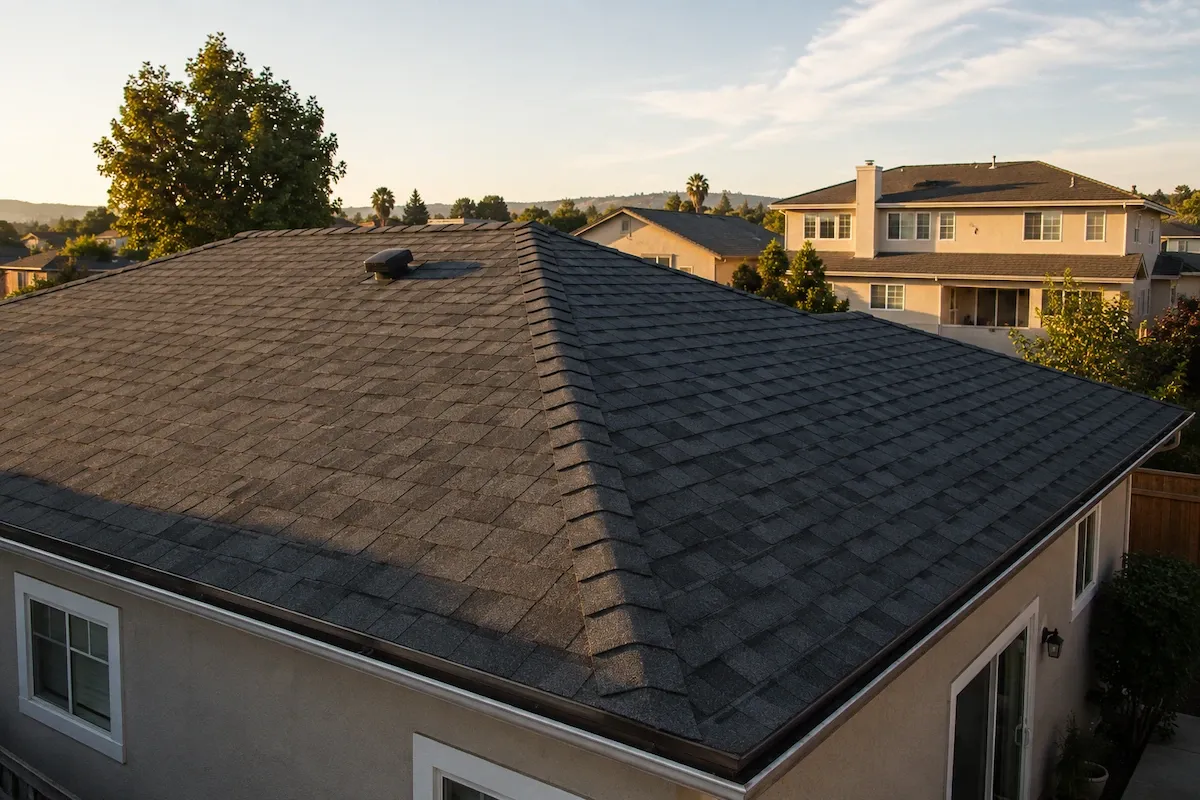
Architectural shingles (also called dimensional or laminate shingles) are thicker, heavier, and more durable. They carry a realistic lifespan of 25 to 30 years under normal conditions. Major manufacturers like GAF, CertainTeed, and Owens Corning offer premium architectural lines with warranty periods of up to 50 years, though actual field performance tends to fall closer to the 25-to-30-year range.
The gap between warranty length and real-world lifespan is worth understanding. Manufacturer warranties cover material defects, not normal wear. A shingle can be functionally worn out and past the point of effective protection long before the warranty technically expires.
Metal Roofing
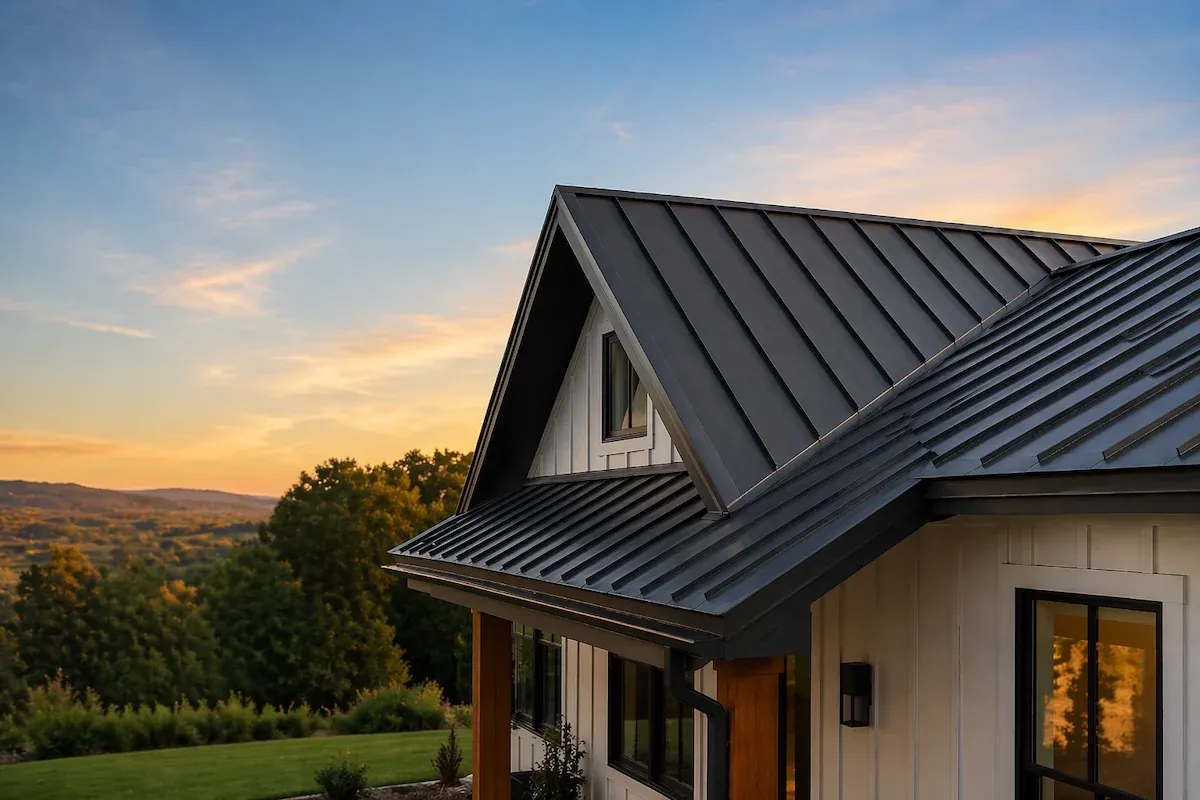
Metal roofing has grown significantly in popularity, and the lifespan numbers explain why. A properly installed standing seam metal roof can last 40 to 70 years, making it one of the best long-term investments in residential roofing.
Standing seam systems use concealed fasteners and interlocking panels, which eliminates the most common failure point on metal roofs: exposed screws. With no penetrations through the panel face, there are fewer opportunities for water intrusion.
Corrugated metal and exposed-fastener panels are more affordable but have a shorter lifespan of 25 to 40 years. The rubber washers around exposed screws degrade over time, eventually allowing moisture to reach the deck. These systems require periodic fastener inspections and replacements.
Metal roofs handle hail and high winds better than most alternatives. They’re also fire-resistant, lightweight relative to tile and slate, and reflect solar heat, which can reduce cooling costs. If you live in a high-wind or hail-prone area like Dallas or Denver, metal is worth serious consideration.
Clay and Concrete Tile
Tile roofing is a fixture in warm-climate regions like Miami and the broader Southwest. When you see those distinctive barrel-shaped or flat profile roofs, you’re usually looking at clay or concrete.
Clay tile is the premium option, with a proven lifespan of 50 to 100+ years. High-quality clay tile roofs installed in Mediterranean climates have lasted well beyond a century. The material is inherently resistant to rot, insects, and fire, and it holds up well under intense UV exposure.
Concrete tile is heavier and less expensive, with a lifespan of 40 to 75 years. It’s more porous than clay, which makes it somewhat more susceptible to moisture absorption and freeze-thaw damage in colder climates. In warm, dry regions, concrete tile performs exceptionally well.
The main limitation of tile roofing is weight. Both clay and concrete are significantly heavier than asphalt or metal, and many residential structures require structural reinforcement before tile can be installed. Individual tiles can also crack under foot traffic or impact, so maintenance requires care.
Slate
If longevity is the only criterion, slate wins. A natural slate roof installed by qualified professionals can last 75 to 150 years, and there are documented examples of slate roofs in Europe that have exceeded 200 years of service.
The lifespan depends largely on the grade of slate. Hard slate quarried from regions like Vermont and Virginia is denser and more durable, typically lasting 100 to 150 years or more. Soft slate varieties are more affordable but have a shorter lifespan of 75 to 100 years.
Slate is also the heaviest common roofing material. A slate roof can weigh 800 to 1,500 pounds per square (a “square” is 100 square feet), compared to roughly 200 to 300 pounds for asphalt shingles. Your roof structure must be engineered to handle that load.
The other limiting factor is cost. Slate is a premium material with premium installation requirements. Not every roofer is qualified to install it, and finding someone with genuine slate experience is critical. A poorly installed slate roof will fail decades before it should.
Wood Shake and Shingle
Wood roofing, almost always cedar, offers a distinctive natural appearance and reasonable durability when maintained properly. There’s an important distinction between the two types.
Wood shakes are thicker and split from the log, giving them a rougher, more textured surface. They typically last 25 to 40 years with regular maintenance.
Wood shingles are thinner and sawn smooth on both sides. They’re more uniform in appearance but less durable, with an expected lifespan of 20 to 30 years.
The catch with wood roofing is maintenance. Cedar naturally resists insects and rot, but it still requires periodic treatment with preservatives and fire retardants. Without maintenance, wood roofs are vulnerable to moss and algae growth, moisture retention, splitting, and cupping. In humid climates, a neglected wood roof can deteriorate rapidly.
Many municipalities have also restricted or banned wood roofing in wildfire-prone areas due to fire risk, even with fire-retardant treatments. Check your local building codes before committing.
Flat and Low-Slope Roofing (TPO, EPDM, Modified Bitumen)
Flat and low-slope roofs are common on commercial buildings but also appear on many residential structures, particularly modern designs, additions, and sections like porches and garages.
TPO (thermoplastic polyolefin) is a single-ply membrane that has become the most popular flat roofing material. It typically lasts 15 to 25 years and offers strong UV and chemical resistance. It’s heat-welded at the seams, which creates a watertight bond.
EPDM (ethylene propylene diene monomer) is a synthetic rubber membrane with a track record stretching back to the 1960s. It lasts 20 to 30 years and is valued for its flexibility and resistance to temperature extremes. Seams are glued or taped rather than welded, which can be a long-term vulnerability.
Modified bitumen is an asphalt-based system reinforced with fiberglass or polyester. It’s one of the most affordable flat roof options, with a lifespan of 15 to 20 years. It’s applied in layers using heat, cold adhesive, or self-adhesion, and it performs well in climates with wide temperature swings.
All flat roofing systems require diligent drainage maintenance. Standing water (ponding) is the primary enemy of flat roofs, and even a small drainage blockage can accelerate deterioration significantly.
Factors That Shorten Your Roof’s Lifespan
The lifespan ranges above assume reasonable conditions. In practice, several factors can pull your roof’s actual performance well below the expected range.
Climate and weather: This is the factor you can’t control. Roofs in Dallas contend with extreme heat and UV exposure that bakes asphalt shingles from above. Roofs in Denver endure freeze-thaw cycles, hail, and heavy snow loads. Coastal roofs in Miami face salt air corrosion, hurricane-force winds, and relentless humidity. The same shingle that lasts 30 years in a temperate climate may only last 20 in a harsh one. You can see your metro area’s specific storm history and hail frequency on each city page.
Poor attic ventilation: This is the factor most homeowners overlook, and it’s one of the most damaging. Without proper airflow, heat and moisture build up in the attic space, degrading your roofing materials from underneath. In winter, trapped heat melts snow unevenly, creating ice dams that force water under shingles. Poor ventilation can reduce your roof’s lifespan by up to 50%, and it’s one of the most common reasons manufacturers deny warranty claims.
Installation quality: A premium shingle installed poorly will underperform a basic shingle installed correctly. Incorrect nailing patterns, improper flashing, missing underlayment, and inadequate sealing around penetrations are all installation errors that lead to premature failure. This is why choosing the right contractor matters as much as choosing the right material.
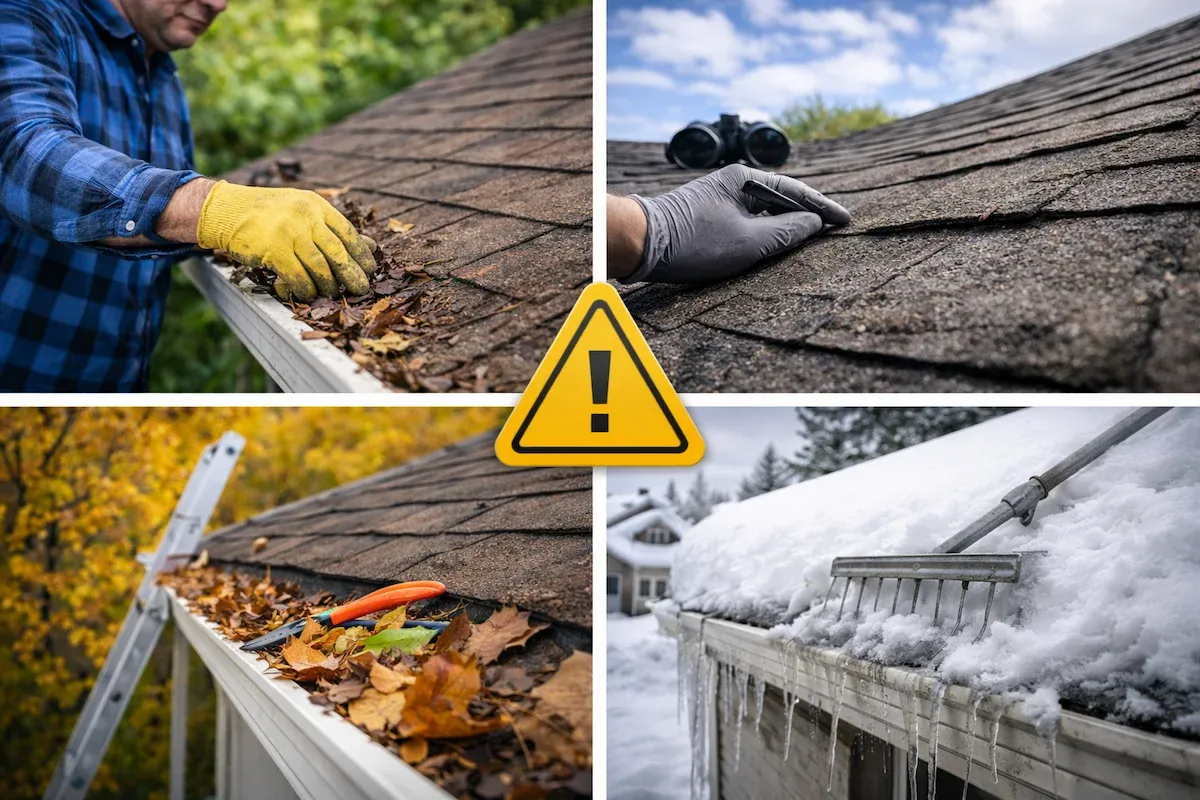
Lack of maintenance: Roofs are not install-and-forget systems. Clogged gutters cause water to back up under roofing materials. Overhanging tree branches drop debris and create shade that promotes moss growth. Small issues like a cracked pipe boot or a lifted shingle become major leaks when ignored. Regular inspections and prompt repairs are the simplest way to protect your investment.
Signs Your Roof Is Nearing End of Life
You don’t need to climb on your roof to spot trouble. Many warning signs are visible from the ground or from inside your attic.
- Granule loss: Check your gutters and downspouts. If you’re finding significant accumulations of granules (the sandpaper-like coating on asphalt shingles), your shingles are losing their protective layer. Some granule loss is normal in the first year after installation, but heavy shedding on an aging roof signals the end is near.
- Curling, cracking, or buckling: Shingles that are curling at the edges, cracking across the surface, or buckling in waves have reached the end of their useful life. This is typically caused by age, heat exposure, or moisture from below.
- Sagging: A sagging roofline is a structural concern, not just a cosmetic one. It can indicate water damage to the roof deck, compromised rafters, or inadequate structural support. This requires immediate professional evaluation.
- Daylight through the deck: Go into your attic during the daytime with the lights off. If you can see pinpoints of light coming through the roof, water is getting in too.
- Moss or algae growth: While algae (dark streaks) is mostly cosmetic, heavy moss growth traps moisture against the roof surface and accelerates deterioration. It’s especially common on north-facing slopes and shaded areas.
- Rising energy bills: A roof that’s no longer performing properly often shows up in your heating and cooling costs before it shows up as a visible leak. If your energy bills are climbing without another explanation, your roof’s insulating and ventilating capacity may be compromised.
When to Repair vs. Replace
This decision comes down to three factors: the age of your roof, the extent of the damage, and the math.
Repair makes sense when:
- Damage is localized: A few missing shingles from a windstorm, a single area of flashing failure, or an isolated leak around a vent pipe are all repair candidates.
- Your roof is in the first half of its expected lifespan: If you have an architectural shingle roof that’s 10 years old, a targeted repair will give you many more years of service.
- Repair cost is well below replacement cost: Minor repairs typically run $360 to $1,550. If the fix is straightforward and the rest of the roof is in good shape, repairing is the right call.
Replace when:
- Problems are widespread: Multiple leaks in different areas, extensive granule loss, curling across the entire roof surface, or visible deck damage all point toward replacement.
- Your roof is past 80% of its expected lifespan: An asphalt shingle roof at 22 years is statistically near the end. Sinking money into repairs at that point delays the inevitable without solving the underlying problem.
- Repair costs are stacking up: If you’ve spent more than 30% of replacement cost on cumulative repairs over the past few years, replacement is more cost-effective going forward.
When you’re ready to get pricing on a replacement, request a free estimate from licensed contractors in your area. Getting at least three written bids is essential for comparing scope and price accurately. Our 2026 roof cost guide breaks down pricing by material, region, and roof size so you know what to expect before those estimates arrive.
How to Extend Your Roof’s Lifespan
You can’t stop your roof from aging, but you can slow it down. These maintenance practices apply to virtually every roofing material.
- Inspect twice a year: The NRCA recommends spring and fall inspections. Look for damaged or missing materials, cracked caulk or sealant, rust spots on flashing, and any debris accumulation. Check your attic for signs of moisture, staining, or light penetration.
- Clean your gutters: Clogged gutters are one of the most common causes of premature roof damage. When water can’t drain properly, it backs up under roofing materials, saturates the fascia, and can cause ice dams in freezing weather. Clean them at least twice a year and after major storms.
- Trim overhanging branches: Branches that touch or hang over your roof drop leaves and debris, create shade that promotes moss, and can cause direct physical damage in storms. Keep branches trimmed at least six feet back from the roof surface.
- Fix problems immediately: A small leak does not stay small. Water that penetrates your roof deck will rot the sheathing, damage insulation, promote mold growth, and eventually compromise structural members. The cost of a prompt repair is always a fraction of the cost of deferred damage.
- Ensure proper ventilation: Your attic needs balanced intake (at the soffits) and exhaust (at the ridge or through roof vents). If your attic feels noticeably hot in summer or you see condensation in winter, your ventilation is likely inadequate. A roofing professional can evaluate and correct this relatively inexpensively.
- Remove moss and debris: Don’t let organic material sit on your roof. Moss retains moisture and can work its way under shingles. Debris traps water and accelerates wear. Use a soft brush or low-pressure wash to remove buildup. Avoid pressure washing, which can strip granules from shingles and void your warranty.
Find a Contractor You Can Trust
Whether you’re facing a repair or a full replacement, the contractor you hire determines the outcome. Material quality matters, but installation quality matters more. A roof is only as good as the hands that put it there.
Take the time to verify licensing, confirm insurance, and compare detailed written estimates. If you’re unsure where to start, read our guide on how to choose a roofing contractor for a step-by-step vetting process.
When you’re ready, find licensed roofing contractors in your area on Roofer Directory. Compare ratings, read verified reviews, and connect directly with professionals who serve your market. For answers to other common roofing questions, visit our FAQ.
A few more answers.
What is the longest-lasting roofing material?
Natural slate is the longest-lasting residential roofing material, with a proven lifespan of 75 to 150 years depending on the grade. Hard slate varieties quarried in Vermont and Virginia routinely last over a century. Clay tile is the second longest-lasting option at 50 to 100+ years.
How long do asphalt shingles really last?
Basic 3-tab asphalt shingles typically last 15 to 20 years, while architectural (dimensional) shingles last 25 to 30 years under normal conditions. Premium architectural shingles from manufacturers like GAF, CertainTeed, and Owens Corning carry warranties of up to 50 years, though actual performance in the field averages closer to 25 to 30 years.
Does a metal roof last longer than shingles?
Yes, significantly. A standing seam metal roof lasts 40 to 70 years, roughly two to three times longer than architectural asphalt shingles. Even exposed-fastener corrugated metal panels typically outlast shingles at 25 to 40 years. Metal roofs also handle high winds and hail better than most shingle systems.
How do I know when my roof needs to be replaced?
Key signs include widespread granule loss on shingles, curling or buckling across multiple areas, daylight visible through the roof deck from the attic, sagging sections, recurring leaks in different locations, and visible moss or algae growth that signals trapped moisture. If your roof is within five years of its expected lifespan and showing multiple symptoms, replacement is usually more cost-effective than continued repairs.
Can I put a new roof over my old one?
In many jurisdictions, building codes allow a second layer of asphalt shingles over the first. However, most roofing professionals recommend a full tear-off. Layering adds weight that can stress the structure, hides underlying deck damage, traps moisture, and shortens the new roof's lifespan. It also makes future inspections and repairs more difficult.
How does climate affect roof lifespan?
Climate is one of the biggest factors. Intense UV exposure in southern states breaks down asphalt and sealants faster. Freeze-thaw cycles in northern climates cause ice dams and cracking. Coastal areas deal with salt air corrosion. High-wind and hail-prone regions like Dallas and Denver see more impact damage. The same shingle that lasts 30 years in a mild climate might only last 20 in a harsh one.
How much does it cost to replace a roof?
The national average for an asphalt shingle roof replacement is approximately $9,500, though costs vary widely based on roof size, material, pitch, and location. Metal roofs typically run $15,000 to $30,000. Tile and slate roofs can exceed $30,000 to $50,000 or more. Always get at least three written estimates before committing.
Does roof color affect how long it lasts?
Roof color has a modest impact on lifespan. Darker roofs absorb more heat, which can accelerate the breakdown of asphalt shingles in hot climates. Lighter or reflective roofing materials stay cooler and may last slightly longer in sun-intensive regions. The effect is secondary to material quality, ventilation, and installation, but it is a factor worth considering.
How often should I have my roof inspected?
Follow your roof manufacturer’s maintenance guidance and arrange a professional inspection when you notice leaks, missing roofing or a significant change after a storm. Check visible conditions from the ground between visits. Your roof’s age, material and exposure may justify a different inspection schedule.
Will a new roof increase my home's value?
Yes. According to industry data, a new asphalt shingle roof recoups roughly 60% to 70% of its cost at resale. Beyond the dollar figure, a visibly aging or damaged roof is one of the most common reasons buyers walk away or demand price reductions. A new roof also eliminates a major inspection concern, which can speed up the sale.
More questions? Browse the roofing FAQ & glossary.
Selected FAQ answers reviewed .
Published by RooferDirectory. Learn about our sources and methods, or suggest a correction.