Roof emergencies are stressful because they combine water, money, and urgency.
The goal in the first 24 hours is not to solve the entire roof problem. The goal is to stop additional damage, document what happened, and avoid making a rushed hiring decision that creates a bigger problem later.
Use this sequence when a roof leak, missing shingles, puncture, tree impact, or storm event needs attention right now.
1. Protect People First
If water is coming through a ceiling, move people and pets away from the area. Water near light fixtures, outlets, breakers, or appliances can become dangerous quickly.
If you see sagging drywall, do not stand under it. A soaked ceiling can release suddenly.
If a tree is on the roof, do not try to remove it yourself. Tree removal, structural inspection, and roof repair may all be needed.
2. Limit Interior Damage
Start inside the home:
- Place buckets or containers under active drips.
- Move furniture, rugs, electronics, and valuables.
- Lay towels or plastic sheeting where water is spreading.
- Photograph the leak, ceiling stains, wet flooring, and damaged belongings.
- If safe, check the attic for wet insulation or visible daylight through the roof.
Do not tear out drywall or insulation immediately unless necessary for safety. If insurance may be involved, document first.
3. Do Not Climb On A Dangerous Roof
A wet roof is dangerous. A damaged roof is worse. Loose granules, lifted shingles, broken decking, and hidden punctures can make a surface unstable.
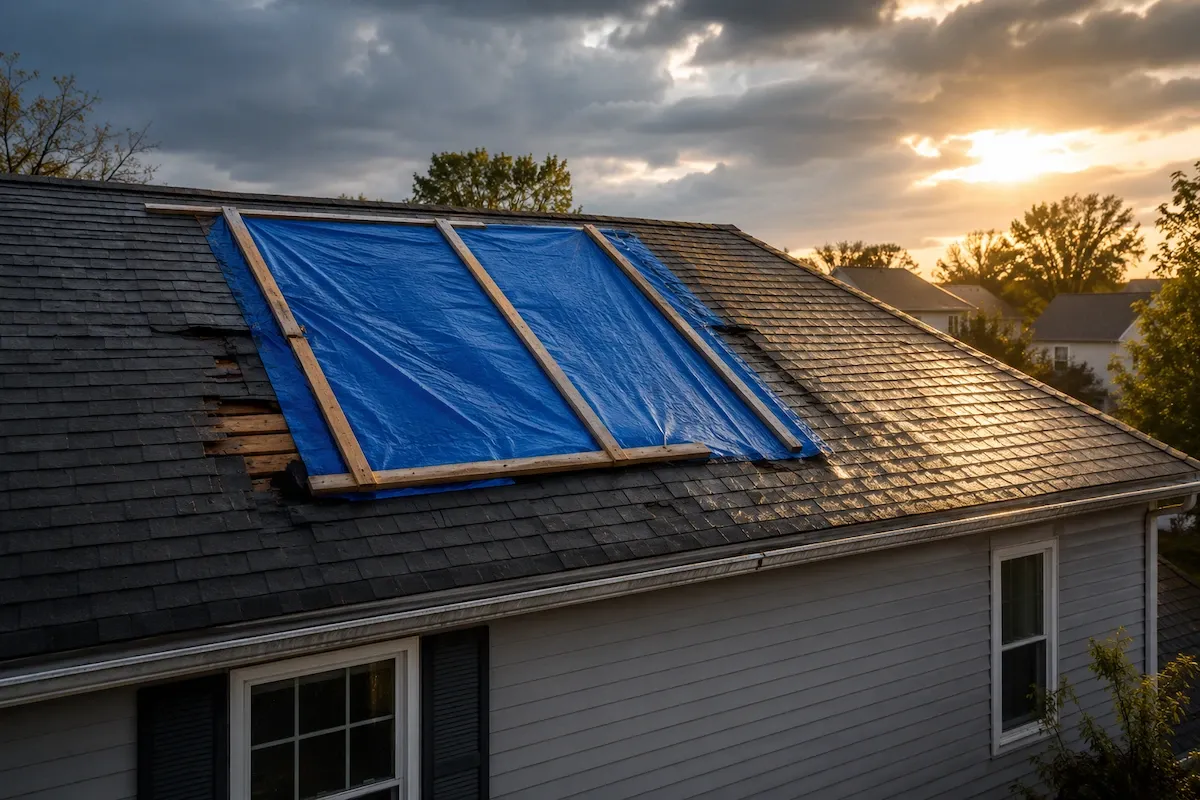
If temporary roof covering is needed, ask a roofing contractor or emergency mitigation company about tarping. A proper tarp should shed water beyond the damaged area and be secured without creating unnecessary new holes.
If you do make a small temporary repair from the ground or attic, keep every receipt.
4. Document The Exterior
Take exterior photos from the ground:
- Missing shingles.
- Tree limbs or debris.
- Damaged vents, flashing, skylights, or gutters.
- Hail dents on soft metals.
- Downspout granules.
- Wide shots of each roof slope.
If the damage followed a storm, save a screenshot of the weather report or local storm warning for the date and time.
5. Decide Whether To Call Insurance
Not every leak should become a claim. If the repair will likely cost less than your deductible, a claim may not help.
Open a claim quickly when:
- Damage is widespread.
- There is a tree impact.
- Water damage is significant.
- Tarping or emergency mitigation is needed.
- The roof may require replacement.
When in doubt, read your policy deadlines and ask the insurer how they handle notice of loss. For more claim-specific guidance, see the hail damage roof insurance claims guide.
6. Separate Temporary Work From Permanent Work
Emergency work should be limited and clear:
- Stop the leak.
- Tarp or temporarily seal the area.
- Prevent additional interior damage.
- Provide a written summary of observed damage.
Permanent repair or replacement is a separate decision. Do not approve a full roof replacement at the door during an emergency unless you have had time to compare scope, price, warranty, and contractor credentials.
7. Hire Carefully Even When It Is Urgent
Before hiring:
- Confirm the business name and local address.
- Ask who is doing the work.
- Ask for written pricing before work starts.
- Confirm what is temporary and what is permanent.
- Avoid cash-only pressure.
- Avoid anyone who promises to waive your deductible.
- Keep copies of texts, emails, photos, invoices, and receipts.
If a contractor arrived because they were canvassing the neighborhood after a storm, slow down. Read the storm chaser roofing scam checklist before signing.
8. Find A Local Roofing Contractor
Once the home is stable, compare local roofing contractor listings in your market. Look for roofing-specific companies, meaningful review history, a real local presence, and a willingness to explain the repair scope in writing.
Use Roofer Directory city pages or ZIP search as a starting point, then confirm directly that the contractor handles emergency roof repair in your area.
Find Emergency Roof Help Near You
Once the immediate leak is stable, use Roofer Directory to compare roofing contractor listings near you and confirm who handles emergency roof repair. You can also request a free estimate when you are ready to compare repair scope.
For more, read the roof inspection after a storm checklist, the storm chaser scam guide, and the FAQ and glossary before approving permanent work.