
In this guide
At a glance.
- The national average for a full roof replacement is around $9,500, while most repairs fall between $380 and $1,800.
- The 30% rule: if repair costs exceed 30% of what a full replacement would cost, replacement is almost always the smarter financial move.
- The average homeowner insurance claim for wind and hail roof damage is approximately $13,000, often covering most or all of a replacement.
- Asphalt shingles last 20 to 30 years, metal roofs 40 to 70 years, and slate can exceed 75 to 150 years — age is the single biggest factor in the repair-vs-replace decision.
- Getting 2 to 3 independent inspections before deciding is critical — contractors have financial incentives that can skew their recommendations either direction.
There’s a particular kind of dread that hits when you notice a water stain on your ceiling, or you’re up in the attic and see daylight where there shouldn’t be any. Your brain immediately starts doing math it’s not equipped to do: Is this a $500 fix or a $10,000 problem? Can we patch this and buy another five years, or is the whole thing shot?
The stakes are real. Spend money on repairs when the roof actually needs replacing and you’re just lighting cash on fire — those patches will fail, and you’ll still need the new roof. But jump to a full replacement when a targeted repair would have lasted another decade, and you’ve just spent thousands of dollars you didn’t need to.
The roofing industry doesn’t make this easier. Contractors have their own financial incentives, and those don’t always line up with what your roof actually needs. So this guide is built around the numbers, the warning signs, and the decision frameworks that separate a smart repair from a necessary replacement — no sales pitch attached.
The 30% Rule (and Why It Exists)
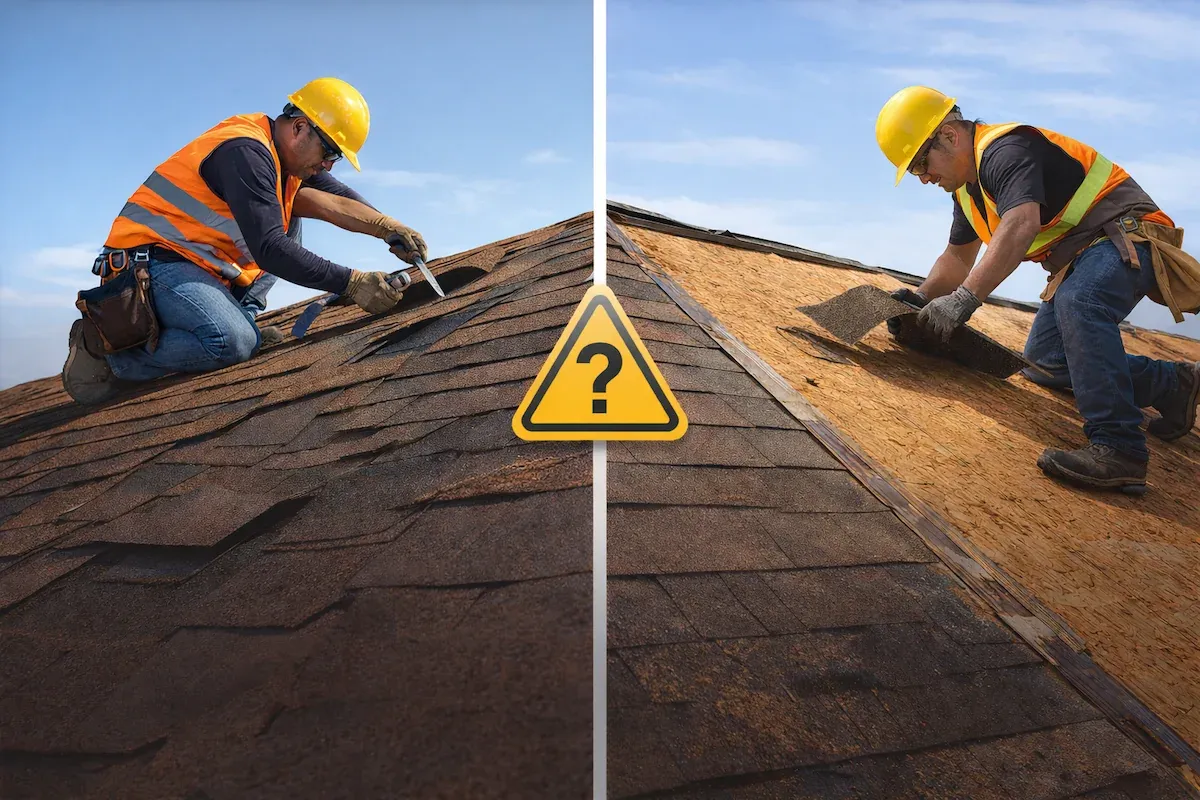
The most reliable rule of thumb in roofing goes like this: if the cost of repairs exceeds 30% of what a full replacement would cost, replace the roof.
The math is straightforward. The national average for a full roof replacement sits around $9,500 for a standard asphalt shingle roof (though your actual cost depends heavily on material, location, and roof complexity; our 2026 pricing guide has the full breakdown). Thirty percent of that is roughly $2,850. So if you’re getting quotes to fix multiple problem areas and the numbers are climbing past that mark, the repair route stops making financial sense.
Here’s why. A roof that needs $2,800+ in repairs is telling you something. That level of damage doesn’t happen in isolation on an otherwise healthy roof. It means the materials are degraded, the underlayment is compromised, or the original installation is catching up with you. You’d be paying to keep a declining system on life support, and more repairs are coming.
The 30% threshold isn’t arbitrary. It accounts for the fact that repair costs compound. A $1,200 fix this year followed by a $1,500 fix next year and another $900 the year after puts you at $3,600 — already past the replacement threshold — and you still have the old roof. If the contractor had told you to replace on day one, you’d be three years into a 25-year warranty instead of three years into an escalating repair cycle.
When Repair Makes Sense
Not every roof problem is a death sentence. Plenty of situations call for a repair, and going straight to replacement in those cases is overkill.
Your roof is under 15 years old. If you have an architectural asphalt shingle roof and it’s less than halfway through its expected lifespan, the underlying materials almost certainly have years of protection left. Damage at this stage is usually caused by an event — a storm, a fallen branch, a critter — not systemic failure.
The damage is localized. A leak around a single plumbing vent, a patch of shingles blown off by wind in one section, a piece of flashing that’s pulled away from a chimney — these are spot problems. A competent roofer can fix them in a few hours for anywhere from $380 to $1,800 depending on the scope, and the rest of your roof keeps doing its job.
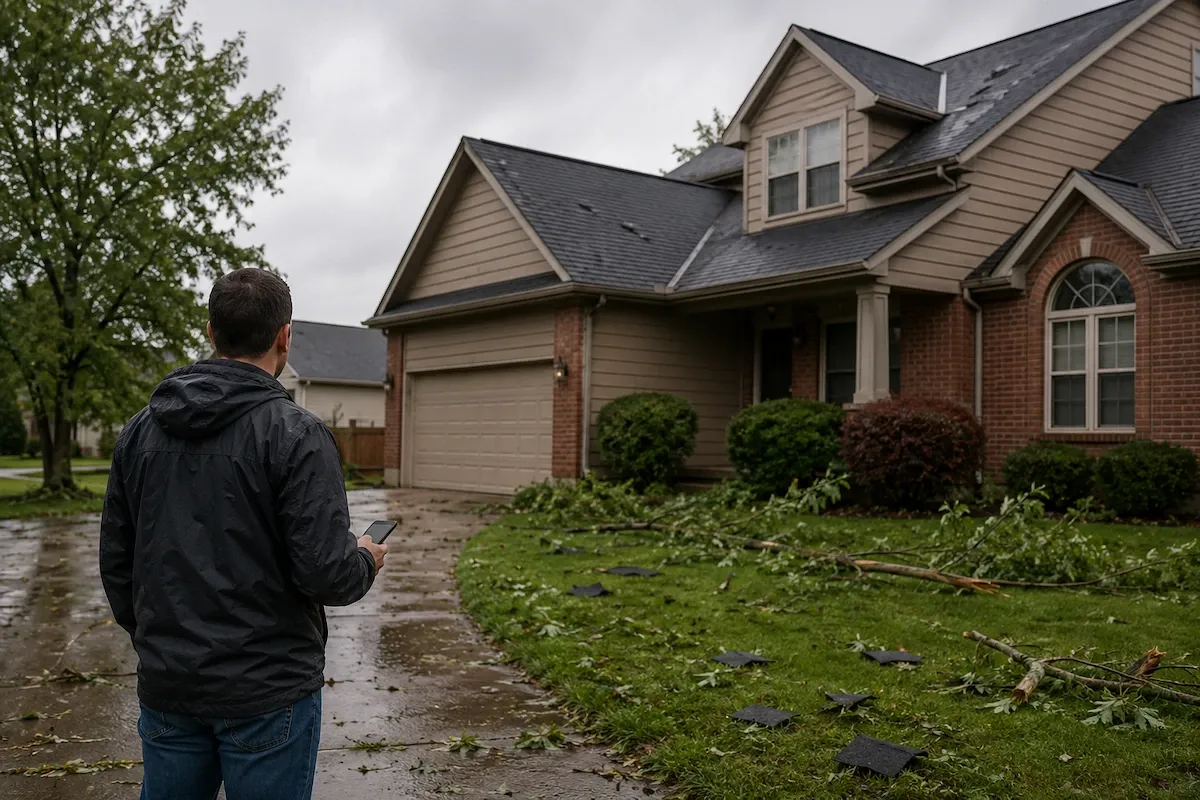
Storm damage to a limited area. Hail can crack or dislodge shingles in isolated spots. High winds tend to peel shingles starting at edges and ridges. If the damage from a single weather event is contained to a specific zone and the rest of the roof is solid, a targeted repair (often covered by insurance) is the appropriate response.
One active leak with a clear source. If water is getting in through a specific, identifiable point — a failed pipe boot, a cracked piece of step flashing, a gap where caulk has dried out — that’s a defined problem with a defined fix. Repairs like this are some of the most cost-effective maintenance you can do on a home.
The key thread through all of these: the problem is specific, the rest of the roof is healthy, and the math doesn’t approach the 30% threshold.
When Replacement Is the Move
Sometimes there’s no way around it. The roof is done, and pouring money into repairs is just delaying the inevitable while increasing your total cost. Here are the situations where replacement is clearly the right call.
The roof has reached the end of its material lifespan. Every roofing material has a clock. Asphalt shingles last 20 to 30 years. Metal roofs go 40 to 70 years. Tile runs 50 to 100+ years. Slate can last 75 to 150 years. If your roof is within five years of its expected limit and showing symptoms, that’s not a repair situation — it’s a timeline situation. You can reference our full breakdown of how long a roof lasts for specifics on every material type.
You’re seeing multiple leaks in different areas. One leak is a repair. Three leaks in three different parts of the roof is a pattern, and the pattern is systemic failure. The underlayment is breaking down, the shingles are no longer shedding water effectively, and the next leak is already forming somewhere you haven’t found yet.
The roof deck is sagging. If you can see dips or waves in your roofline from the ground, or the decking feels spongy when walked on, you have structural damage from prolonged water intrusion. This can’t be fixed by laying new shingles over compromised plywood. The deck needs to be inspected, damaged sections replaced, and a full new roofing system installed.
Daylight is visible through the roof boards. Go up to your attic on a sunny day. If you can see pinpoints of light coming through the roof deck, moisture has been getting in. Where light gets through, water gets through.
Shingles are curling, buckling, or cupping across large sections. When shingles lose their seal and start to deform over wide areas, the damage is material-level and widespread. You can replace individual shingles, but if the entire south-facing slope is curling, you’re fighting a losing battle one shingle at a time.
The Hidden Costs of “Just Patching It”
The most expensive decision homeowners make with their roofs isn’t choosing the wrong contractor or overpaying for materials. It’s deferring a replacement that should have happened years ago.
Here’s what incremental patching actually costs you when the roof is past its useful life:
Compounding repair bills. That first repair is $800. Six months later, a different section fails — $1,200. The following spring, flashing gives out on the other side — $950. Within two years you’ve spent $2,950 and you still have an aging roof that’s going to need more work. The total almost always exceeds what a replacement would have cost at the start.
Water damage below the roofline. Every leak that goes undetected or gets patched late has consequences downstream. Water saturates insulation (destroying its R-value), stains and warps drywall, and can rot structural framing. Repairing water-damaged framing and drywall often costs $1,000 to $4,000 per affected area — on top of the roof work.
Mold. Persistent moisture behind walls and in attic spaces creates ideal conditions for mold growth. Mold remediation is expensive, disruptive, and in some cases a health hazard. It’s one of those problems that wouldn’t exist if the roof had been addressed on time.
Energy efficiency loss. A compromised roof lets conditioned air escape and outside air in. You won’t see this on a single utility bill, but over months and years, the extra heating and cooling costs add up. Homeowners are often surprised at how much their energy bills drop after a new roof goes on.
Insurance complications. Insurers track the age and condition of your roof. Many carriers in storm-prone areas like Dallas and Miami will either raise premiums, limit coverage, or flat-out refuse to renew policies on homes with roofs past 20 years old. If your insurer drops your coverage because the roof is too old, getting a new policy becomes significantly more difficult and expensive.
How to Get an Honest Assessment
This is the part where most homeowners make their biggest mistake. They call one contractor, take that contractor’s recommendation at face value, and proceed. The problem is that contractors have skin in the game, and their recommendation can be colored by what’s most profitable for them.
For an initial replacement budget, use our roof cost calculator. It separates installation from removal and shows every assumption; it cannot tell you whether your roof needs replacement.
Get 2 to 3 independent inspections. Not estimates — inspections. You want different sets of eyes on your roof, each giving you their honest assessment of its condition. If all three say replace, replace. If all three say repair, repair. If they’re split, ask each one to explain specifically why they disagree with the other approach.
Beware of contractors who always recommend replacement. A full roof replacement is a much bigger job than a repair. Bigger job means more revenue. Some contractors will push replacement even when a repair would serve you fine for another ten years. If a contractor immediately recommends a $10,000+ replacement without thoroughly inspecting the roof first, get a second opinion.
Beware of contractors who always recommend patching. This goes the other direction. A contractor who’s built on repair work benefits from repeat business. They have an incentive to keep patching your roof year after year rather than telling you it’s time to replace. If you’ve had the same contractor out three or more times in two years, something is wrong with their assessment.
Signs of a trustworthy assessment. The contractor spends real time on the roof — at least 30 to 45 minutes for a thorough inspection. They take photos and show you what they found. They explain the condition of the shingles, flashing, vents, and decking in plain language. They give you a written report with their recommendation and the reasoning behind it. And they don’t pressure you to sign anything on the spot.
If you need to find top-rated contractors in your area, Roofer Directory can connect you with local professionals you can compare by rating and review history. Always verify licensing and insurance directly before hiring. You can also get a free estimate to start the process.
What a Roof Replacement Actually Involves
If you’ve never been through a replacement before, knowing what the process looks like helps you evaluate bids, set expectations, and spot cut corners.
Tear-off. The old roofing material gets stripped down to the deck. This is the noisy, messy part. A proper tear-off removes everything — shingles, underlayment, old flashing, pipe boots, drip edge. Some contractors will try to save money by layering new shingles over old ones. Most building codes allow two layers, but the practice hides deck damage and shortens the new roof’s life. A full tear-off is almost always worth it.
Deck inspection and repair. Once the old material is off, the crew inspects the plywood or OSB decking underneath. Water-damaged, soft, or delaminated sections get cut out and replaced. This is one of the most important steps and one of the most common places corners get cut. Make sure your contract addresses decking repair and how it’s priced — some contractors charge per sheet of replaced plywood, and you should know that rate upfront.
Underlayment. A layer of synthetic or felt underlayment goes down over the deck. This is your secondary water barrier. In areas prone to ice dams, an ice-and-water shield membrane is applied along the eaves.
Flashing and drip edge. Metal flashing gets installed at every transition point — where the roof meets a wall, around chimneys, in valleys, around vents. Drip edge goes along the eaves and rakes. These components are critical for directing water away from vulnerable joints. Old or reused flashing is a common source of leaks on otherwise new roofs.
Roofing material installation. Shingles, panels, or tiles go on according to the manufacturer’s specifications. Proper nailing patterns, overlap dimensions, and sealing matter. This is where the quality of the crew shows up — good installation extends the life of the material, bad installation shortens it.
Cleanup. A reputable contractor includes full cleanup in their scope. That means magnetic sweeps of the yard and driveway for stray nails, removal of all debris, and leaving your property the way they found it minus the old roof.
Timeline: Most standard residential roofs are completed in 1 to 3 days. A simple single-story home might be done in a day. Complex, multi-level roofs with steep pitches and lots of features take longer. Weather delays can add time.
Permits: A building permit is required for roof replacements in most jurisdictions. Your contractor should handle the permit application. If they ask you to pull the permits yourself, that’s a red flag — it often means they’re not licensed to do so. You can learn more about evaluating contractors in our guide on how to choose a roofing contractor.
Financing and Insurance
How you pay for a roof matters almost as much as the roof itself. Making the wrong financing decision under pressure can cost you for years.
Insurance coverage. Homeowners insurance covers roof damage from sudden, accidental events — storms, hail, wind, fallen trees, fire. It does not cover wear and tear, gradual deterioration, or neglected maintenance. If your roof was damaged in a storm, file a claim. The average insurance payout for wind and hail roof damage is approximately $13,000, according to the Insurance Information Institute, which often covers the full cost of replacement for a standard asphalt shingle roof.
A few things to know about the claims process: your insurance company will send an adjuster to inspect the damage. The adjuster’s assessment determines the payout. If you disagree with the adjuster’s finding, you can hire a public adjuster or a roofing contractor experienced in insurance work to provide a counter-assessment. Document everything with photos before any repairs begin.
Contractor financing. Many roofing companies offer financing through third-party lenders. These range from no-interest promotional periods (6 to 18 months is common) to longer-term loans with interest rates that vary based on credit. Read the terms carefully, particularly the interest rate after the promotional period ends and any prepayment penalties.
Don’t let financing pressure drive the decision. Some contractors push financing hard because it closes deals. “You can get a brand-new roof for just $150 a month” sounds appealing, but make sure the roof actually needs replacing before you sign a financing agreement. The monthly payment structure can make an unnecessary replacement feel affordable, and that’s by design. Decide what your roof needs first, then figure out how to pay for it — not the other way around.
Home equity options. If you do need a replacement and have equity in your home, a home equity loan or HELOC often offers better interest rates than contractor-arranged financing. It’s worth checking with your bank before committing to whatever the roofing company offers.
The Bottom Line
Here’s a quick framework you can use when you’re staring at a roof problem and trying to decide what to do:
Repair if:
- Age: Your roof is less than 15 years old (asphalt) or well within its material lifespan
- Scope: The damage is in one area and has a clear, identifiable cause
- Cost: Repairs are well under 30% of replacement cost
- Pattern: This is a first-time or isolated issue, not a recurring problem
Replace if:
- Age: Your roof is approaching or past its expected lifespan
- Scope: You’re seeing problems across multiple areas of the roof
- Cost: Repair estimates are at or above 30% of full replacement cost
- Pattern: You’ve already repaired the roof multiple times in recent years
- Structure: The deck is sagging, spongy, or visibly damaged
If you’re on the fence, get two to three inspections from independent, licensed contractors. Compare their assessments. Ask each one to explain what they found and why they’re recommending what they’re recommending. The right answer is usually pretty clear once you have multiple professional opinions in front of you.
And if you’re looking for contractors you can actually trust with that assessment, Roofer Directory lists licensed, insured professionals across the country. You can get a free estimate to start comparing options, or check our FAQ for answers to the most common roofing questions homeowners ask.
Your roof is either protecting your home or it isn’t. Figure out which one it is, make the call, and move forward.
A few more answers.
How do I know if my roof needs to be repaired or replaced?
Ask a roofer to document the cause, extent and location of the problems, then compare a repair scope with a replacement scope. Age, repeat leaks, hidden damage and remaining service life all matter. No single roof age or repair-cost percentage settles the decision for every home.
What is the 30% rule for roof replacement?
It is a rough budgeting shortcut sometimes used to compare repair and replacement costs, not a building-code rule or a reliable diagnosis. A repair exceeding a particular percentage does not automatically require replacement. Compare condition, scope, remaining service life and future repair needs.
How much does a typical roof repair cost?
Most residential roof repairs fall between $380 and $1,800 depending on the type and scope of the damage. Simple fixes like replacing a handful of missing shingles or sealing a small leak run on the lower end. More involved repairs like fixing damaged flashing, repairing a larger section of shingles, or addressing a localized deck issue push toward the higher end.
How much does a full roof replacement cost?
The national average for a full roof replacement is approximately $9,500 for asphalt shingles. That figure varies based on roof size, pitch, material choice, and location. Complex roofs with multiple valleys, dormers, or steep pitches can push costs well above $15,000 to $20,000, especially with premium materials like architectural shingles or metal.
Does homeowners insurance cover roof replacement?
Homeowners insurance typically covers roof damage caused by sudden events like storms, hail, fallen trees, and fire. It does not cover damage from normal wear and tear, neglected maintenance, or a roof that has simply reached the end of its lifespan. The average insurance payout for wind and hail damage is around $13,000. Filing a claim requires documentation of the damage and usually an adjuster inspection.
How long can I delay a roof replacement?
That depends on the severity of existing issues. Minor cosmetic wear on a relatively young roof can wait. But active leaks, sagging areas, or widespread shingle failure should not be put off. Water intrusion causes compounding damage to insulation, framing, drywall, and can lead to mold — problems that cost far more to fix than the roof itself. Every month of delay increases your total cost.
Can I do roof repairs myself to save money?
Minor repairs like replacing a few shingles or applying roof sealant to a small area are within reach for a competent DIYer. However, most roofing work involves significant fall risk, and improper repairs can void your warranty and cause worse damage. For anything beyond basic maintenance, hiring a licensed professional is worth the cost.
Should I get multiple estimates before deciding on repair or replacement?
Absolutely. Get at least two to three independent inspections from different licensed contractors. Some contractors are incentivized to recommend replacement because it's a bigger job with higher margins. Others default to patching because it generates repeat business. Comparing multiple professional opinions gives you a more accurate picture of what your roof actually needs.
What happens if I keep repairing a roof that should be replaced?
You end up spending more in total than a replacement would have cost, while living under a roof that's unreliable and potentially causing hidden damage. Recurring repairs also signal to insurance companies that your roof is a liability, and some carriers will drop coverage or refuse to renew your policy on homes with roofs past a certain age.
How long does a roof replacement take?
Most residential roof replacements are completed in 1 to 3 days, depending on roof size, complexity, weather conditions, and crew size. A straightforward single-story home with a simple roof line can often be done in a single day. Larger homes or complex roofs with steep pitches, multiple levels, and features like skylights or chimneys may take two to three days.
More questions? Browse the roofing FAQ & glossary.
Selected FAQ answers reviewed .
Published by RooferDirectory. Learn about our sources and methods, or suggest a correction.