Good photos do not guarantee an insurance claim will be approved, but bad documentation can make a legitimate claim harder than it needs to be.
After hail, you want to prove three things:
- A hail event happened at your property.
- The home shows hail impact indicators.
- Any temporary repairs were reasonable and documented.
This checklist helps you collect that evidence without climbing onto the roof.
Before You Start
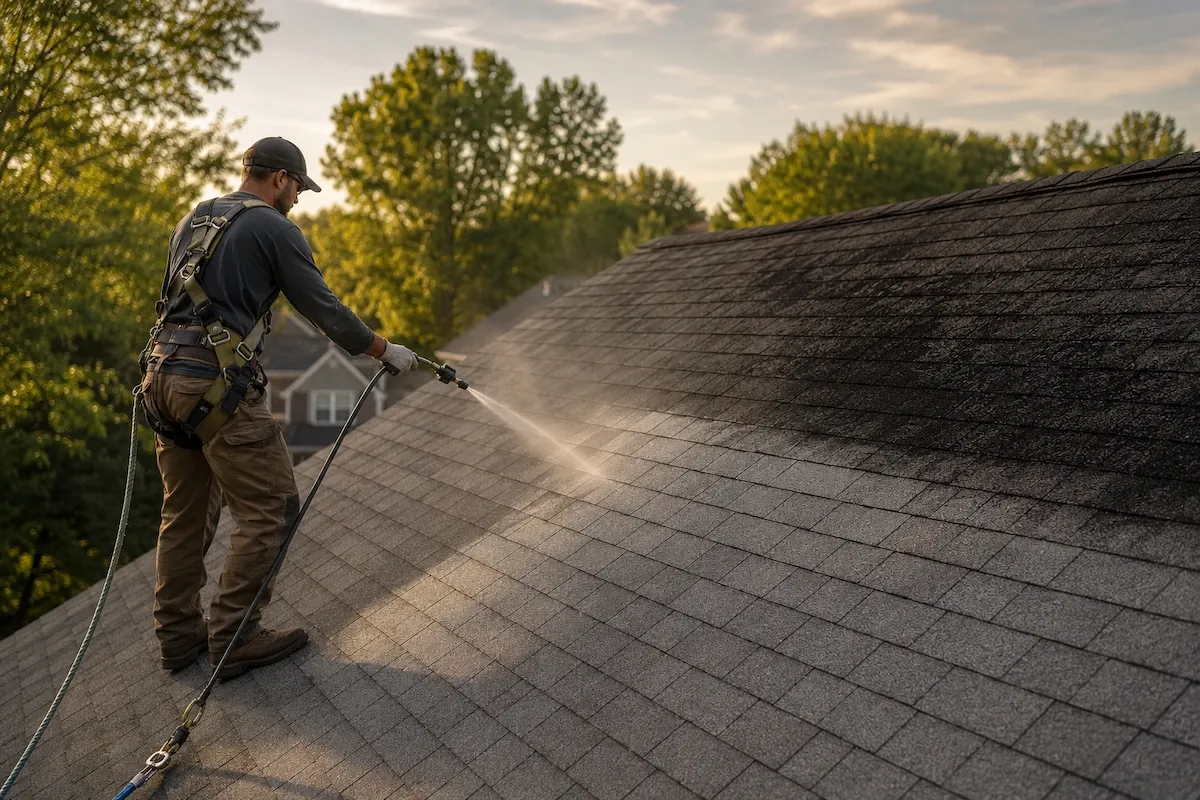
Stay on the ground. Hail damage often comes with wet shingles, loose granules, slick decking, and hidden punctures. Walking the roof is not worth the risk.
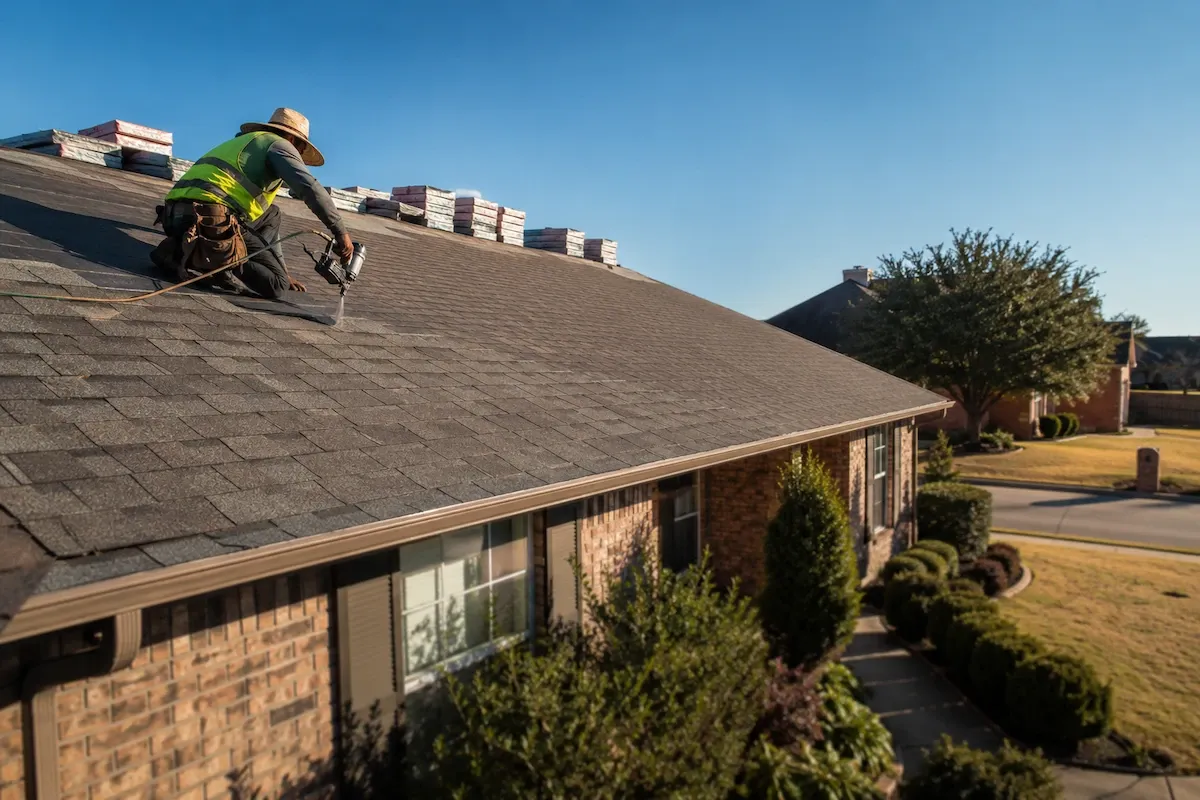
Use your phone camera, zoom, and wide-angle shots. If you later hire a roofing contractor, they can document roof-surface impacts directly.
Photo Set 1: Weather And Time
Save:
- A screenshot of the weather alert.
- A screenshot of local radar or storm report if available.
- The date and approximate time hail hit.
- A short note describing hail size if you saw it.
Do not exaggerate hail size. If you are unsure, say you are unsure.
Photo Set 2: Wide Exterior Views
Before close-ups, take wide photos:
- Front of the house.
- Back of the house.
- Left and right sides.
- Each visible roof slope from the ground.
- Detached garage or outbuildings.
- Trees, branches, and debris patterns.
Wide shots help establish context and show that damage was not isolated to one object.
Photo Set 3: Soft Metal Clues
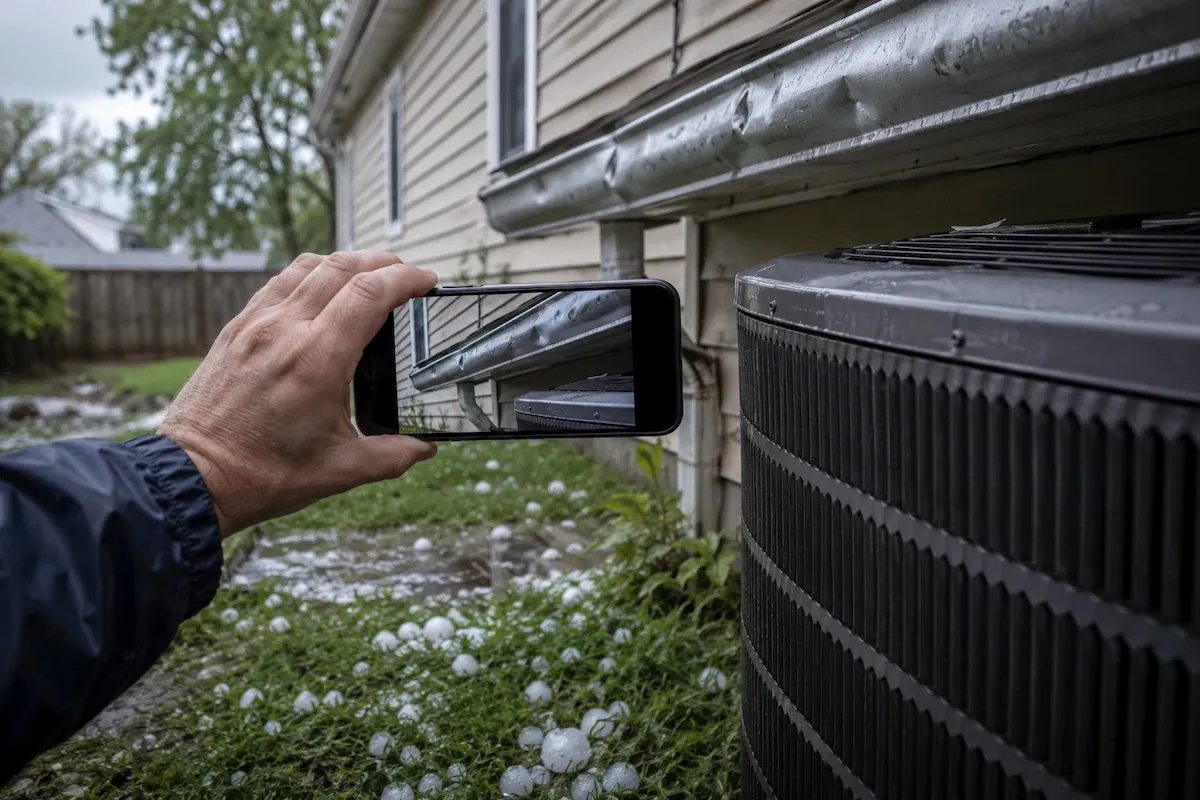
Hail often leaves clearer marks on soft metals than on shingles.
Photograph:
- Gutters.
- Downspouts.
- Metal roof vents.
- Furnace caps.
- Flashing.
- Window trim.
- Garage door panels.
- Mailboxes or metal railings.
Use close-ups and include a coin, ruler, or your finger for scale when safe.
Photo Set 4: Ground-Level Roof Clues
From the ground, look for:
- Missing shingles.
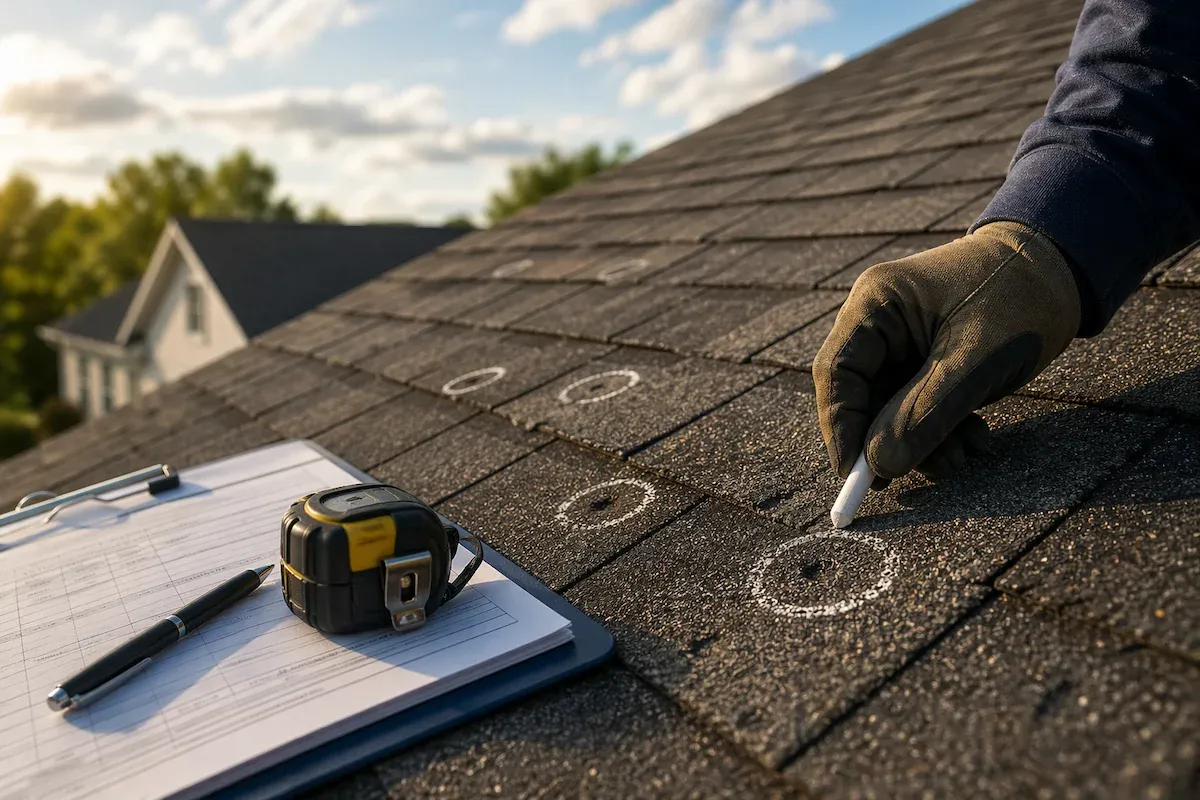
- Shingles that look bruised, cracked, or out of line.
- Granules collected at downspout exits.
- Granules in gutters if safely visible.
- Damaged ridge caps.
- Broken tile or slate pieces on the ground.
- Dented metal panels on low-slope or porch roofs.
If you cannot see the roof well, do not force it. Let a roofing contractor inspect it.
Photo Set 5: Other Corroborating Damage
Hail rarely hits only the roof.
Document:
- Torn window screens.
- Dented AC condenser fins.
- Dents on vehicles.
- Damaged patio furniture.
- Broken light fixtures.
- Damaged fencing.
- Shredded plants or landscaping.
These details help show storm direction and severity.
Photo Set 6: Interior Water Damage
If there is a leak, photograph:
- Ceiling stains.
- Active drips.
- Wet insulation if visible from the attic.
- Bubbling paint.
- Damp flooring.
- Damaged belongings.
Take photos before moving items if you can do so safely.
Photo Set 7: Temporary Repairs
If you tarp, seal, or mitigate damage:
- Photograph before the temporary repair.
- Photograph during the repair if possible.
- Photograph after the repair.
- Keep receipts.
- Keep contractor invoices.
- Save text messages or emails about emergency work.
Insurance policies often require homeowners to prevent additional damage. Documentation shows what you did and why.
Organize Everything
Create one folder with:
- Photos.
- Videos.
- Weather screenshots.
- Contractor inspection notes.
- Tarping or mitigation invoices.
- Insurance claim number.
- Adjuster communications.
Rename files with the date if you can. Even simple labels like 2026-05-11-gutter-dent-front.jpg help later.
What Comes Next
Once you have photos, schedule an inspection with a roofing contractor. Ask for a written summary with photos, roof slope notes, and a clear distinction between functional damage and cosmetic marks.
For the full claim process, read the hail damage roof insurance claims guide. If a contractor knocked on your door right after the storm, read the storm chaser scam checklist before signing anything.
Find A Roofer After You Document Hail Damage
After you photograph the damage, use Roofer Directory to compare roofing contractor listings in your market and confirm who handles hail inspections. You can also request a free estimate once you are ready to compare repair or replacement scopes.
For more, read the hail damage roof insurance guide, the roof inspection after a storm checklist, and the FAQ and glossary for common claim and roofing terms.