Storm damage is easiest to handle when you slow down for the first hour.
The mistake homeowners make is rushing straight to the roof, calling the first person who knocks, or cleaning up evidence before they understand what happened. A better approach is simple: document the storm, inspect safely from the ground, protect the home from active water intrusion, and then choose a roofing contractor deliberately.
This checklist is designed for the first 24 to 48 hours after hail, high wind, heavy rain, or a severe thunderstorm.
Start With Safety
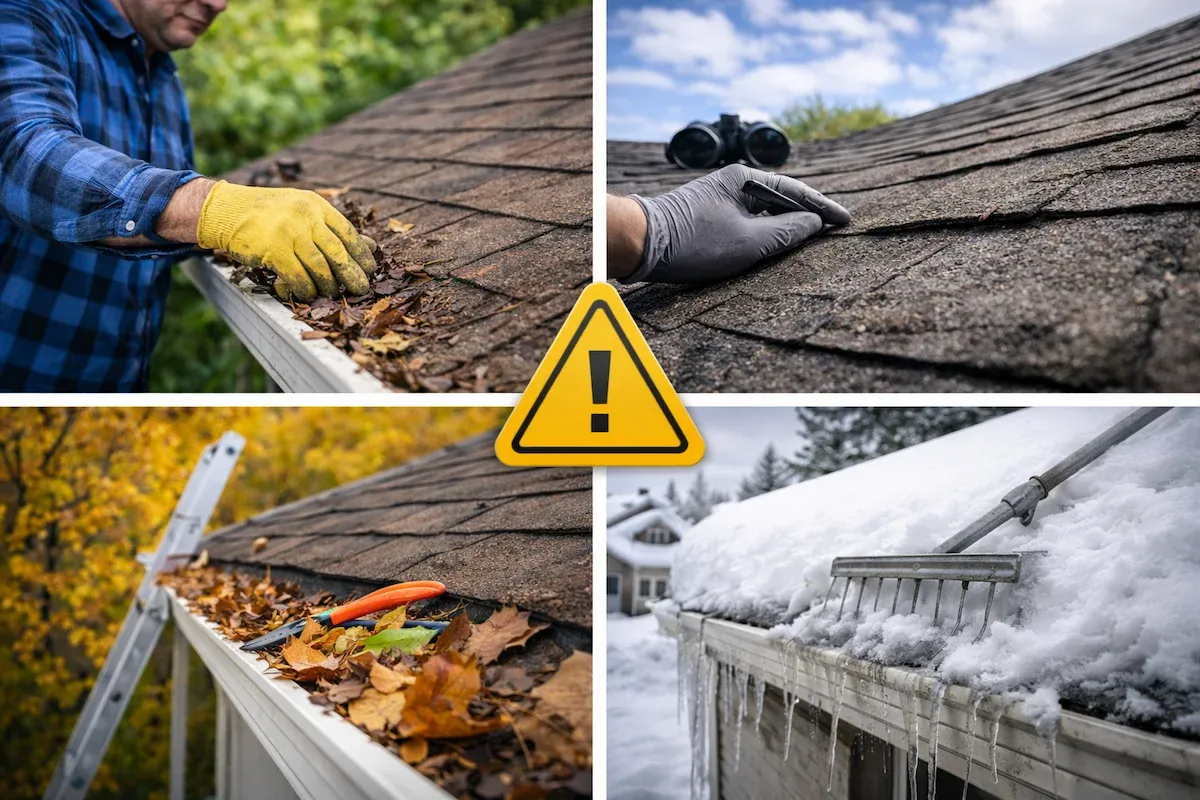
Do not climb on a roof after a storm. Wet shingles, loose granules, lifted edges, and hidden deck damage can make a roof unsafe even when it looks fine from the driveway.
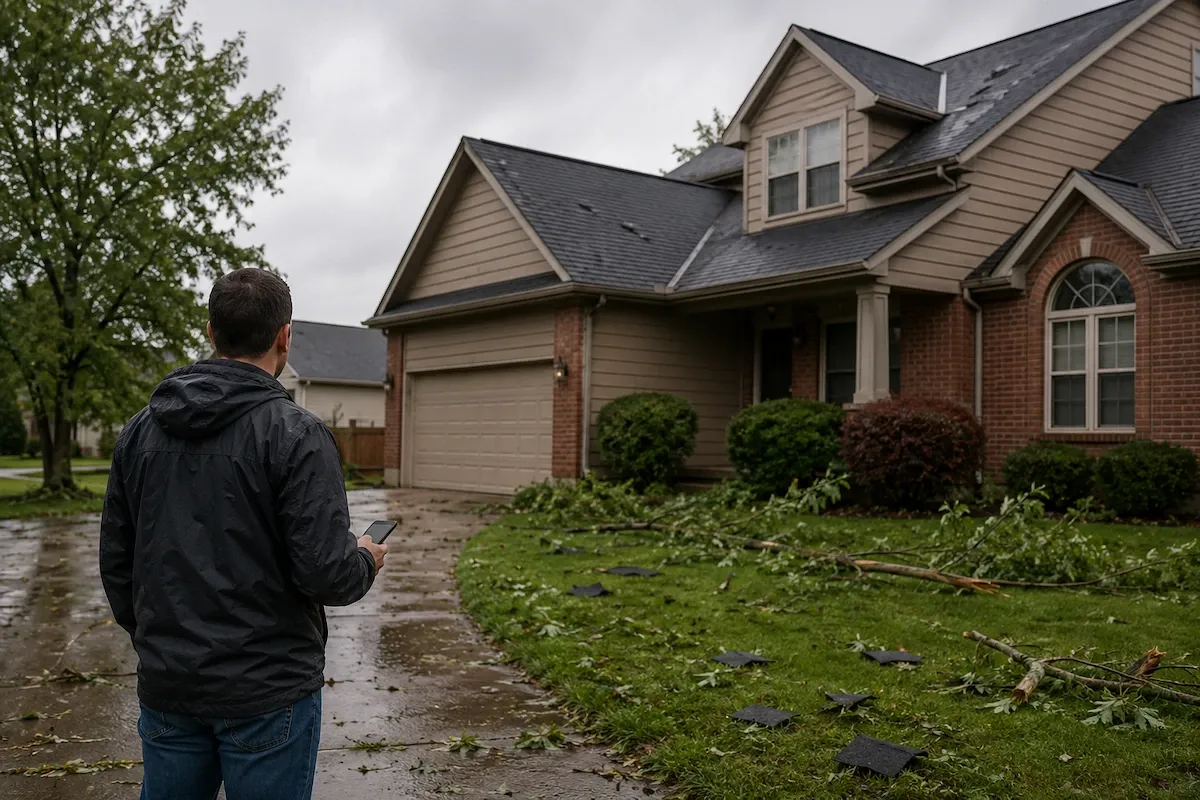
Instead, walk the perimeter of the home. Use your phone camera, binoculars, and the zoom function. If you see anything that suggests roof damage, stop there and call a roofing contractor for a closer inspection.
Avoid touching downed wires, broken tree limbs resting on the home, sagging ceilings, or any area where water is near electrical fixtures. Those are emergency conditions.
Document Before Cleanup
Before you move branches, clean gutters, or throw away damaged materials, take photos and short videos.
Capture:
- The date and approximate time of the storm.
- Wide shots of each side of the house.
- Close-ups of dents, missing shingles, fallen branches, damaged vents, and water stains.
- Gutters, downspouts, window screens, AC condenser fins, fencing, and outdoor furniture.
- Any emergency tarping or temporary repairs.
If you later file an insurance claim, photos taken before cleanup are much more useful than photos taken days later.
Check The Ground-Level Clues
Roof damage often leaves evidence around the house before it is obvious on the roof.
For hail, look for:
- Dented gutters and downspouts.
- Dings on metal vents, flashing, or window trim.
- Shingle granules in gutters or at downspout exits.
- Torn window screens.
- Dents on vehicles, grills, patio furniture, or AC units.
For wind, look for:
- Missing shingles.
- Shingle tabs lifted or folded back.
- Ridge caps out of line.
- Loose flashing around chimneys, walls, skylights, or vents.
- Debris impact marks.
- Exposed underlayment or decking.
For water intrusion, look for:
- Ceiling stains.
- Damp attic insulation.
- Dripping around light fixtures.
- Musty smells after the storm.
- Bubbling paint or drywall seams.
What Needs Immediate Attention
Some issues can wait for a scheduled inspection. Others need quick action.
Call for help quickly if you see:
- Active leaking.
- A tree or large branch on the roof.
- Missing shingles over a large area.
- A visible puncture or hole.
- Sagging roof decking.
- Water near electrical fixtures.
- Interior ceiling bulging.
Temporary tarping can reduce further damage, but it should be done safely. Keep receipts and photos of any temporary work.
Choose The Roofer, Do Not Let The Roofer Choose You
Storms attract aggressive door-to-door sales. Some companies are legitimate. Some are not. The safest rule is to choose the contractor yourself.
Before signing anything:
- Confirm the company name, address, and phone number.
- Compare Google review history and review count.
- Ask whether the person inspecting your roof is an employee, subcontractor, or salesperson.
- Ask for a written inspection summary.
- Do not sign a contingency agreement under pressure.
- Do not let anyone offer to “cover” or “waive” your deductible.
If the repair or replacement will be expensive, get more than one opinion.
Use Local Storm Context
Storm risk is not the same in every market. Hail-prone cities need different inspection habits than coastal wind markets or low-risk regions.
Roofer Directory city pages include local storm sections where NOAA data is available. Use those sections to understand whether hail, wind, tornadoes, or seasonal storm patterns are common in your market, then compare roofing contractor listings in that city.
Start with your city page, or use the ZIP search to find roofing contractor listings near you.
What To Do Next
If you see no damage indicators, schedule a routine roof inspection during safer weather.
If you see possible damage, document it and contact a roofing contractor.
If there is active leaking, protect the home first, save receipts, and call your insurer if the damage may exceed your deductible.
For more detail on the claim process, read our hail damage roof insurance guide. If someone knocked on your door right after the storm, read the storm chaser roofing scam checklist before signing anything.
Find A Roofer After Storm Damage
If your inspection turns up missing shingles, leaks, hail indicators, or wind damage, use Roofer Directory to compare roofing contractor listings in your market. You can also request a free estimate once you are ready to talk through scope and pricing.
For more, read the hail damage roof insurance guide, the emergency roof repair checklist, and the FAQ and glossary for common roofing terms.