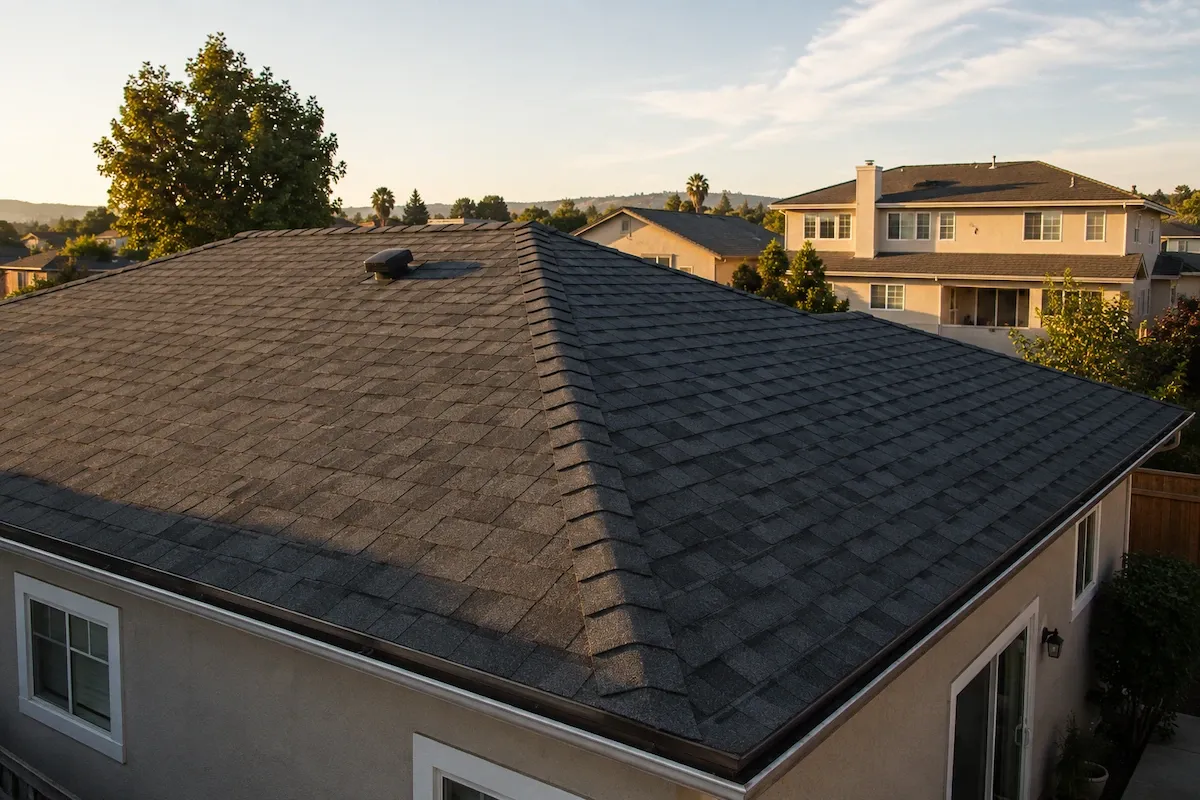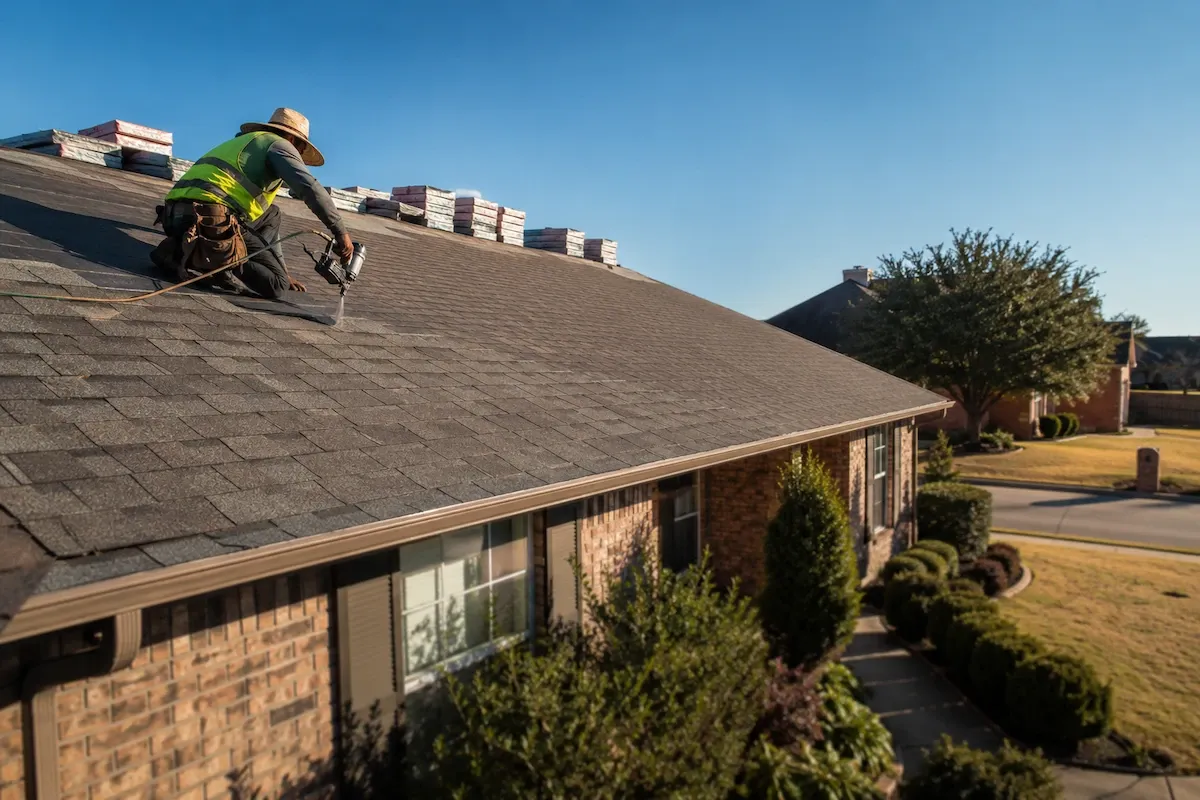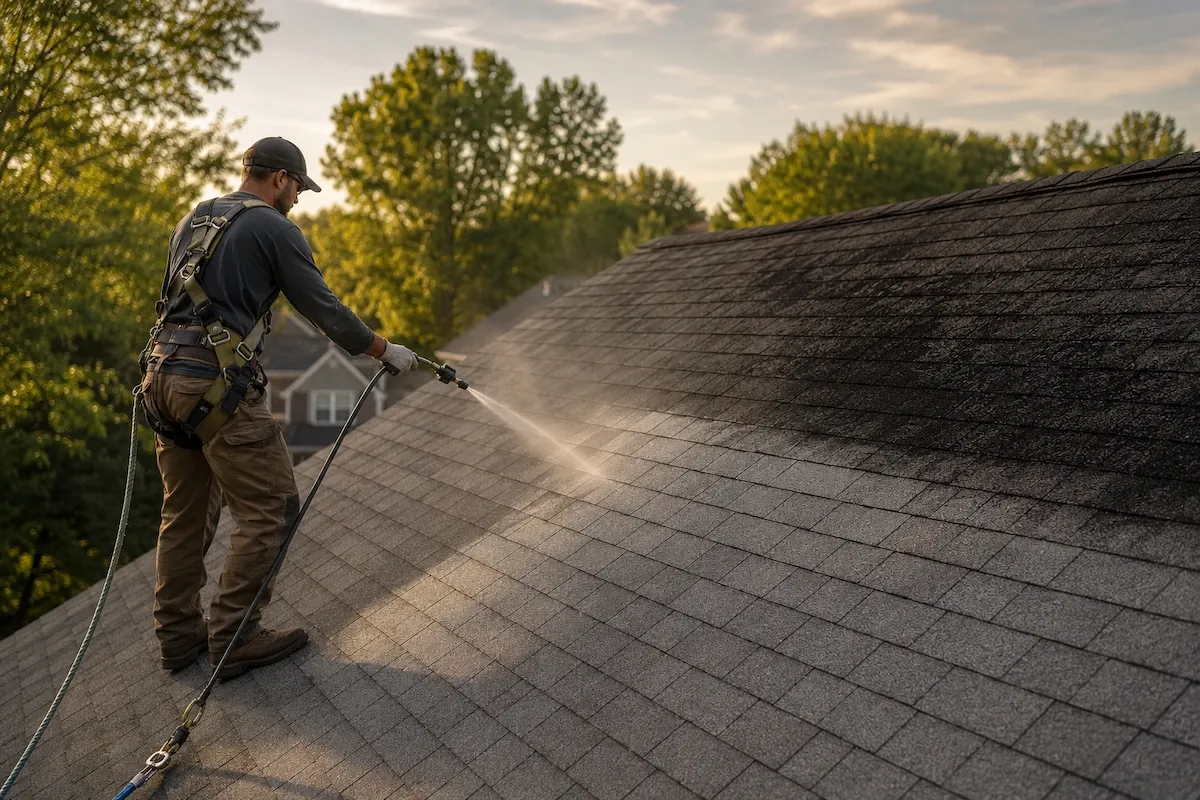
The black streaks running down your roof are not dirt, and they are not mold. They are a living cyanobacterium, and the fix is cheaper than most homeowners expect: a typical professional roof cleaning runs $295 to $650, with a national average around $460.
The catch is that the most common way to “clean” a roof, blasting it with a pressure washer, is also the fastest way to ruin it. The trade group that represents shingle manufacturers says it plainly: never pressure wash asphalt shingles. Do it anyway and you can strip the granules, shorten the roof’s life, and void the warranty in one afternoon.
This guide covers what roof cleaning actually costs in 2026, the difference between the methods (and which one is safe for your roof), what those streaks and green patches really are, and when cleaning is worth it versus when your money is better spent elsewhere.
What Roof Cleaning Costs in 2026
Most homeowners pay between $295 and $650 for a professional roof cleaning, and the national average lands near $460. Priced by area, that works out to roughly $0.15 to $0.70 per square foot, with the safe soft-wash method most roofs need sitting in the $0.30 to $0.60 range.
The spread is wide because “roof cleaning” covers everything from a light algae rinse on a small ranch house to a multi-treatment moss removal on a steep, two-story roof. Here is how price tracks with roof size.
| Roof Size | Typical Total Cost |
|---|---|
| Small (under 1,200 sq ft) | $200 – $450 |
| Medium (1,200–1,700 sq ft) | $350 – $650 |
| Large (1,700–2,500 sq ft) | $500 – $900 |
| Extra large (2,500+ sq ft) | $750 – $1,200+ |
These are ranges, not quotes. The same roof can land at either end depending on pitch, height, and how much living growth has to come off. Always get the number in writing, broken out by what is included.
The Cost Drivers That Actually Move the Number
A few specific variables explain almost all of the price difference between a $300 job and a $1,000 job.
Roof size. This is the biggest factor, since most cleaners price per square foot. Each additional roofing square (100 square feet) adds roughly $20 to $60.
Pitch and height. A steep roof or a multi-story home means harnesses, longer reach, and slower, more careful work. Expect a steep pitch to add $0.15 to $0.20 per square foot, and a second story to add $0.10 to $0.20 per square foot.
Type of growth. Light algae staining rinses off with a chemical treatment. Thick moss and embedded lichen are slow, manual work, and they push the price up.
Roof material. Asphalt and tile require gentle soft washing. Metal can tolerate low-pressure washing, which is sometimes faster. The method drives the labor time, and labor drives the bill.
Access and landscaping. Tight lots, delicate plantings that need to be tarped and rinsed, and hard-to-reach roof planes all add time.
Soft Wash vs. Pressure Washing: The Choice That Matters Most
This is the part that decides whether roof cleaning protects your roof or quietly damages it.
Soft washing uses a low-pressure sprayer (think garden-hose pressure) to apply a chemical solution that kills algae, moss, and lichen, lets it dwell, then rinses gently. It does the work with chemistry, not force. This is the only method asphalt shingle manufacturers approve, and it is safe for shingles, tile, slate, and cedar.
Pressure washing uses high-force water to physically blast growth off the surface. On a metal roof, that can be fine. On asphalt shingles, it is destructive. The Asphalt Roofing Manufacturers Association (ARMA) states that high-pressure washing systems are likely to damage asphalt roofing and should not be used to remove algae or any other stains. The force knocks loose the mineral granules that shield the asphalt from UV, which accelerates aging and can cause premature failure.
| Method | Cost Per Sq Ft | Safe For | Avoid On |
|---|---|---|---|
| Soft wash (chemical, low pressure) | $0.30 – $0.60 | Asphalt, tile, slate, cedar | Nothing; universally safe |
| Low-pressure wash | $0.20 – $0.50 | Metal, concrete tile | Cedar, slate |
| High-pressure wash | $0.15 – $0.45 | Metal roofs only | Asphalt, tile, cedar, slate |
| Moss/lichen manual removal | $0.20 – $0.75 | Heavy established growth | Not a standalone fix |
If a contractor shows up wanting to pressure wash your shingle roof, that is your signal to stop. It is the single most common way a “cleaning” turns into a roof-shortening mistake.
What Those Black Streaks and Green Patches Actually Are
Knowing what you are looking at tells you what it will take to remove it.
Algae (the black streaks). The dark streaks on most roofs are caused by Gloeocapsa magma, a blue-green cyanobacterium. It feeds on the limestone filler in asphalt shingles and produces a dark pigmented sheath to protect itself from sunlight, which is the staining you see. It spreads through airborne spores, thrives in humid and coastal climates, and by the time it is visible it has usually been growing for several months. Early on it is mostly cosmetic.
Moss (the green, fuzzy clumps). Moss is an actual plant, not a stain. It holds water like a sponge, and over time it can lift shingle edges and trap moisture against the roof, which is more damaging than algae. Moss is common on shaded, north-facing slopes and in damp climates like the Pacific Northwest.
Lichen (crusty, gray-green spots). Lichen is the toughest of the three, a composite fungus-algae organism whose root-like structures penetrate into the granule layer. That is why scrubbing it off can take granules with it, and why it usually needs a longer chemical dwell time rather than force.
How a Proper Roof Cleaning Is Done
A correct soft wash follows a predictable sequence. ARMA’s published guidance describes the core of it.
- Protect the surroundings: wet down and tarp landscaping, since the cleaning solution can harm plants.
- Apply a 50:50 mix of laundry-strength liquid chlorine bleach and water with a low-pressure sprayer.
- Let the solution dwell on the surface for 15 to 20 minutes so it kills the growth, without letting it dry completely.
- Rinse thoroughly with low-pressure water.
- Remove loosened moss gently. ARMA notes that moss will loosen over time and can be removed with a leaf blower, and that severe cases may take more than one treatment.
The algae washes away with subsequent rains rather than needing to be scrubbed. The whole point is that the chemistry does the work, so there is never a reason to crank up the pressure on a shingle roof.
DIY vs. Hiring a Pro
The math on doing it yourself is closer than for most home projects, but the risk is higher.
Lean toward DIY if: your roof is low-pitched and single-story, the growth is light algae rather than heavy moss, and you are comfortable working at height with proper fall protection and chemical PPE. The materials (bleach, a pump sprayer, a surfactant) are inexpensive.
Hire a pro if: the roof is steep or multi-story, there is established moss or lichen, you would be mixing and applying chlorine near landscaping, or your shingle warranty terms are strict about cleaning methods. A professional carries insurance, knows the dwell times, and protects your plantings, and the cost is often not much more than buying and storing the equipment for a once-every-few-years job.
Whatever you choose, the non-negotiable rule is the same: no pressure washing on shingles or tile.
How Often to Clean, and How to Keep Growth From Coming Back
Most roofs do well with a cleaning every two to five years. Humid, coastal, or heavily shaded roofs sit at the short end of that range; dry, sunny, open roofs at the long end. The honest trigger is visual: clean when staining or moss returns enough to hold moisture, not on a rigid calendar.
Prevention is cheaper than repeat cleaning:
- Algae-resistant shingles. If you are reroofing in a streak-prone area, choose shingles with copper or zinc in the granules. ARMA notes these are specifically designed to inhibit algae growth for extended periods. This is the most durable fix because it is built into the roof.
- Zinc or copper strips. On an existing roof, a metal strip installed near the ridge releases ions when it rains, suppressing regrowth on the slopes below.
- Trim back trees. More sunlight and airflow means less moisture, which slows both moss and algae. It also keeps debris off the roof.
When Cleaning Is the Wrong Spend
Roof cleaning is cosmetic and protective, but it does not rejuvenate a worn-out roof. If your shingles are cracked, curling, bald in spots, or shedding granules into the gutters, a wash makes a tired roof look briefly better without adding any real life.
Before spending on cleaning an older roof, it is worth understanding where it sits in its lifespan. Our guide on how long a roof lasts by material type helps you gauge that, and repair versus replacement walks through the math when a roof is near the end. If the roof is sound and just stained, cleaning is a smart, low-cost way to protect it and restore curb appeal. If it is failing, that money belongs toward a new roof instead.
Regular cleaning also pairs naturally with the rest of your upkeep. Folding it into a seasonal roof maintenance routine, alongside gutter clearing and a twice-yearly look for damage, is how you get the full lifespan out of the roof you have.
Find a Roofer Who Cleans Roofs the Right Way
Roof cleaning is simple work that goes wrong when it is done with a pressure washer on the wrong surface. The fix is hiring someone who soft washes shingles and tile and reserves high pressure for metal. Find top-rated roofers in your area on Roofer Directory, compare ratings and reviews, and connect with professionals who serve your zip code. You can also request a free estimate from a local contractor for cleaning, inspection, or both.
For more, our guides cover how long a roof lasts, when to repair versus replace, the seasonal maintenance checklist, and the FAQ and glossary for everything else.