
In this guide
At a glance.
- The average professional roof inspection costs $175 to $350, depending on your roof's size and accessibility. Catching a problem early can save you $5,000 to $15,000 in damage.
- Clogged gutters are the single most common cause of preventable roof damage. Professional cleaning runs $150 to $250 per visit, and your roof needs it at least twice a year.
- Poor attic ventilation can cut your roof's lifespan by up to 50% and void your manufacturer warranty if the damage is traced back to inadequate airflow.
- Most homeowners skip fall maintenance. That's a mistake. The repairs you don't make before winter become the emergencies you pay double for in January.
- 85% of roof problems are visible from the ground if you know what to look for. A pair of binoculars and 20 minutes can save you thousands.
Most homeowners think about their roof twice: the day it goes on and the day it starts leaking. Everything in between gets ignored. That gap is where the expensive problems grow.
The thing about roof damage is that it compounds. A small issue you could have fixed for $200 in April becomes a $2,000 emergency in December. Water doesn’t wait for your schedule. It finds the gap, soaks the deck, rots the framing, and by the time you see a stain on your bedroom ceiling, the damage behind that drywall has been building for months.
The good news is that roof maintenance isn’t complicated. It doesn’t require a lot of money, specialized tools, or climbing onto your roof (in fact, please don’t). What it requires is consistency and knowing which tasks actually matter versus the ones that are just noise.
The Two Inspections That Matter Most
The National Roofing Contractors Association recommends inspecting your roof twice a year, in spring and in fall. That recommendation isn’t arbitrary. Spring catches whatever winter did to your roof. Fall catches whatever summer did and prepares you for winter.
You don’t need to hire someone for these. About 85% of common roof problems are visible from the ground with a pair of binoculars. Walk around your house and look for:
- Missing, cracked, or curling shingles. These are your roof’s first line of defense. When they fail, water gets in.
- Damaged or lifted flashing. Metal flashing around chimneys, vents, skylights, and wall intersections is a common failure point. Look for gaps, rust, or sections that have pulled away.
- Sagging sections. Any dip or wave in your roofline is a structural issue that needs professional attention immediately.
- Gutter condition. Are they pulling away from the fascia? Full of debris? Showing signs of rust or standing water?
- Debris accumulation. Leaves, branches, and dirt that sit on your roof trap moisture and accelerate wear.
From inside your attic, check for daylight coming through the roof deck, water stains on the underside of the sheathing, condensation on nails, and any musty smell that signals moisture.
If you spot anything concerning, that’s when you bring in a professional. A standard inspection runs $175 to $350 for a typical home. Drone inspections for steep or inaccessible roofs cost $225 to $375. These aren’t expenses. They’re investments that routinely save homeowners thousands in avoided damage.
Spring: Post-Winter Recovery
Spring is your damage assessment season. Winter is hard on roofs, especially in climates that see freeze-thaw cycles, ice, or heavy snow. Here’s what to focus on:
Check for winter damage. Look for shingles that are cracked, displaced, or missing entirely. Freeze-thaw cycles cause materials to expand and contract repeatedly, which loosens fasteners and breaks sealant bonds. In northern markets like Minneapolis and Denver, this is the most important spring task.
Clean your gutters. Winter deposits debris, ice residue, and granule accumulation from shingle wear. Clogged gutters cause water to back up under roofing materials, damaging the fascia, soffit, and even the foundation. Professional gutter cleaning costs $150 to $250 for a single-story home.
Inspect pipe boots and sealants. The rubber boots around plumbing vents deteriorate faster than the roofing material around them. Cracked or dried-out pipe boots are one of the most common sources of residential roof leaks, and they’re one of the cheapest fixes (typically under $200).
Trim overhanging branches. Spring growth pushes branches closer to your roof. Branches that touch or hang over the surface drop debris, scratch materials in the wind, create shade that promotes moss, and pose a direct impact risk during storms. Keep branches at least six feet from the roof surface.
Check your attic. After a long winter, look for any new water stains, condensation, or signs of moisture intrusion. If you see frost on the underside of the roof deck, your ventilation is likely inadequate.
Summer: Heat, Storms, and UV
In many parts of the country, summer is when roofs take the most abuse. UV radiation, extreme heat, and storm damage all peak between June and September.
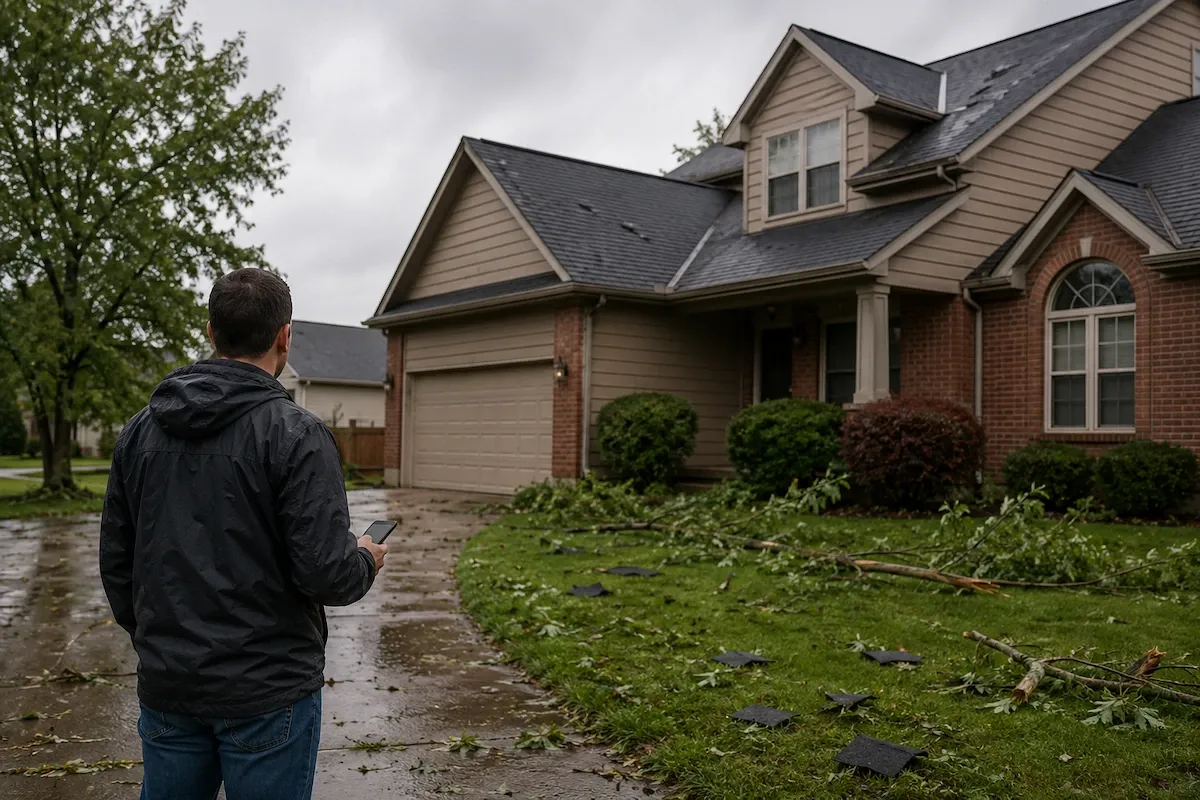
Monitor for storm damage. Summer brings hail, high winds, and severe thunderstorms across much of the country. In storm-heavy markets like Dallas, Oklahoma City, and Atlanta, post-storm inspections are critical. Check within 48 hours of any significant weather event. Document damage with photos before making temporary repairs, and contact your insurance company promptly.
Watch for signs of heat damage. Extreme heat accelerates the breakdown of asphalt shingles by drying out the oils that keep them flexible. Look for shingles that are cracking, blistering, or losing granules at an accelerated rate. If you’re seeing heavy granule accumulation in your gutters during summer, your shingles are aging faster than normal.
Check your attic temperature. On a hot day, your attic should not be dramatically hotter than the outside temperature. If it is, your ventilation is failing. Trapped heat bakes your shingles from underneath and can cut their lifespan by up to 50%. Adequate ventilation means balanced intake at the soffits and exhaust at the ridge. A roofing professional can evaluate this for a few hundred dollars, and correcting ventilation issues is one of the highest-value maintenance investments you can make.
Inspect caulk and sealants. Heat causes caulk and sealant to expand, contract, and eventually crack. Check around skylights, vent pipes, and any roof penetrations. Re-sealing a joint costs almost nothing but prevents water intrusion that can cost thousands.
Fall: Preparing for Winter
Fall maintenance is about preventing winter emergencies. The repairs you skip now will cost significantly more when they become urgent in freezing weather.
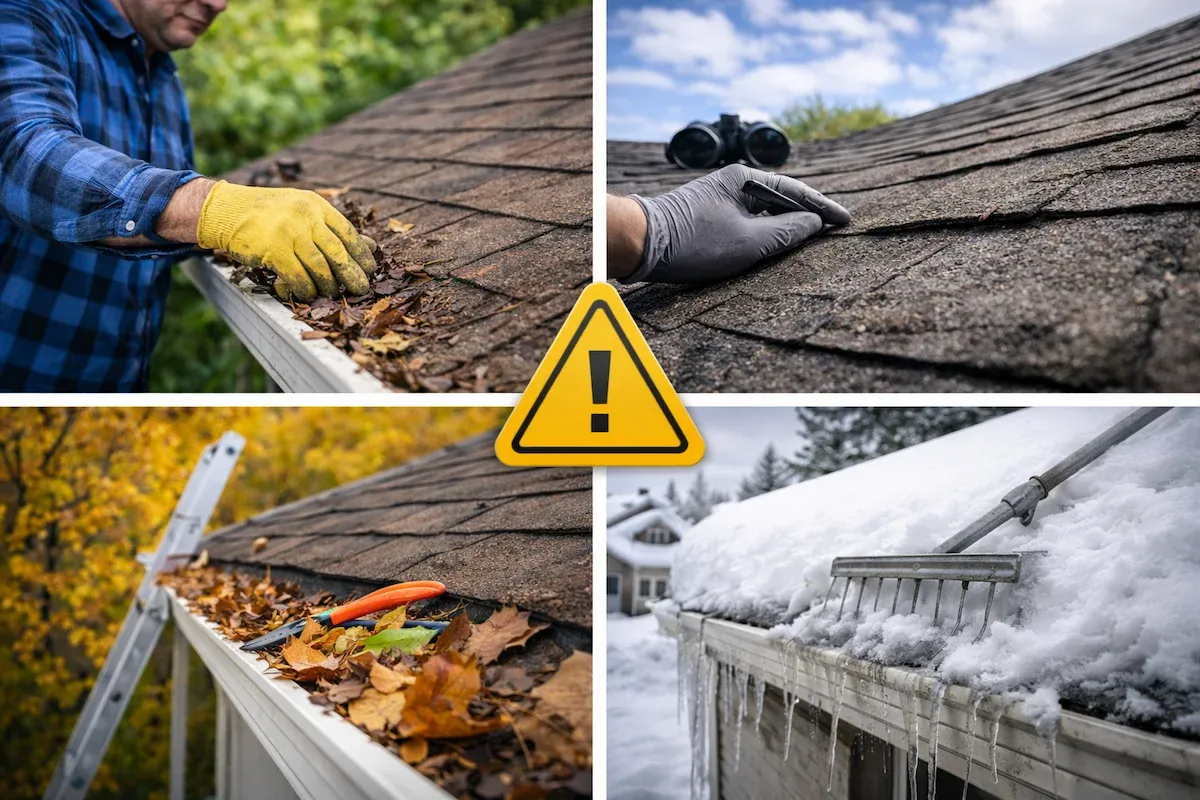
Clean your gutters again. After the leaves drop, your gutters need a second cleaning. This is arguably the most important gutter cleaning of the year. Clogged gutters in winter cause ice dams, which force water under shingles and into your roof deck. In cold-climate markets like Louisville and Kansas City, this is non-negotiable.
Replace damaged or missing shingles. Any shingles that are cracked, curling, or missing need to be replaced before winter. Sealant adhesion works best when installed in moderate temperatures (40°F to 85°F). Once temperatures drop consistently below 40°F, asphalt shingles become brittle and harder to work with, and the sealant strips that bond shingles together won’t activate properly.
Inspect and repair flashing. Flashing around chimneys, vents, and valleys should be tight, sealed, and free of corrosion. Flashing failure is one of the top causes of winter roof leaks. A flashing repair typically costs $200 to $500, far less than the water damage it prevents.
Check attic insulation. Insufficient attic insulation lets heat escape through the roof, which melts snow unevenly and creates ice dams. The recommended insulation level depends on your climate zone, but most of the country falls between R-38 and R-60. If your insulation is below the tops of the attic floor joists, it’s probably not enough.
Remove any debris from the roof surface. Leaves and organic matter trap moisture and create an environment for moss and algae to take root. Clear it before winter locks it in place.
Winter: Monitoring and Damage Control
Winter maintenance is mostly about watching, not doing. The conditions are too dangerous for most roof work, and cold temperatures limit what can be effectively repaired.
Monitor for ice dams. If you see icicles forming along your eaves or thick ridges of ice at the roof edge, you likely have an ice dam. The ice itself isn’t the problem. The problem is the pool of water that forms behind it, which has nowhere to go except under your shingles and into your home. If ice dams are recurring, the fix is inside: more insulation and better ventilation. Ice dam removal cables are a temporary measure, not a long-term solution.
Watch for snow load. Most residential roofs can handle normal snowfall. But prolonged heavy accumulation, especially wet, dense snow, can stress the structure. If you notice doors sticking, visible sagging, or cracking sounds, contact a professional immediately. Snow removal should be done by a professional with the right equipment; shoveling a roof yourself is one of the most dangerous things a homeowner can do.
Check your attic after storms. After a heavy snow or ice event, go into your attic and look for new leaks, condensation, or frost on the underside of the deck. Catching water intrusion early, even in winter, limits the damage.
Don’t climb on your roof in winter. This sounds obvious, but it needs to be said. Icy, snow-covered roofs are extremely dangerous. Asphalt shingles are brittle in freezing temperatures and can crack under foot traffic. Any exterior work should wait for safer conditions or be handled by a professional with proper safety equipment.
Gutters: The Task Nobody Wants to Do
Gutter maintenance gets its own section because it’s the single most impactful preventive task you can do for your roof, and it’s the one homeowners most commonly skip.
Clogged gutters cause a chain reaction of problems. Water that can’t drain properly backs up under roofing materials, saturates the fascia and soffit, causes ice dams in cold weather, erodes landscaping, and can even damage your foundation.
How often: At least twice a year (spring and fall). If you have overhanging trees, you may need three or four cleanings.
Cost: Professional gutter cleaning runs $150 to $250 per visit for a single-story home. Two-story homes cost 25% to 50% more. Annual maintenance typically runs $300 to $400 total.
DIY or pro: If your home is single-story and you’re comfortable on a ladder, gutter cleaning is a reasonable DIY task. For two-story homes or steep rooflines, hire a professional. The injury risk isn’t worth the savings.
Gutter guards: Gutter guards reduce the frequency of cleaning but don’t eliminate it. No guard system is completely maintenance-free, and some designs actually make cleaning harder when debris does accumulate. If you install guards, plan on at least one professional cleaning per year to clear fine debris and check the system.
When to DIY vs. When to Call a Pro
Some maintenance tasks are well within a homeowner’s capabilities. Others require a professional, either for safety reasons or because getting them wrong causes more harm than skipping them.
Safe for most homeowners:
- Ground-level visual inspections with binoculars
- Attic inspections for leaks, stains, and condensation
- Single-story gutter cleaning (with a stable ladder on flat ground)
- Trimming branches away from the roof
- Clearing debris from valleys and low-slope sections accessible from a ladder
Hire a professional:
- Any work that requires walking on the roof
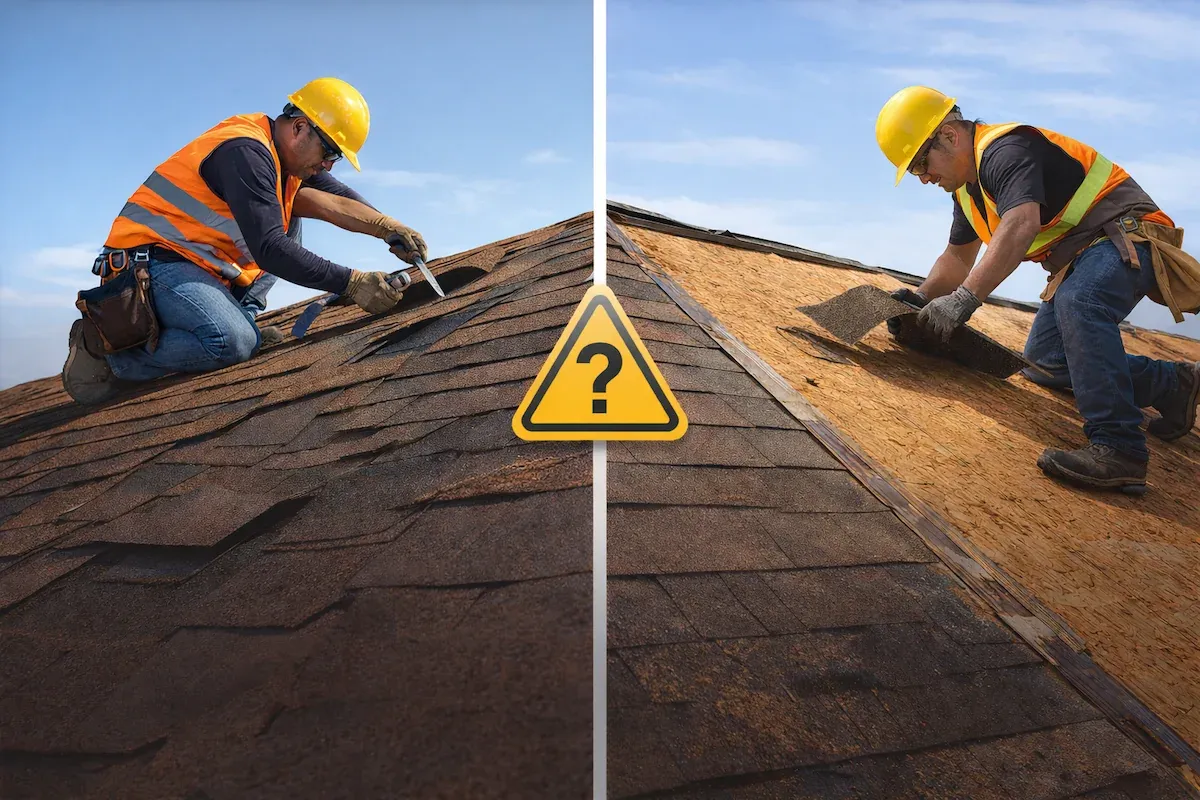
- Shingle replacement (improper nailing patterns or sealant application can void warranties)
- Flashing repair or replacement
- Ventilation assessment and correction
- Anything on a steep-pitch roof (6/12 or greater)
- Any structural concern (sagging, spongy decking)
The threshold is simple: if it involves heights, walking on roofing materials, or anything that could affect your warranty, call a licensed contractor. If you need help finding one, you can search licensed roofers in your area or get a free estimate.
What a Professional Inspection Actually Covers
If you’ve never had a professional inspection, you might wonder what you’re paying for beyond what you can see yourself. A thorough inspection covers:
Exterior assessment: The inspector examines every visible component: shingles or roofing material condition, flashing integrity at all transition points, drip edge condition, ridge cap, valley lining, pipe boot condition, and any visible damage from weather or debris.
Gutter and drainage: Gutter alignment, downspout positioning, evidence of overflow or standing water, and fascia/soffit condition behind the gutters.
Structural evaluation: Checking for sagging, dipping, or uneven planes that indicate deck or framing issues underneath.
Attic assessment: Evaluating ventilation adequacy, insulation levels, signs of moisture or condensation, roof deck condition from below, and any evidence of leaks past or present.
Documentation: A proper inspection includes a written report with photos, noting current condition, any concerns, and recommended actions. This report is valuable for insurance purposes, warranty claims, and future reference.
A standard physical inspection runs $175 to $350. The NRCA recommends a professional inspection every three to five years in addition to your own twice-yearly visual checks. For the cost breakdown of different inspection types, see our guide on how to choose a roofing contractor, which covers what to look for when hiring inspectors.
The Maintenance That Matters vs. What You Can Skip
Not everything you read online about roof maintenance is worth your time. Here’s what actually moves the needle versus what’s often exaggerated.
Worth every dollar:
- Gutter cleaning (twice yearly)
- Professional inspections (every 3 to 5 years)
- Prompt minor repairs (cracked sealant, damaged pipe boots, loose flashing)
- Attic ventilation correction
- Keeping trees trimmed back from the roof
Nice but not critical:
- Roof cleaning for cosmetic algae stains (those dark streaks are usually Gloeocapsa magma algae; they’re ugly but generally not harmful)
- Annual professional cleaning of debris (most homeowners can handle this themselves)
- Applying aftermarket roof coatings to “extend” shingle life (the evidence for these products is mixed at best)
Usually a waste of money:
- “Roof rejuvenation” spray treatments that claim to restore old shingles (these products have limited independent verification and won’t fix structural aging)
- Unnecessary full-roof moss treatments when moss is only present in small, shaded areas (spot treatment is sufficient)
Focus your budget on the tasks that prevent water from getting where it shouldn’t be. That’s what actually extends your roof’s life. According to industry data, consistent maintenance can add 5 to 15 years to a roof’s functional lifespan, regardless of material. If you want to understand what those lifespans look like by material type, our guide on how long a roof actually lasts has the full breakdown.
When Maintenance Reveals a Bigger Problem
Sometimes a routine inspection uncovers something that goes beyond maintenance. You find widespread shingle deterioration, sagging you hadn’t noticed, or evidence of chronic moisture intrusion in the attic. At that point, you’re no longer in maintenance territory. You’re in repair-or-replace territory.
If that happens, don’t panic, but don’t delay either. Get two to three professional assessments and compare their recommendations. Use the 30% rule as a guide: if repair costs exceed 30% of what a full replacement would cost, replacement usually makes more financial sense. Our guide on roof repair vs. replacement walks through the full decision framework with real numbers, and our 2026 cost guide breaks down what a replacement actually costs by material, region, and roof size.
And whatever you do, don’t let a contractor pressure you into a decision on the spot. A legitimate professional will give you a written report, explain their findings, and let you take the time to compare options. If someone is pushing you to sign today, find someone else.
Keep Your Roof Working for You
Your roof is doing its job 24 hours a day, 365 days a year. It doesn’t ask for much in return. Two inspections a year, clean gutters, and prompt attention when something looks off. That’s the formula.
The homeowners who get 25 to 30 years out of an asphalt shingle roof aren’t lucky. They’re consistent. They catch problems while they’re small, they keep water flowing where it should, and they address ventilation issues before those issues eat their warranty.
When you need a professional to take a look, find licensed roofing contractors near you on Roofer Directory. Compare ratings, read reviews, and connect directly with pros who serve your area. For answers to other common roofing questions, visit our FAQ.
A few more answers.
How often should I have my roof inspected?
Follow your roof manufacturer’s maintenance guidance and arrange a professional inspection when you notice leaks, missing roofing or a significant change after a storm. Check visible conditions from the ground between visits. Your roof’s age, material and exposure may justify a different inspection schedule.
How much does a professional roof inspection cost?
A standard physical inspection runs $175 to $350 for a typical residential roof. Drone inspections, which are useful for steep or inaccessible roofs, cost $225 to $375. Infrared inspections that detect trapped moisture run $325 to $550. Costs vary by roof size, pitch, material, and location. Some contractors offer free inspections, but these are typically sales calls rather than independent assessments.
Can I inspect my roof myself?
You can note visible changes from the ground and check accessible indoor areas for leaks without climbing onto the roof. Photograph concerns safely. A ground check cannot reveal every defect; ask a qualified roofer to inspect areas you cannot assess and explain the findings.
How often should I clean my gutters?
At minimum, twice a year: once in late spring after pollen and seed pods have fallen, and once in late fall after the leaves are down. If you have overhanging trees, you may need three or four cleanings per year. Professional gutter cleaning costs $150 to $250 per visit for a single-story home. Two-story homes run 25% to 50% more.
How do I prevent ice dams?
Ice dams form when heat escapes through an under-insulated attic, melts snow on the upper part of the roof, and the water refreezes at the colder eaves. Prevention starts inside your house, not on the roof. Ensure your attic has adequate insulation (R-38 to R-60 depending on your climate zone), proper ventilation with balanced intake at the soffits and exhaust at the ridge, and no air leaks from the living space below. Ice dam prevention cables are a temporary fix, not a solution.
Should I remove moss from my roof?
Yes, but carefully. Moss retains moisture against your roof surface and can work its way under shingles, accelerating deterioration. Remove it with a soft brush or a low-pressure rinse. Never pressure wash an asphalt shingle roof, as this strips the protective granules and can void your manufacturer warranty. Zinc or copper strips installed near the ridge can help prevent moss from returning.
Does skipping maintenance void my roof warranty?
It can. Many manufacturer warranties include maintenance requirements, and inadequate ventilation is one of the most common reasons claims get denied. If a warranty claim investigation reveals that the failure was caused by deferred maintenance, clogged gutters, or poor attic ventilation rather than a material defect, the manufacturer is within their rights to deny coverage. Keep records of your maintenance for this reason.
What is the most important roof maintenance task?
Keeping your gutters clean. It sounds unglamorous, but clogged gutters cause more preventable roof damage than any other single factor. When gutters are blocked, water backs up under roofing materials, saturates fascia boards, causes ice dams in cold climates, and can even damage your foundation. It's a $150 to $250 fix that prevents thousands in potential damage.
How do I know if my attic ventilation is adequate?
Go into your attic on a hot day. If it's noticeably hotter than the outside temperature or the air feels stagnant, ventilation is likely inadequate. In winter, look for condensation on the underside of the roof deck or on nails. Ice dams forming at the eaves are another strong signal. The general rule is 1 square foot of net free ventilation area for every 150 square feet of attic floor space, split evenly between intake (soffit vents) and exhaust (ridge vent).
Will regular maintenance actually extend my roof's life?
Yes, meaningfully. Industry data suggests that consistent maintenance can add 5 to 15 years to a roof's functional lifespan regardless of material type. The two biggest factors are keeping gutters clear (prevents water damage) and ensuring proper ventilation (prevents heat and moisture buildup). A roof that's maintained also performs better during its lifespan, meaning fewer leaks, lower energy bills, and better insurance standing.
What should I do if I find roof damage after a storm?
Document everything with photos and video from the ground before touching anything. Make temporary repairs to prevent further water intrusion, like tarping an exposed area, and keep receipts for any materials you purchase. Contact your insurance company promptly, as most policies require timely reporting. Then get an independent inspection from a licensed contractor. Do not sign anything with a storm chaser who knocks on your door offering a free inspection.
More questions? Browse the roofing FAQ & glossary.
Selected FAQ answers reviewed .
Published by RooferDirectory. Learn about our sources and methods, or suggest a correction.