
In this guide
At a glance.
- Florida insurers paid approximately $5.2 billion in claims after Hurricanes Helene and Milton in 2024, on 436,167 total claims (Florida Office of Insurance Regulation). Helene + Milton NFIP flood payouts reached $7.6 billion to nearly 66,000 families (FEMA, Feb 2026).
- Citizens Property Insurance shrank from a peak of 1.42 million policies (Oct 2023) to about 385,000 by end of 2025 — a 73% reduction. Seventeen new private insurers have entered the Florida market since the 2022-2023 reforms.
- The new OIR-B1-1802 wind mitigation form takes effect April 1, 2026. A $75 to $150 inspection can cut the wind portion of your premium by 15% to 50%, with combined credits reaching up to 88% in some configurations.
- Florida's Roof Age Law (§627.7011) blocks insurers from refusing renewal solely on roof age if an inspection shows 5 or more years of useful life remaining. SB 808 (effective July 1, 2026) expands who can perform that inspection. Pending SB 128 would require the insurer to reimburse up to $300 for the inspection.
- Citizens roof age caps: shingle and other roofs 25 years; tile, slate, clay, concrete, and metal roofs 50 years. After those thresholds, full replacement documentation is required for coverage.
Florida is the hardest place in the country to insure a roof, and the rules change almost every legislative session. The 2024 hurricane season alone (Helene and Milton) generated $5.2 billion in Florida property insurance payouts on 436,167 total claims, plus another $7.6 billion in NFIP flood payouts to nearly 66,000 families, according to Florida Office of Insurance Regulation and FEMA data current through February 2026.
That’s the backdrop. The decisions you make about roofing material, contractor selection, and inspection paperwork now directly determine whether your home is insurable next year, what you’ll pay for that coverage, and what you’ll recover when the next storm comes ashore.
This guide walks through the four roofing materials worth considering in Florida in 2026, the building code reality that constrains your choices in the HVHZ, the insurance market as it actually works (Citizens vs. private, the 20% rule, depopulation), the new wind mitigation form taking effect April 1, 2026, and the Roof Age Law everyone misunderstands.
The 2026 Florida Insurance Reality
For five years, Florida’s property insurance market was in active collapse. Carriers withdrew, became insolvent, or stopped writing new policies. Citizens Property Insurance Corporation, the state-backed insurer of last resort, ballooned to 1.42 million policies at its October 2023 peak — far beyond its intended role.
Following the 2022 and 2023 reforms (Senate Bill 2A which eliminated assignment of benefits for property claims, expansion of Citizens depopulation tools, tightened litigation rules, and rate stabilization measures), the picture in 2026 looks meaningfully different:
- Citizens policy count: ~385,000 by end of 2025 — a 73% reduction from peak.
- 17 new insurance companies have entered the Florida market.
- Citizens has filed for a 2.6% personal-lines rate cut beginning June 2026, the first rate decrease in years.
- Senate Bill 808 (effective July 1, 2026) expands who can perform the qualifying roof inspection under Florida’s Roof Age Law.
The reforms haven’t made Florida cheap. Average homeowners premiums remain high, especially in coastal markets like Miami, Tampa, and Fort Myers, and the rules around roof age and condition are stricter than ever. But the death-spiral trajectory has stabilized.
What this means for your roofing decision: material choice now drives insurability more than at any point in modern Florida history. The right material plus the right wind mitigation features can keep you in the private market with reasonable rates. The wrong combination forces you into Citizens or, increasingly, out of homeownership entirely.
Florida Building Code: The Backbone of Every Roof Decision
Every roof in Florida is installed under the Florida Building Code (FBC) 8th Edition (2023), which became effective January 1, 2024. The FBC is one of the most stringent residential building codes in the United States, and roofing requirements diverge meaningfully by zone.
The Two Code Zones
| Zone | Counties | Key Requirements |
|---|---|---|
| HVHZ (High Velocity Hurricane Zone) | Miami-Dade, Broward | Miami-Dade Notice of Acceptance (NOA) required for every roofing product. Installation per applicable Roofing Application Standard (RAS 115 for asphalt shingles, RAS 120 for adhesive-set tile, etc.). Test protocols TAS 100, 102, 103. Wind load per ASCE 7-22. Stricter inspection. |
| Non-HVHZ (rest of Florida) | All other 65 counties | FBC §1500 series. Asphalt shingles must meet ASTM D3161 or D7158 wind class for design wind speed. ASCE 7-22 load methodology. Standard product approval (FL number) required. |
The HVHZ is where Florida’s roofing rules are the most demanding in the United States. Every product on a Miami-Dade or Broward roof has to carry a Miami-Dade Notice of Acceptance (NOA) document specifying the exact installation pattern, fastener type and spacing, deck requirements, and design wind pressures the assembly is approved for. Pull a sample NOA (like GAF Timberline HDZ NOA #22-1221.04) and you’ll see it spans pages, approves the shingle for use only up to a 33-foot mean roof height, and expires periodically (Feb 2027 for that example).
The takeaway: in the HVHZ, the contractor’s familiarity with the NOA system and the local product control office is as important as the material choice. In the rest of Florida, the bar is lower but still substantially higher than typical national practice.
Wind Rating Standards You’ll See on Spec Sheets
| Standard | What It Tests |
|---|---|
| ASTM D7158 Class H | Asphalt shingle wind resistance up to 150 mph (3-second gust) — the practical Florida floor |
| ASTM D3161 Class F | Older asphalt shingle wind test — still cited but D7158 is the current standard |
| UL 2218 Class 4 | Impact resistance (hail) — highest classification, also recognized in Florida insurance discount schedules |
| TAS 100 / 102 / 103 | Florida HVHZ test protocols for tile, single-ply, and underlayment |
| Miami-Dade NOA | HVHZ-specific product approval with installation specs |
The Four Best Roofing Materials for Florida Homes
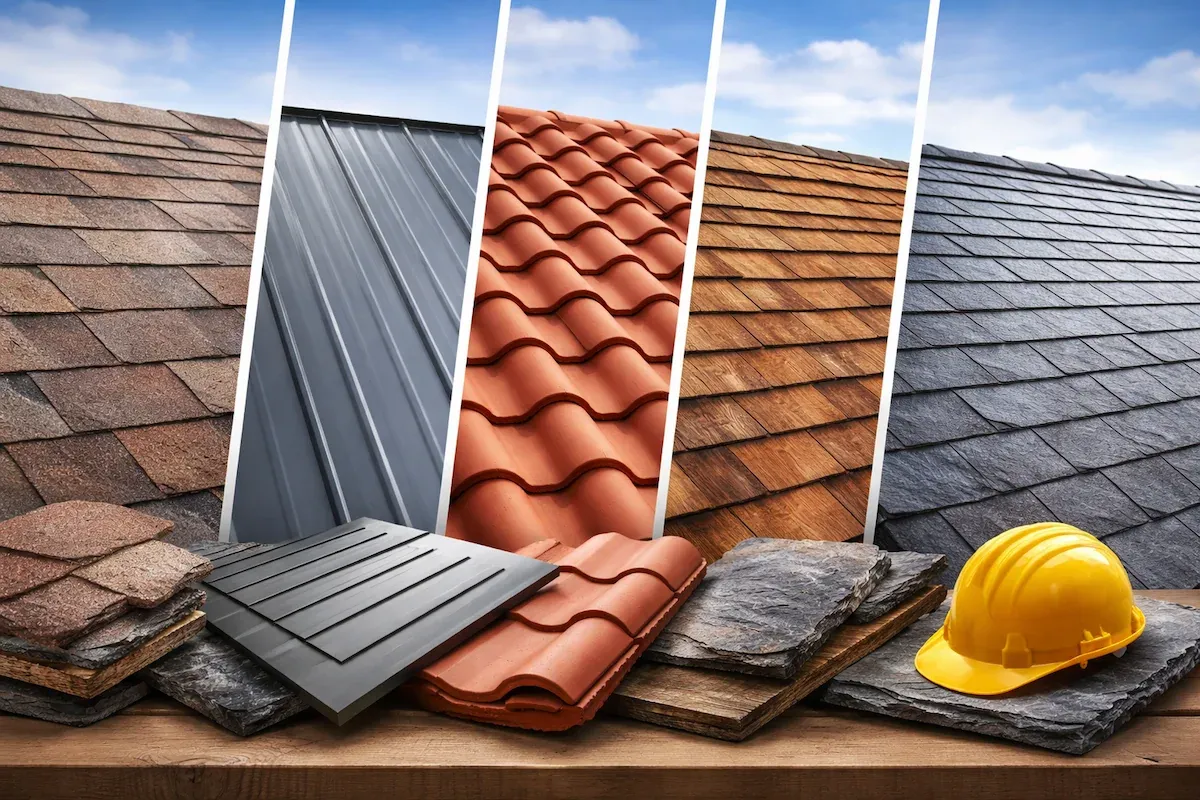
Ranked for Florida-specific performance, insurance impact, and value-per-year over the roof’s expected service life. All four meet current FBC requirements when installed to spec. The order isn’t strictly hierarchical — your structural conditions, location, and budget determine which is right for you.
1. Concrete Tile
Cost installed in Florida: $10 to $18 per sq ft (~$20,000 to $36,000 for a 2,000 sq ft roof) Florida lifespan: 50 to 75 years Hurricane performance: Excellent when installed to current FBC tile standards (RAS 120 in HVHZ)
Concrete tile is the workhorse premium roof of Florida. It handles UV, heat, salt air, and high winds extremely well, lasts longer than three asphalt roofs combined, and qualifies for the maximum roof covering credit on the wind mitigation form. It’s heavy (typically 9 to 12 pounds per square foot), so an existing structure may require engineering verification before installation. Concrete tile cracks under direct hard impact (large hail, falling tree limbs), but Florida’s hail exposure outside the panhandle and Central Florida storm corridor is much lower than in the Plains.
Best for: Single-family homes in Tampa, Sarasota, Orlando, and Fort Myers where the architectural style supports it and structural capacity is verified.
2. Standing Seam Metal
Cost installed in Florida: $10 to $18 per sq ft Florida lifespan: 40 to 70 years (use galvalume or aluminum for coastal salt exposure; not bare steel) Hurricane performance: Excellent with proper clip spacing and seam type
Standing seam metal is the fastest-growing premium choice in Florida in 2026. Lighter than tile, faster to install, fire-resistant, and reflective (cooler attic temperatures reduce HVAC load). The visual aesthetic divides homeowners — modern coastal contemporary architecture loves it; traditional Mediterranean homes look better in tile. Avoid exposed-fastener corrugated metal in Florida unless it’s a barn or outbuilding; the fasteners are the failure point in high winds and the gaskets degrade in UV.
For coastal homes in Miami, Pensacola, and barrier-island markets, specify galvalume or aluminum to handle salt air. Bare galvanized steel will pit and fail in coastal exposure within 10 to 15 years.
Best for: Coastal homes, modern architecture, energy-conscious owners, and anyone planning to add solar (standing seam plus S-5! mounting clamps eliminates roof penetrations entirely).
3. Class H Architectural Asphalt Shingle (with FORTIFIED upgrades)
Cost installed in Florida: $5.50 to $9 per sq ft (~$11,000 to $18,000 for a 2,000 sq ft roof) Florida lifespan: 20 to 25 years (versus 25 to 30 in milder climates due to UV intensity) Hurricane performance: Good with full FBC-compliant installation; excellent if installed to IBHS FORTIFIED Roof standard
Architectural asphalt is the practical choice for the majority of Florida homes outside the HVHZ. The cost-to-coverage ratio is unmatched, the major manufacturers (GAF Timberline HDZ, CertainTeed Landmark, Owens Corning Duration) all carry the wind ratings and Florida product approvals, and the IBHS FORTIFIED Roof upgrade (sealed deck, ring-shank nails, drip edge, code-plus underlayment) elevates the assembly to genuine hurricane-resistance grade for a modest cost premium ($1,000 to $2,500 over a standard installation).
The FBC requires asphalt shingles in the HVHZ to have a Miami-Dade NOA and be installed per RAS 115. As of the FBC 8th Edition, fastener penetration through sheathing has been changed from 3/16” to 1/8” minimum, and underlayment requirements have been tightened (single-ply ASTM D226 Type I underlayment is no longer permitted in the HVHZ; double-layer or self-adhered membrane is required).
Best for: Single-family and townhomes outside the HVHZ in Jacksonville, Pensacola, Orlando, and inland metros where budget is the dominant constraint and structural capacity for tile is unavailable.
4. Clay Tile (Premium / Historic)
Cost installed in Florida: $15 to $25+ per sq ft (~$30,000 to $50,000+ for a 2,000 sq ft roof) Florida lifespan: 75 to 100+ years Hurricane performance: Excellent with proper installation; longest documented service life of any FL roofing material
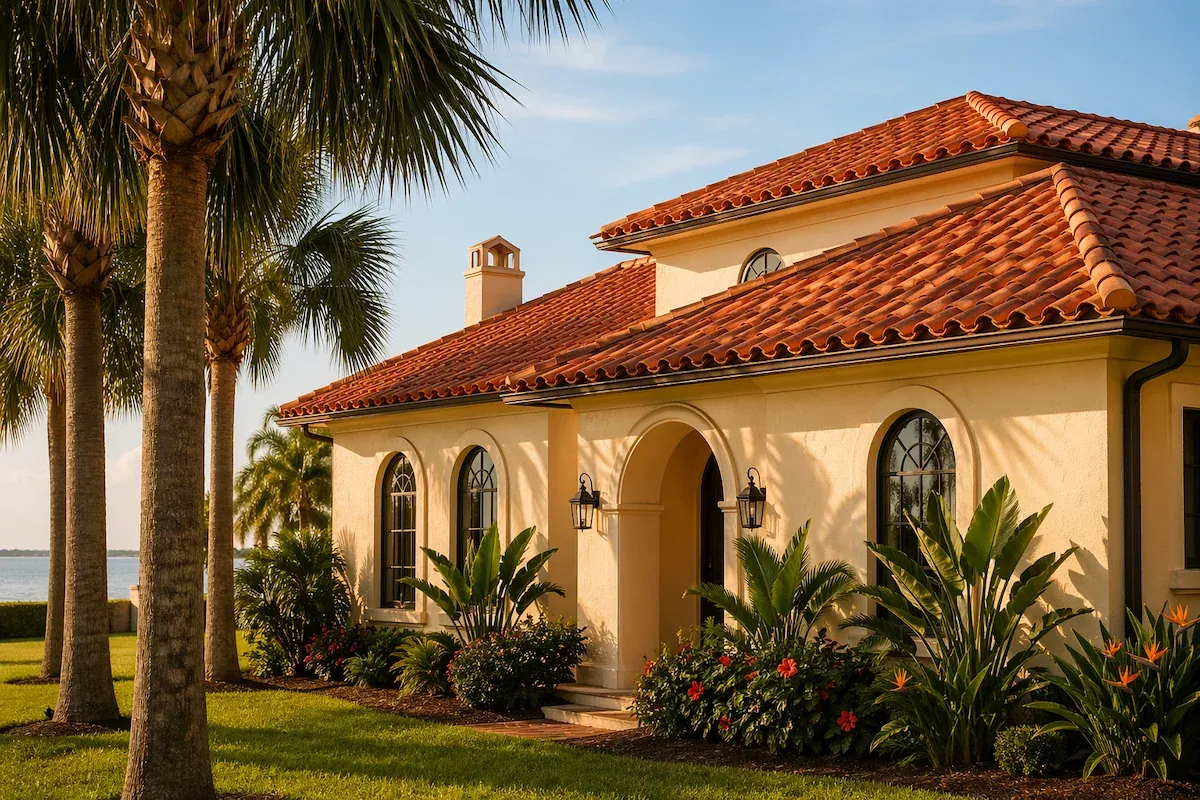
Clay tile is the luxury and historic option, particularly common on Mediterranean Revival, Spanish Colonial, and Mission style homes. It carries the highest material cost but the lowest cost-per-year over its service life. Like concrete tile, it’s heavy and requires structural verification. Genuine clay tile from quality manufacturers (Ludowici, MCA, Boral) routinely exceeds 100 years of service in Florida coastal environments.
Best for: High-end coastal homes, historic restorations, and owners with multi-decade time horizons.
Quick comparison
| Material | Cost/Sq Ft (FL Installed) | Lifespan in FL | Cost Per Year (2,000 sq ft) | Insurance Impact |
|---|---|---|---|---|
| Concrete Tile | $10–$18 | 50–75 yrs | $267–$720 | Maximum roof covering credit |
| Standing Seam Metal | $10–$18 | 40–70 yrs | $286–$900 | Maximum roof covering credit + Class 4 hail |
| Class H Architectural Asphalt | $5.50–$9 | 20–25 yrs | $440–$900 | Strong credit if Class H + FORTIFIED |
| Clay Tile | $15–$25+ | 75–100+ yrs | $300–$667 | Maximum roof covering credit |
For a national breakdown of how each material’s lifespan compares, see our guide on how long a roof lasts. For the broader 2026 cost framework, see how much a new roof costs in 2026.
What NOT to Install in Florida
Some materials still appear in catalogs and contractor pitches but should be avoided for any owner-occupied Florida home:
- 3-tab asphalt shingles: Lacking the wind rating, longevity, and insurance-credit profile of architectural shingles. Not approved for HVHZ use under RAS 115.
- Wood shake/shingle: Fire risk, rapid degradation in Florida humidity and UV, generally uninsurable in coastal Florida and frequently excluded by Citizens.
- Bare galvanized steel (in coastal/salt environments): Will pit and fail within 10 to 15 years from salt corrosion. Specify galvalume or aluminum instead.
- Low-end exposed-fastener corrugated metal panels for primary residences: The exposed fasteners and gaskets are the failure point. Acceptable for outbuildings, not for hurricane-rated primary roofs.
- Reused shingles, tile, or flashing on a re-roof: Common corner-cutting move. Reduces wind ratings, voids manufacturer warranties, and frequently fails inspection.
Florida’s Roof Age Law Explained Plainly
This is the law everyone has heard of and almost nobody understands correctly. Here’s what it actually says.
Florida Statute §627.7011 (specifically subsection 5(c), as amended by SB 808 effective July 1, 2026) provides:
For a roof that is at least 15 years old, an insurer must allow the homeowner to obtain an inspection by an authorized inspector at the homeowner’s expense before requiring roof replacement as a condition of issuing or renewing a homeowners insurance policy. If that inspection shows the roof has 5 or more years of useful life remaining, the insurer cannot refuse to issue or renew the policy solely because of roof age.
A few clarifications:
- The protection applies only to roofs ≥15 years old. There’s no statutory protection for younger roofs (and there’s also no need for it).
- The inspection is at the homeowner’s expense under current law. Pending Senate Bill 128 (2026 session) would require the insurer to reimburse the cost up to $300.
- SB 808 (effective July 1, 2026) expands who can perform the qualifying inspection. Previously a narrow list of authorized inspectors; the new list adds licensed home inspectors (under FL §468.8314) and building inspectors.
- The protection is against refusal solely on the basis of roof age. An insurer can still decline a policy for other reasons (failed 4-point inspection, location, prior claims history, etc.).
The law does NOT mean your insurer cannot ever non-renew an old roof. If the inspection comes back showing less than 5 years of useful life, the insurer is back within their rights to require replacement. Most reputable Florida roofing inspectors will tell you upfront whether the roof will pass the 5-year test.
Citizens Property Insurance: Who Qualifies in 2026
Citizens has tightened eligibility considerably as part of the depopulation effort. Here’s how it works now.
Roof Age Caps (per Citizens, updated December 2025)
Documentation of full roof replacement is required for:
- Homes with shingle or other standard roofs more than 25 years old
- Homes with tile, slate, clay, concrete, or metal roofs more than 50 years old
- Mobile homes with roofs more than 25 years old
Exceptions can be granted if a licensed inspector verifies the roof has at least 5 years of remaining useful life, but acceptance is at Citizens’ discretion and requires their version of a 4-point inspection.
The 4-Point Inspection
Homes 30 years old or older (some private carriers apply this at 20+) must pass a 4-Point Inspection covering: roof, electrical, plumbing, and HVAC. A material failure on any of the four can lead to coverage denial. Inspections cost $100 to $250 typically.
The 20% Price Test (Most Misunderstood Rule)
Under legislation passed in December 2022, you cannot get or keep a Citizens policy if a private carrier offers comparable coverage at a premium not more than 20% greater than Citizens’.
In practice:
- Citizens quote: $2,000/year
- Private carrier offer: $2,300/year (15% more) → You don’t qualify for Citizens
- Private carrier offer: $2,500/year (25% more) → You qualify for Citizens
The agent submitting your Citizens application is required to first shop the private market. Rejecting a depopulation offer twice typically triggers Citizens non-renewal.
Citizens Coverage Caps and Caveats
- Dwelling coverage cap: $700,000. Higher-value homes need supplementary coverage or a private carrier.
- Mandatory flood insurance for many Citizens policies, phased by property value.
- Assessment risk: After major hurricanes, Citizens can levy assessments on policyholders (and on every other Florida property and auto insurance policyholder) to cover deficits. This has happened multiple times historically.
The Wind Mitigation Inspection: The Single Biggest Discount
If you do nothing else after reading this article, schedule a wind mitigation inspection. Florida Statute §627.0629 requires every Florida insurance carrier to apply premium discounts for verified wind-resistant features. The Uniform Mitigation Verification Inspection Form (OIR-B1-1802) is the document that captures those features.
The 7 Categories Inspected
- Building code year (built to FBC 2001 or later?)
- Roof covering (material + installation date + Florida product approval)
- Roof deck attachment (nail size, spacing, sheathing thickness)
- Roof-to-wall connection (toe-nail vs. clip vs. single wrap vs. double wrap)
- Roof geometry (hip vs. gable; hip earns the bigger discount)
- Secondary water resistance (sealed roof deck membrane)
- Opening protection (impact-rated windows, doors, garage door, shutters)
Discount Magnitudes
| Feature | Typical Discount on Windstorm Premium |
|---|---|
| Roof covering post-2002 + Florida product approval | 5% to 15% |
| Roof-to-wall connection (single wrap) | 15% to 30% |
| Roof-to-wall connection (double wrap) | 30% to 45% |
| Hip roof geometry | 3% to 8% |
| Secondary water resistance (sealed deck) | 25% to 54% |
| Full opening protection (impact glass + shutters) | 15% to 45% |
Stacked credits can reach up to 88% off the windstorm portion of premium under FL Statute §627.0629. Real-world savings typically run $500 to $2,000+ per year, on a $75 to $150 inspection.
The April 2026 Form Update
The new OIR-B1-1802 form takes effect April 1, 2026, based on the 2024 Applied Research Associates (ARA) Residential Wind-Loss Mitigation Study commissioned under FL Statute §627.0629 (which requires the OIR to update the form every 5 years). The updated form has stricter documentation requirements, particularly for impact windows, roof coverings, and roof-to-wall connections, and reflects updated discount tables based on real-world hurricane performance data.
What this means for you: any inspection conducted on or after April 1, 2026 must use the new form. Existing OIR-B1-1802 reports remain valid for their original 5-year window, but the next inspection will use the new methodology.
For the broader insurance-claim playbook (ACV vs. RCV, deadlines, IBHS FORTIFIED, public adjusters), see our hail damage insurance claim guide — most of those rules apply to wind/hurricane claims as well.
My Safe Florida Home: Free Inspections + Up to $10,000 in Grants
The My Safe Florida Home program (mysafeflhome.com), administered by the Florida Department of Financial Services, provides:
- Free wind mitigation inspections for qualifying owner-occupied single-family homes.
- Matching grants up to $10,000 for hurricane mitigation upgrades (impact windows, opening protection, roof reinforcement).
The program is funded by the Florida Legislature. Funding is appropriated by session and demand routinely exceeds available funds, so application windows fill quickly when they open. If your home is eligible, this is one of the few programs that genuinely pays for itself within years through insurance savings.
Permits and Contractor Licensing
Florida roofing contractors must hold a state license from the Florida Department of Business and Professional Regulation (DBPR), Construction Industry Licensing Board (CILB). There are two relevant license types:
- Certified Roofing Contractor (CCC): Statewide license. Can pull permits anywhere in Florida.
- Registered Roofing Contractor (RC): Local/county license. Limited to specific jurisdictions.
Verify any contractor’s license at myfloridalicense.com. Look for the license number (CCC#### or RC####), the issue date, expiration date, and any complaint or disciplinary history.
Roofing permits in Florida are pulled by the contractor, not the homeowner. Permit cost varies by jurisdiction but typically runs $200 to $700 for a residential re-roof. In HVHZ counties (Miami-Dade and Broward), permitting is more rigorous and includes the requirement to submit Notice of Acceptance documentation for every product on the roof.
A contractor who tells you to pull the permit yourself is either unlicensed locally or trying to avoid accountability for the work. Either way, send them home. Our guide on how to choose a roofing contractor covers the full vetting process.
What to Watch After a Storm
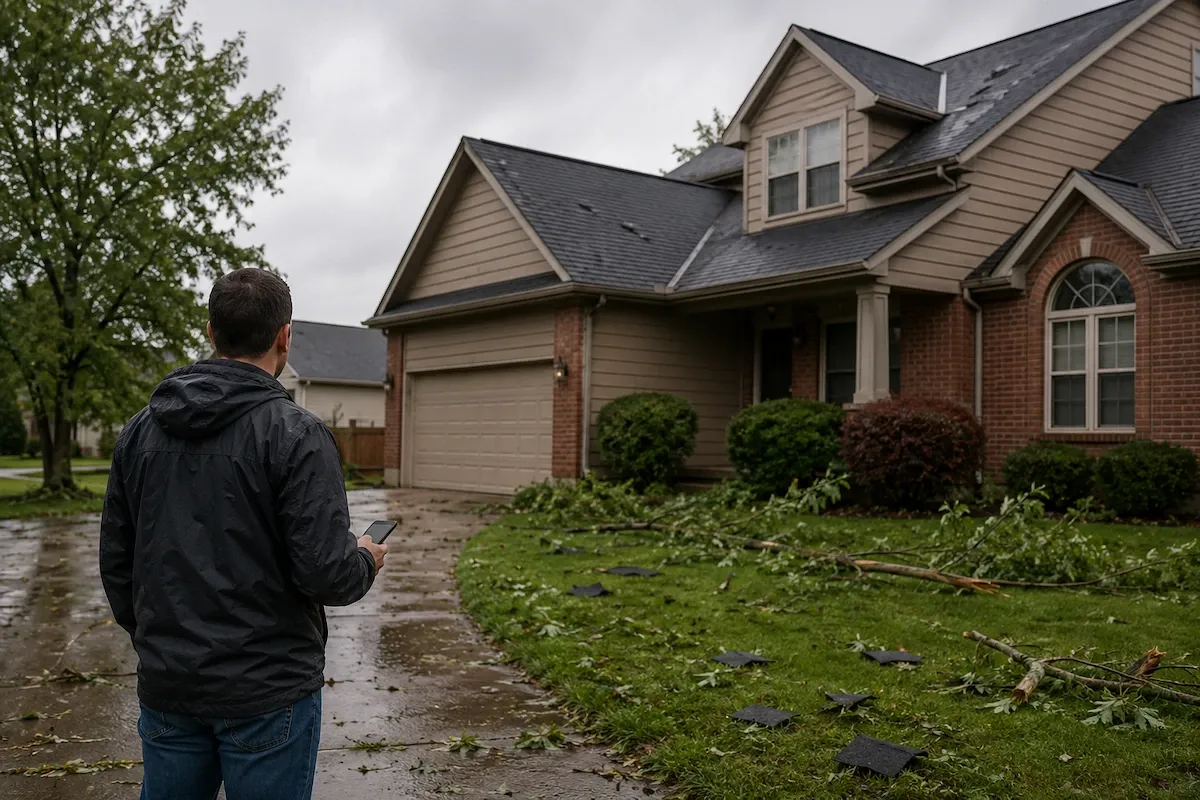
After every Florida hurricane, the same scam pattern repeats: out-of-state contractors arrive within 48 hours, knock doors, and pressure homeowners into contracts. The Florida-specific issues:
- Assignment of Benefits (AOB) was banned for property claims in December 2022 under SB 2A. Any contractor who asks you to sign one is operating under outdated practice or actively trying to deceive you.
- Deductible waiver is a third-degree felony in Florida under state insurance fraud statutes. Florida DFS Fraud Hotline: 1-800-378-0445.
- Citizens claims follow specific protocols. If you’re a Citizens policyholder, file directly through Citizens’ claims center (866-411-2742) and use only contractors verified through Florida DBPR.
For the full post-storm playbook, see our guide on storm chasers and roofing scams.
Putting It All Together: A Decision Framework
If you’re picking a roof in Florida in 2026, the order of operations:
- Confirm your zone. HVHZ (Miami-Dade or Broward) means you must use NOA-approved products installed per RAS standards. Non-HVHZ means broader product choice but still strict wind ratings.
- Check your structure. If you’re considering tile, get a structural engineer’s verification before committing. The structural cost can shift the math toward standing seam metal even at similar material cost.
- Match material to your timeline. Planning to stay 30+ years? Tile or metal is almost always cheaper per year than two asphalt cycles. Selling within 7 to 10 years? Class H architectural shingle is the value play.
- Schedule the wind mitigation inspection. Whatever you install, get the OIR-B1-1802 done after installation to capture every available discount. Use the new April 2026 form.
- Verify your contractor. CCC or RC license through myfloridalicense.com, current insurance certificates verified directly with the carriers, real local address, and reviews showing multi-year track record.
- Don’t sign anything in 48 hours after a storm. Especially anything called an Assignment of Benefits.
For homeowners weighing repair against full replacement on an existing Florida roof, our repair vs replacement guide walks through the decision framework.
Find a Licensed Florida Roofer
Roofer Directory features verified, licensed roofing contractors across Florida’s major metros. Every listing has a verified address, displayed license information, real review history, and a minimum 4.0 star rating. Browse contractors in your area:
- Miami roofers
- Tampa roofers
- Orlando roofers
- Jacksonville roofers
- Fort Myers roofers
- West Palm Beach roofers
- Sarasota roofers
- Pensacola roofers
Or find top-rated roofers anywhere in Florida on the directory homepage. To get a free written estimate from local contractors, request a quote and we’ll connect you with roofers serving your zip code.
For more, our deeper guides cover hail damage insurance claims, storm chasers and post-storm scams, how to choose a roofing contractor, the 2026 hurricane season and your roof, and the full FAQ and glossary.
A few more answers.
What is the best roofing material for a Florida home in 2026?
It depends on your zip code and your insurance situation. For most of Florida outside the High Velocity Hurricane Zone (HVHZ), an architectural asphalt shingle rated ASTM D7158 Class H (150 mph) installed by a licensed local contractor is the most cost-effective choice and qualifies for wind mitigation credits. In coastal HVHZ counties (Miami-Dade and Broward) and high-end inland markets, concrete tile and standing seam metal both deliver 40 to 70+ year lifespans and the strongest insurance discount stack. Clay tile is the longest-lasting and most premium option.
What is the High Velocity Hurricane Zone in Florida?
The HVHZ covers Miami-Dade and Broward counties under the Florida Building Code (FBC) 8th Edition (2023, effective January 1, 2024). Roofing products installed in the HVHZ must carry a Miami-Dade Notice of Acceptance (NOA), be installed per the applicable Roofing Application Standard (RAS 115 for asphalt shingles, RAS 120 for tile, etc.), and meet wind load standards under ASCE 7-22. The HVHZ also has stricter test protocols (TAS 100, 102, 103) than the rest of the state.
What is the Florida Roof Age Law?
Florida Statute §627.7011 says an insurer cannot refuse to issue or renew a homeowners policy solely based on roof age if a qualifying inspection shows the roof has 5 or more years of useful life remaining. The protection applies to roofs at least 15 years old. Senate Bill 808, effective July 1, 2026, expands who can perform the inspection (now including licensed home inspectors). Pending Senate Bill 128 would require the insurer to reimburse the homeowner up to $300 for the inspection.
What are Citizens Property Insurance roof age limits in 2026?
Per Citizens' official guidance (updated December 2025): documentation of full roof replacement is required for homes with shingle or other standard roofs more than 25 years old, and for homes with tile, slate, clay, concrete, or metal roofs more than 50 years old. Mobile homes follow the 25-year rule. Exceptions can be granted if a licensed inspector verifies the roof has at least 5 years of remaining useful life, but acceptance is at Citizens' discretion.
What is the wind mitigation inspection (Form OIR-B1-1802) and how much can I save?
A qualified inspector documents wind-resistance features such as roof connections, roof shape and opening protection. Your insurer reviews the applicable form and supporting evidence to determine credits. Savings depend on your home and policy; ask for an actual premium comparison instead of assuming a fixed percentage.
Should I get a metal or tile roof for hurricane protection?
Both perform extremely well in hurricanes when properly installed. Concrete and clay tile roofs have the best track record in Florida hurricane events and the longest lifespans (50 to 100+ years), but they're heavy (require structural verification) and expensive ($14 to $25+ per square foot installed). Standing seam metal lasts 40 to 70 years, weighs less, and is increasingly competitive on cost ($10 to $18 per square foot installed in Florida). Both qualify for the maximum roof covering credit on Form OIR-B1-1802 when installed to current FBC standards.
Why are so many Florida homeowners on Citizens?
Citizens provides an insurance option for eligible Florida properties that cannot obtain qualifying private-market coverage. Eligibility and available offers can change. Ask your agent to compare current coverage, deductibles and obligations rather than relying on an old statewide policy count.
What is the 20% rule for Citizens eligibility?
Citizens’ guidance says qualifying under this rule requires documentation that offers from authorized insurers exceed the premium for comparable Citizens coverage by more than 20%. The comparison must use matching coverage options. Ask your agent to apply the current rules to your property and offers; other eligibility requirements also apply.
Are 3-tab asphalt shingles legal in Florida?
Three-tab shingles are still legal under the Florida Building Code in non-HVHZ areas if they meet the applicable wind ratings, but in practice almost no Florida insurer or buyer will accept them today. They lack the wind ratings, longevity, and insurance-credit profile of architectural shingles, and they are not approved for use in the HVHZ (Miami-Dade and Broward) under Roofing Application Standard 115. Architectural shingles rated ASTM D7158 Class H (150 mph) are the practical floor.
What roofing material has the longest lifespan in Florida?
Clay tile, with a typical lifespan of 75 to 100+ years when properly installed and maintained. Concrete tile follows at 50 to 75 years. Standing seam metal (galvalume or aluminum, especially important for coastal salt exposure) lasts 40 to 70 years. Architectural asphalt shingles deliver about 20 to 25 years in Florida's UV and humidity (versus 25 to 30 years in milder climates).
What is the My Safe Florida Home program?
My Safe Florida Home is a state grant program that provides free wind mitigation inspections and matching grants up to $10,000 for hurricane mitigation upgrades on owner-occupied single-family homes. The program is funded by the Florida Legislature and administered by the Department of Financial Services. Funding is appropriated by session and demand routinely exceeds available funds. Check mysafeflhome.com for current application windows.
More questions? Browse the roofing FAQ & glossary.
Selected FAQ answers reviewed .
Published by RooferDirectory. Learn about our sources and methods, or suggest a correction.