
In this guide
At a glance.
- NOAA's May 21, 2026 outlook calls for 8 to 14 named storms, 3 to 6 hurricanes, and 1 to 3 major hurricanes, with a 55% chance of a below-normal season driven by an emerging El Niño.
- Colorado State University's April forecast is similar: 13 named storms, 6 hurricanes, and 2 major hurricanes, all below the 1991-2020 averages of 14, 7, and 3.
- Below-normal is not no-risk. NOAA, CSU, and the National Weather Service all stress the same point: it only takes one landfalling storm to define your season, regardless of the basin-wide total.
- Homeowners insurance premiums are projected to rise about 8% in 2026 and another 8% in 2027 (Cotality), so documenting your roof's condition before the season has never mattered more.
On May 21, 2026, NOAA issued its outlook for the Atlantic hurricane season, and the headline number is reassuring: a 55% chance of a below-normal season, with 8 to 14 named storms expected. Colorado State University’s April forecast pointed the same direction, calling for 13 named storms. Both are below the long-term average, and both point to the same cause: an emerging El Niño that tends to choke off Atlantic hurricanes.
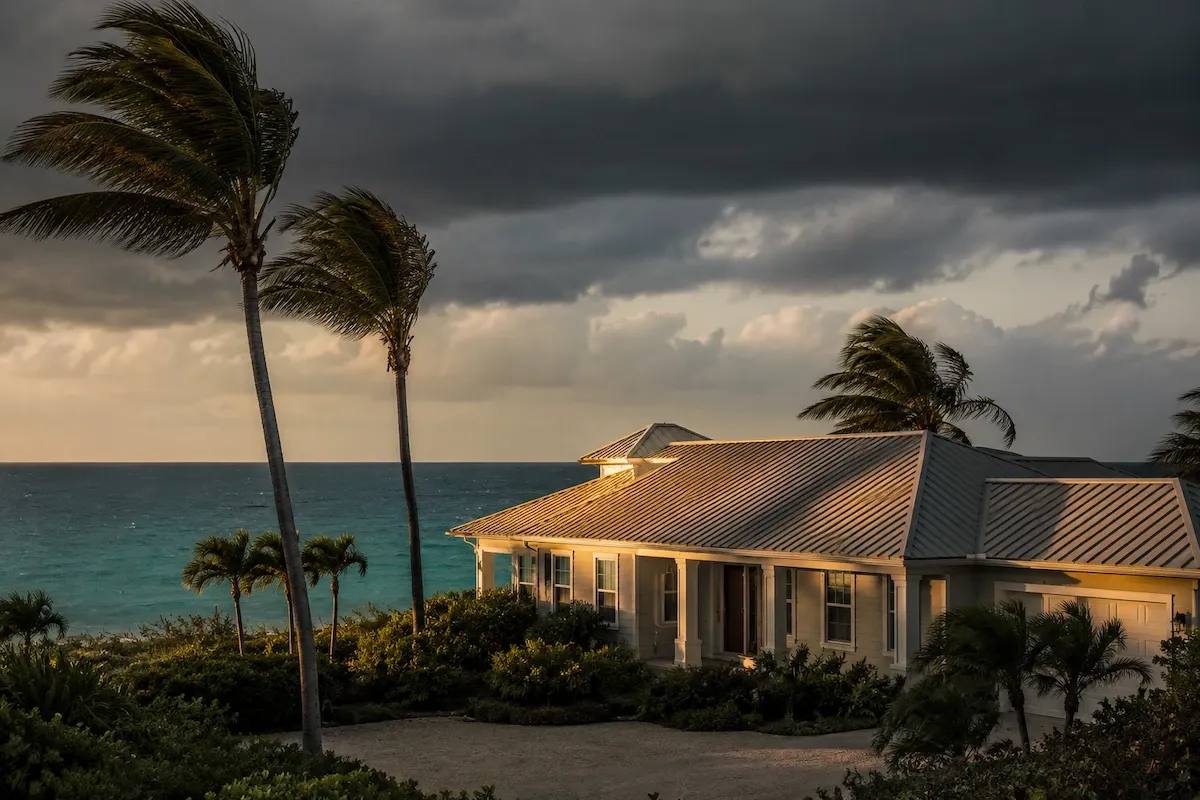
Here is the part forecasters repeat every single year, and the part that actually matters for your house: a below-normal forecast is not a low-risk forecast. It only takes one storm making landfall near you to turn a quiet season into the most expensive year of your life. Hurricane Andrew in 1992 hit during a below-normal season. Preparation is not a function of the seasonal total.
This article breaks down what NOAA and CSU actually forecast for 2026, why “below normal” can be dangerously misread, what a hurricane forecast means for your roof and your insurance, and exactly how to prepare before June 1.
What NOAA and CSU Actually Forecast for 2026
Two authoritative forecasts shape every hurricane season: NOAA’s Climate Prediction Center and the Tropical Weather and Climate Research team at Colorado State University. For 2026, they agree closely.
| Forecast | Named Storms | Hurricanes | Major Hurricanes | Issued |
|---|---|---|---|---|
| NOAA (range, 70% confidence) | 8–14 | 3–6 | 1–3 | May 21, 2026 |
| Colorado State University | 13 | 6 | 2 | April 9, 2026 |
| 1991–2020 average | 14 | 7 | 3 | (baseline) |
NOAA assigns a 55% chance to a below-normal season, 35% to near-normal, and just 10% to above-normal. The agency expects an Accumulated Cyclone Energy (a measure of total seasonal storm intensity and duration) of 45% to 115% of the median. CSU’s numbers translate to the same story: a season running a notch below the long-term norm.
NOAA will update its outlook in early August, ahead of the historical peak that runs from mid-September through October. That mid-season update is usually the more reliable signal, because by August forecasters can see how strong El Niño has actually become.
Why “Below Normal” Is Not “Low Risk”
The single most important thing to understand about a seasonal forecast: it describes the whole Atlantic basin, not your address.
The below-normal call rests on an emerging El Niño, which is expected to develop and intensify during the season. El Niño increases vertical wind shear across the tropical Atlantic, and that shear tends to tear apart developing storms. But the picture is not one-sided. Atlantic ocean temperatures are running slightly warmer than normal, and trade winds are likely weaker than average. Both of those conditions support storm development and partly counteract El Niño. That tension is exactly why NOAA landed on a probability, not a guarantee.
National Weather Service forecasters put it bluntly when the outlook dropped: the public can misread a below-normal outlook as a reason to relax. It is not. As one Meteorologist in Charge said, “All it takes is one storm to define a hurricane season, regardless of the outlook.” History backs this up. A below-normal season with a single Category 4 landfall on a populated coast does far more damage than an above-normal season where every storm curves harmlessly out to sea.
For your roof, the practical translation is simple: prepare the same way every year. The forecast changes the odds, not the stakes.
The 2026 Storm Names
The World Meteorological Organization sets the name list in advance. The 2026 Atlantic names are:
Arthur, Bertha, Cristobal, Dolly, Edouard, Fay, Gonzalo, Hanna, Isaias, Josephine, Kyle, Leah, Marco, Nana, Omar, Paulette, Rene, Sally, Teddy, Vicky, and Wilfred.
If more than 21 named storms form, NOAA moves to a supplemental list rather than the Greek alphabet, a change adopted after the record 2020 season. With a below-normal forecast, reaching the supplemental list is unlikely in 2026, but the first few names tend to appear regardless of how the season ultimately ranks.
How These Forecasts Are Made, and How Much to Trust Them
NOAA and CSU build their outlooks from statistical models trained on decades of past seasons plus dynamical models of large-scale ocean and atmosphere conditions: sea surface temperatures, the state of the El Niño/La Niña cycle (ENSO), wind shear, and more. This year, ENSO is the dominant input.
Two honest caveats the forecasters themselves stress:
- Early forecasts are the least reliable. CSU notes its April outlook has only modest long-term skill because so much can change between spring and the August-to-October peak. Accuracy improves with each update, which is why NOAA reissues in early August and CSU updates on June 10, July 8, and August 5. The August numbers are the ones to plan around.
- Knowing the ENSO state is most of the signal. Historically, simply knowing whether a season will be El Niño (suppressed) or La Niña (active) has predicted above- or below-average activity about as well as the detailed outlooks. In 2026, the expected shift to a robust El Niño is the entire reason both forecasts came in below normal.
None of that changes the homeowner takeaway. Treat the May outlook as a baseline, watch the August update, and prepare your roof either way.
What Wind Actually Does to a Roof
Hurricane categories are defined by sustained wind speed on the Saffir-Simpson scale, and the jump between categories is not linear. Damage potential rises sharply as winds climb.
| Category | Sustained winds | Typical roof impact |
|---|---|---|
| Tropical storm | 39–73 mph | Loose shingles lifted, gutters and flashing damaged |
| Category 1 | 74–95 mph | Shingle loss, exposed decking, minor structural damage |
| Category 2 | 96–110 mph | Major covering loss, gable-end failures |
| Category 3 (major) | 111–129 mph | Roof decking and some structural roof failure |
| Category 4 | 130–156 mph | Severe roof structure loss; much of the roof can be gone |
| Category 5 | 157+ mph | Total roof failure common |
Roof age compounds the risk. In testimony to the Florida Senate, the Insurance Institute for Business & Home Safety noted that a 10-year-old asphalt shingle roof has roughly a 1-in-12 chance of damage from 60 mph winds, and that the probability of damage climbs to nearly 100% against 100 mph winds. That is the entire case for entering the season with a roof in documented good condition. An older, marginal roof that limps through a quiet year is the one that fails in the first real storm.
It is also why wind-resistance features matter. A sealed roof deck, ring-shank nails, and proper roof-to-wall connections measurably improve a roof’s odds, and in many states they earn an insurance discount on top of the protection. Our Florida roofing guide details the wind mitigation inspection and the credits it unlocks, and most of those principles apply along the entire Gulf and Atlantic coast.
What a Hurricane Forecast Means for Your Roof and Insurance
Your roof is the first thing a hurricane attacks and the most expensive thing to get wrong. Two forces make 2026 a year to get ahead of the problem.
Insurance is getting more expensive and more selective. Cotality (formerly CoreLogic) projects U.S. homeowners insurance premiums will rise about 8% in 2026 and another 8% in 2027, driven largely by severe weather losses. Carriers are scrutinizing roofs harder than ever, imposing roof age limits, and in many coastal markets paying actual cash value (depreciated) rather than full replacement cost on older roofs. A roof in documented good condition is easier to insure and easier to claim on.
Coastal deductibles are separate and large. Many coastal policies carry a distinct hurricane or wind deductible, often 2% to 5% of the insured value rather than a flat dollar figure. On a $400,000 home, a 5% hurricane deductible is $20,000 out of pocket before coverage applies. Know your number before the season, not after.
Flooding is never covered by a homeowners policy. Wind-driven rain that enters through a storm-damaged roof is generally covered; rising water and storm surge are not. Storm surge requires separate flood insurance through the National Flood Insurance Program or a private flood carrier, and new policies often carry a waiting period, so the time to buy is now.
For the full claims mechanics (actual cash value vs. replacement cost, documentation, deadlines, public adjusters), see our hail damage insurance claim guide, which applies to wind and hurricane claims as well. If you live in Florida, our guide to the best roofing for Florida homes covers the state’s hurricane codes, Citizens eligibility, and the wind mitigation discount in detail.
Pre-Season Roof Prep Checklist (Do This Before June 1)
The window to prepare is now, while contractors have open schedules and you are not competing with thousands of post-storm claims.
- Get a professional inspection. A licensed roofer will find loose or lifted shingles, failing flashing, soft decking, and weak penetrations that a hurricane will exploit. Fixing them now is a fraction of the cost of fixing them after.
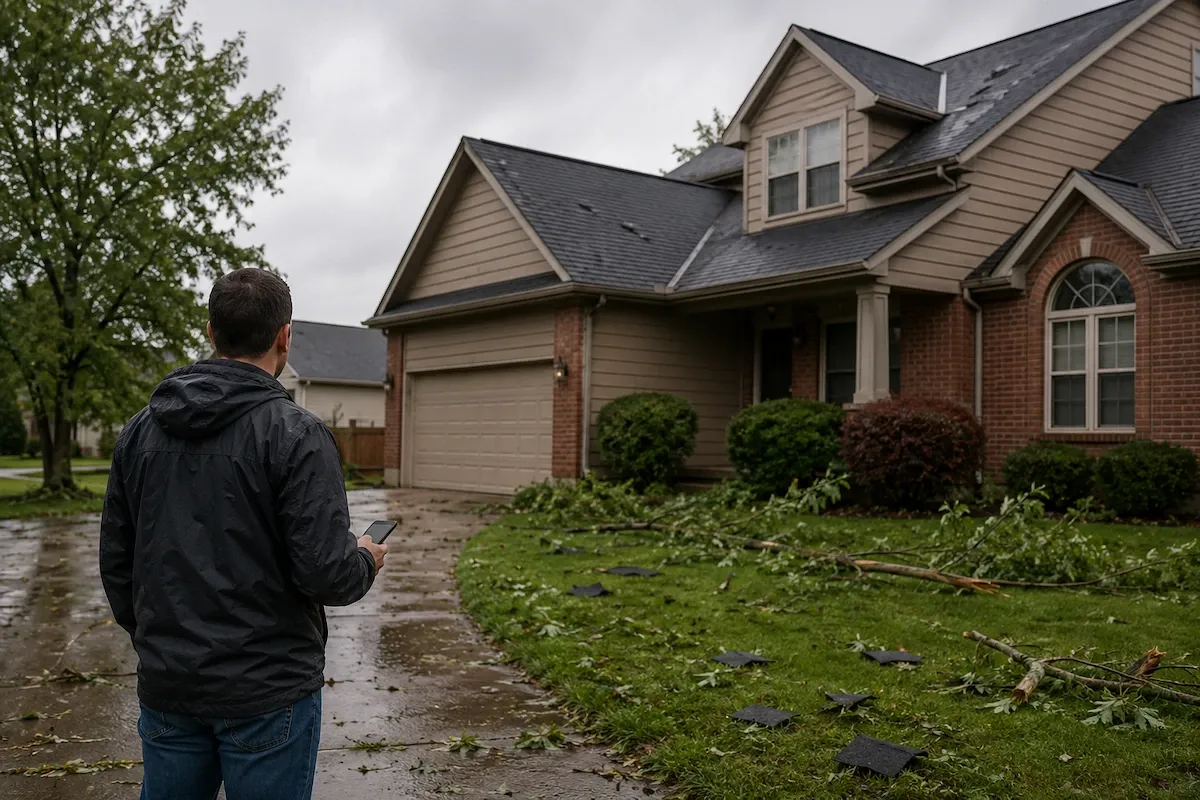
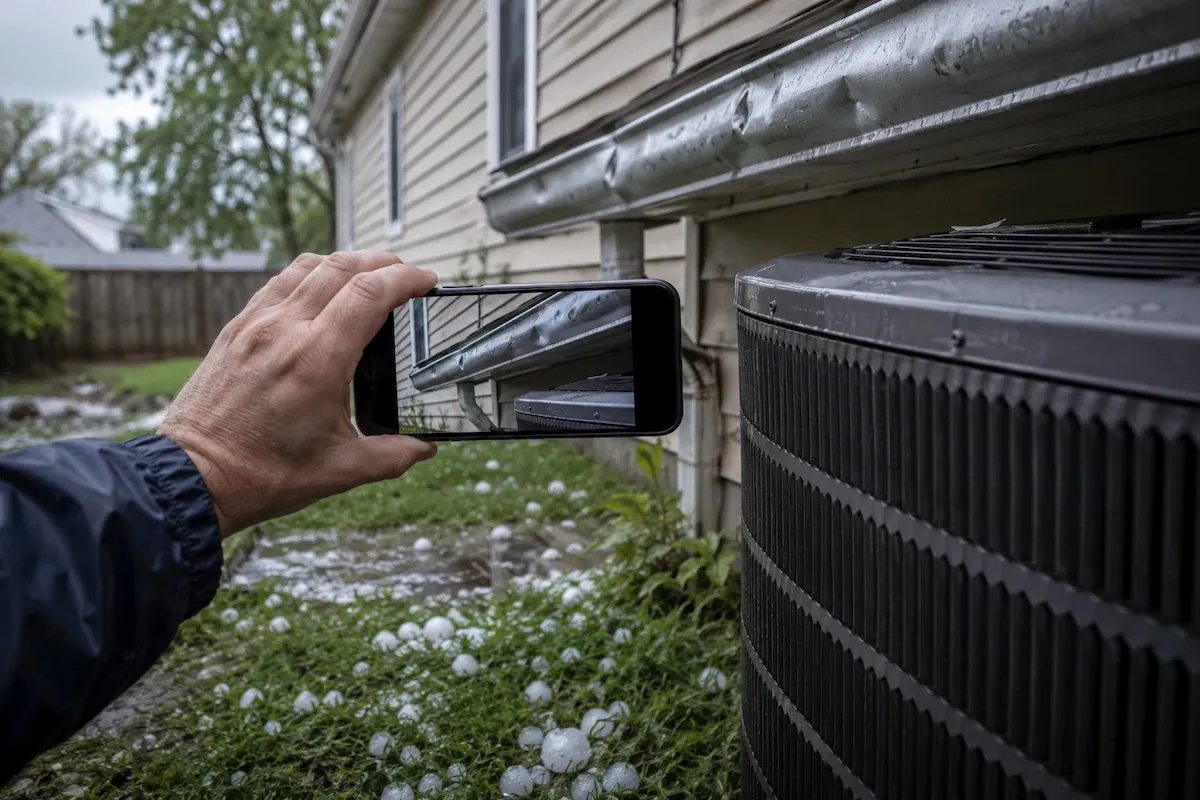
- Document the current condition. Take dated photos of every roof slope, plus the attic and ceilings. This baseline is your strongest evidence if you file a claim later.
- Trim trees and clear debris. Overhanging limbs become battering rams in high wind. Clear gutters, downspouts, and roof drains so wind-driven rain has somewhere to go.
- Secure loose items. Patio furniture, grills, and unsecured panels become wind-borne projectiles that puncture roofs.
- Confirm your coverage. Check your wind/hurricane deductible, your roof age status, whether you have replacement-cost or actual-cash-value coverage, and whether you carry flood insurance.
- Ask about wind mitigation. In wind-prone states, features like a sealed roof deck, ring-shank nails, and proper roof-to-wall connections both protect the roof and can lower your premium.
For the full seasonal maintenance routine, see our roof maintenance checklist.
After the Storm: Inspect, Document, Avoid the Scams
If a storm does hit, the first 24 hours set the tone for your entire recovery.
- Safety first. Stay clear of downed lines and do not climb a wet or damaged roof. Inspect from the ground and from inside the attic.
- Document before you repair. Photograph all damage before making any temporary fixes, then make reasonable emergency repairs (tarping, water diversion) to prevent further damage. Keep every receipt.
- Use a licensed local roofer. Get an independent inspection rather than relying on a door-knocker’s assessment. After every major storm, out-of-town crews flood the area within days.
- Watch for fraud. Be wary of any contractor who pressures you to sign on the spot, demands full payment up front, or offers to waive your deductible. Deductible waivers are illegal in many states.
Our guides walk through each step: the first 24 hours after emergency roof damage, how to inspect a roof after a storm, and how to spot storm chasers and roofing scams.
Coastal Exposure: Know Your Local History
A national forecast is an average. Your risk is local, and the best predictor of future exposure is documented history. High-history markets worth extra attention in 2026 include:
- Florida: Miami, Tampa, Fort Myers, Jacksonville, and Pensacola
- Gulf Coast: Houston, New Orleans, Baton Rouge, and Mobile
- Southeast Atlantic: Charleston and Virginia Beach
Each city page on Roofer Directory includes the local NOAA severe weather record so you can see your area’s storm history and plan accordingly. For homeowners deciding whether an aging roof can survive another season or needs replacement now, our repair vs replacement guide walks through the decision.
The Bottom Line on 2026
NOAA and CSU both forecast a below-normal Atlantic season, driven by an emerging El Niño. That is genuinely good news for the basin as a whole. It is not a reason to skip preparation for your home. The forecast lowers the odds of an active season; it does nothing to lower the damage a single landfalling storm can do to an unprepared roof. Inspect now, document now, confirm your coverage now, and you will be ready whether 2026 produces 8 named storms or 14.
Get Your Roof Inspected Before the Storms
The best time to find a problem with your roof is before a hurricane finds it for you. Find top-rated roofing contractors near you on Roofer Directory, compare ratings and real review history, and connect with professionals who serve your zip code. You can also request a free estimate or inspection from a local contractor.
For more, our deeper guides cover the roof maintenance checklist, hail damage insurance claims, storm chasers and post-storm scams, and the FAQ and glossary for everything else.
A few more answers.
What is NOAA's forecast for the 2026 Atlantic hurricane season?
NOAA’s August 6, 2026 update gives a 75% chance of a below-normal season, with ranges of 7–13 named storms, 2–6 hurricanes and 0–2 major hurricanes. These describe basin-wide seasonal activity, not the chance of a storm hitting your home. Follow current NHC and local emergency guidance.
Does a below-normal hurricane season mean my home is safe?
No. A below-normal forecast describes basin-wide storm counts, not your individual risk. Forecasters from NOAA, Colorado State University, and the National Weather Service all emphasize the same caution: it only takes one landfalling hurricane to make it a devastating season for your community. Some of the most destructive U.S. hurricanes struck during seasons forecast to be near or below normal. Prepare your roof and insurance the same way every year regardless of the seasonal outlook.
Why is the 2026 hurricane season expected to be below normal?
NOAA’s August 6, 2026 outlook cites El Niño and its expected effects on Atlantic conditions among the reasons for a below-normal outlook. Seasonal expectations can change, and lower basin-wide activity does not remove local danger. Use current warnings for decisions about an approaching storm.
How many named storms are predicted for 2026?
NOAA’s August 6, 2026 Atlantic outlook gives a range of 7–13 named storms, including storms already recorded at the time of the outlook. It is a probabilistic range for the whole basin, not a prediction of landfalls or damage at your address.
When does the 2026 Atlantic hurricane season start?
The Atlantic hurricane season officially runs from June 1 to November 30, 2026. The historical peak typically extends from mid-August through October. NOAA plans to issue an updated outlook in early August, ahead of that peak, which is usually the more reliable signal because forecasters can better assess El Niño's strength by then. The best time to prepare your roof is before June 1, while contractors are available and you are not competing with post-storm demand.
How should I prepare my roof before hurricane season?
Start with a professional roof inspection to find and fix loose shingles, failing flashing, and weak spots before a storm exploits them. Document the roof's current condition with dated photos so you have a baseline for any future claim. Trim overhanging tree limbs, clear gutters and drains, secure or store loose outdoor items that can become wind-borne debris, and confirm your insurance coverage, deductible, and roof age status. If you live in a wind-prone state, ask about wind mitigation features that can both protect the roof and lower your premium.
Will my insurance cover hurricane roof damage in 2026?
Coverage depends on the cause of damage, policy exclusions and settlement terms. A separate hurricane or wind deductible may apply, and flood coverage is a separate question. Ask your insurer to explain your roof coverage and deductible before a storm; do not assume every kind of storm damage is covered.
What should I do to my roof after a hurricane passes?
Prioritize safety first, then document everything. Once it is safe, photograph all damage from the ground before any temporary repairs, make reasonable emergency repairs (such as tarping) to prevent further water intrusion, and keep receipts. Report the claim to your insurer promptly and get an independent inspection from a licensed local roofer rather than relying solely on a door-to-door contractor. Be wary of storm chasers who pressure you to sign immediately or offer to waive your deductible, which is illegal in many states.
Is El Niño good or bad for hurricane season?
For the Atlantic basin, a strong El Niño generally suppresses hurricane activity because it increases vertical wind shear that disrupts storm formation. That is why NOAA and CSU both forecast a below-normal 2026 Atlantic season. However, El Niño tends to increase activity in the eastern and central Pacific, where NOAA forecast above-normal seasons for 2026. And even in a suppressed Atlantic season, individual storms can still form and make landfall, so El Niño lowers the odds of an active season without eliminating the threat to any single home.
Which coastal areas should be most prepared in 2026?
Every Atlantic and Gulf coast community should prepare regardless of the forecast, but high-history markets warrant extra attention. Florida metros like Miami, Tampa, Fort Myers, and Jacksonville, Gulf Coast cities like Houston, New Orleans, and Mobile, and Southeast coastal markets like Charleston and Virginia Beach all carry significant hurricane and wind history. You can review local NOAA storm records on each city's page on Roofer Directory to understand your specific exposure.
More questions? Browse the roofing FAQ & glossary.
Selected FAQ answers reviewed .
Published by RooferDirectory. Learn about our sources and methods, or suggest a correction.