

Canyon Roofing, LLC
4.9673 Google reviews
6099 E Speedway BlvdTucson, AZ 85712
Tucson office
Need roof leak repair, a full replacement, or a second opinion?
Compare Tucson roofing companies and know what to ask before you hire.
Browse freely. Contact the roofing companies you choose.
Keep clear of wet electrics and a sagging ceiling. Stay off the roof, move belongings if safe, and take photos.
When you call: “Water is getting in. Can you assess the leak, and what would temporary protection cost?”
Ask about availability directly. Listings are not a live emergency dispatch service.
01 / FIND LOCAL HELP
Compare reviews, office locations and contact details. Choose who you call.
6099 E Speedway BlvdTucson, AZ 85712

1011 S Eli DrTucson, AZ 85710

3611 S Broadmont Dr Unit 102Tucson, AZ 85713

6057 E Grant RdTucson, AZ 85712

333 E Wetmore Rd #400Tucson, AZ 85705

3149 E Prince Rd #1Tucson, AZ 85716
Try another company, town or ZIP code.
6 of 99 Tucson-area listings explored.
An office location doesn't confirm service at your address. Ask before booking.
These are existing public roofing and roofing-related business listings. The default order puts Tucson offices first, then sorts by Google review count. Ratings, hours and estimate options are saved listing details, not real-time verification. Position in this list isn't an endorsement. Confirm service coverage, current insurance and availability directly. Read our methodology.
YOUR SHORTLIST
Compare what we know, then confirm the rest on your call.
Do you handle my type of project? Can you send current insurance? Will you provide a written scope and price?
03 / A STARTING POINT FOR YOUR BUDGET
Explore a repair or a full replacement. Get a starting range and know what to ask.
Not sure what’s wrong? A roofer can find the cause before you agree to the work.
Finding where water enters comes before choosing the repair.
Ask for the leak source, the proposed repair and any water-damaged materials to be listed separately.
Access, roof material and damage beneath the surface can change the price.
Angi’s national repair ranges, not measured Tucson prices. Inspection, emergency service and additional work may cost extra.
Angi’s repair cost guideChecked Sep 20, 2026Use the total living area across all floors. The roof itself is a different size.
We use Angi’s national cost guides and estimate roof area from your living space, stories and a standard slope. These are broad planning ranges, not measured Tucson quotes.
The total reserves $1–$5 per sq ft for removal and $250–$500 for permits. A roofer may already include these in a quote. Garages, porches and hidden repairs are extra; no local-price or extra material-waste markup is added.
Approx. 2,300 sq ft of roof · planning range, not a quote
Compare the same job, not just the total.
Make sure each quote covers removal, flashing, ventilation, cleanup and any wood repairs.
Have the roof condition checked before adding panels. Coordinating both jobs can avoid removing panels later for roof work.
Confirm who removes and reinstalls existing panels, and include it in the written price.
Ask how mounting points affect the roofing and solar warranties, and get the answer in writing.
04 / YOUR ROOF & LOCAL WEATHER
Use local storm records to prepare for an inspection, and the forecast to plan a visit.
Ask about impact resistance when comparing new roofing materials.
* 2026 is incomplete — through June. NOAA has not published the later months in this archive yet. Counts may be revised.
January–June 2026: 1 hail report. January–June 2025: 0.
From 2017–2025, 93% of this area’s hail and wind records fell after June.Tucson-area county records. Wind counts mainly cover thunderstorms. Other high-wind records are not included.
| Year | Hail reports | Wind reports |
|---|---|---|
| 2017 | 1 | 16 |
| 2018 | 6 | 18 |
| 2019 | 2 | 23 |
| 2020 | 2 | 16 |
| 2021 | 3 | 32 |
| 2022 | 9 | 26 |
| 2023 | 8 | 34 |
| 2024 | 6 | 34 |
| 2025 | 5 | 18 |
| 2026 (incomplete) | 1 | 5 |
Pima County. Reports can span multiple counties and are not counts of damaged homes. Annual counts from the NOAA archive prepared Sep 18, 2026. Latest local event in this archive: Jun 17, 2026. The archive cutoff is shown below. These are county-based reports; forecast-zone wind records are excluded. A zero count does not mean no damaging weather occurred. NOAA Storm Events Database
Wind totals include county-based event records. Wind events reported only for forecast zones are not included.
Hail, wind and tornado reports from the surrounding counties, not individual roofs.
Sep 27–Oct 3, 2026
Take photos from the ground and ask for a documented roof inspection.
Use the after-storm checklistArea: Pima County. Source: NOAA/NWS Storm Prediction Center. Reporting days run noon–noon UTC. Reports are preliminary and may change.
BEFORE YOU BOOK
Choose a day to see what to discuss with your roofer.
Official NWS forecastForecast reference: Tucson, AZ. The NWS page may name a nearby community; its point forecast uses this mapped location.
Your forecast will appear here automatically.
Checking the latest National Weather Service forecast…
05 / LOCAL ANSWERS
The permit question. A way to check the company. A clearer next step.
A same-material roof-covering replacement generally does not need a permit if no structural work is involved.
Tucson requires permits for structural roof work, including decking or sheathing. Historic properties and preservation zones can require additional review.
Ask whether the job changes the material or includes decking, framing, new vents or skylights.
Use Arizona’s official contractor search to check the business name, current status and license classification.
Use the business name or credential number on your estimate.
Confirm that the license classification covers the proposed work.
Request documentation for your job. Check recent references and the written workmanship warranty.
Arizona Registrar of Contractors
Understand what an inspection should establish before deciding on a new roof.
Read the guide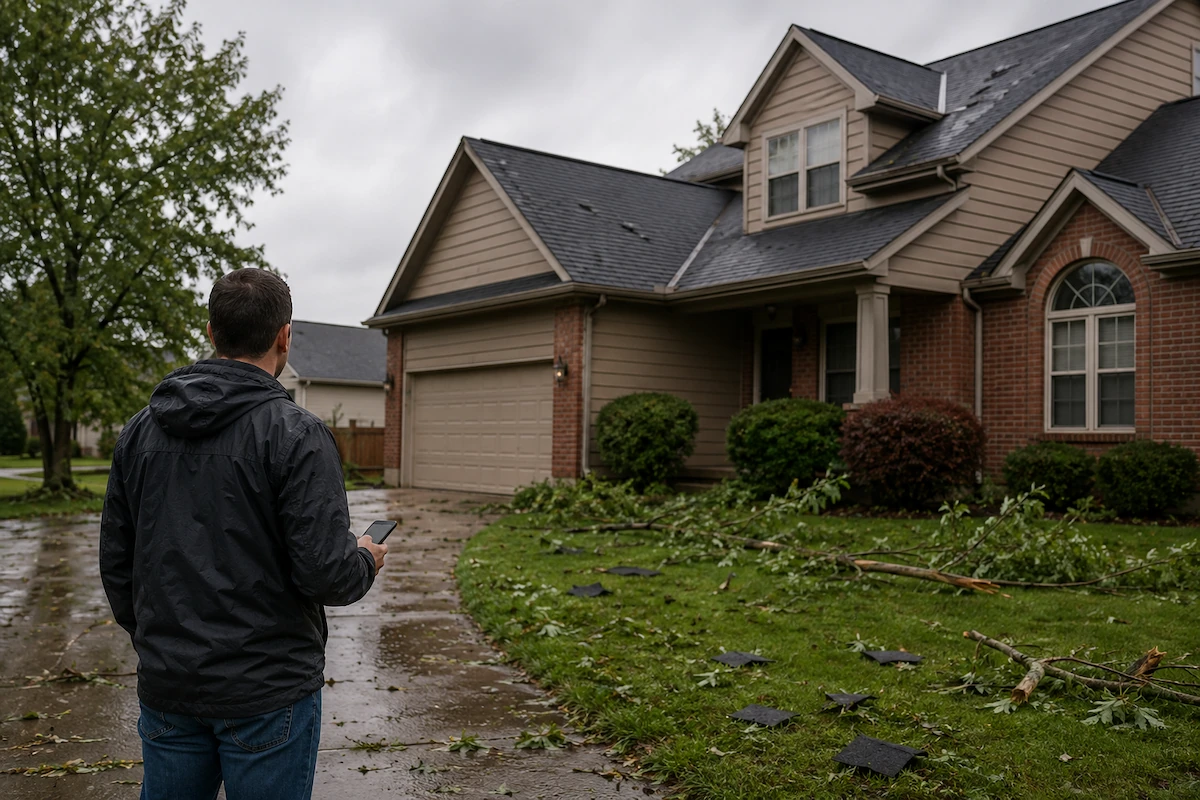
A practical checklist for recording changes and preparing for an inspection.
See the checklistKEEP EXPLORING
TUCSON, EXPLAINED
Costs, past roof work and the details that help you decide.
For a roof leak, Angi’s national guide lists $360–$1,550. That is a published job range, not a measured Tucson average. Roof access, material and hidden damage affect the work; inspection or emergency service may cost extra. Compare common roof repair costs, then ask for a written quote for your home.
For a 2,000 sq ft, one-story home, our asphalt-shingle example is $8,300–$35,000. It assumes about 2,300 sq ft of roof, a standard slope and removal of the old roof. This is a broad national planning range based on Angi cost guides, not a measured Tucson average. Garages, porches and hidden repairs can add to the price; any permit allowance may not apply to your job. Adjust the home size and number of stories for a more useful starting point, then compare written local quotes. See the sources and assumptions.
Look beyond the star rating: compare review counts and recent comments, ask for proof of insurance and relevant qualifications, and request local references for similar work. Confirm that the company serves your address. Compare the listed companies.
Ask the roofer to locate the cause, show photos and explain what a repair would address. Widespread deterioration can change the recommendation. Compare repair and replacement.
No. An area report records weather in a wider region. Ask for an inspection with photos and an explanation of the findings on your roof. Use the after-storm checklist.
Ask for the material and roof system, removal and disposal, flashing, ventilation, permits, the workmanship warranty and how unexpected decking repairs will be priced. Compare the scope as well as the total.
More questions? Browse the roofing FAQ & glossary.
YOUR NEXT STEP
Choose a few local companies, compare the details,
and ask for a written scope before you decide.
Explore roofing companies in nearby communities.