
In this guide
At a glance.
- A partial proposal needs evidence about the slopes you will keep as well as the slope being replaced.
- Ask the roofer to mark shared connections and explain where the new work stops.
- Compare written scopes, product choices and warranty boundaries before comparing totals.
Can you replace one side of a roof? Before accepting a one-slope proposal, have the whole roof assessed. For an asphalt-shingle roof, ask whether the remaining slopes are suitable to keep, how the new work will connect to them, and which product instructions, local requirements and written warranty terms apply.
One damaged slope does not tell you enough about the rest. You need a proposal that explains both the work being purchased and the roof being left behind. The checklist below helps you compare that proposal with a whole-roof quote.
This is a homeowner’s way to evaluate the scope, not manufacturer approval for a particular roof. Metal, tile and membrane systems need their own assessment.
Put a boundary around “one side”
Start with a roof photo or simple plan. Ask the contractor to label each slope and mark the proposed replacement area. “The back half” can mean different things to different bidders, especially when the house has a garage, porch or dormer.
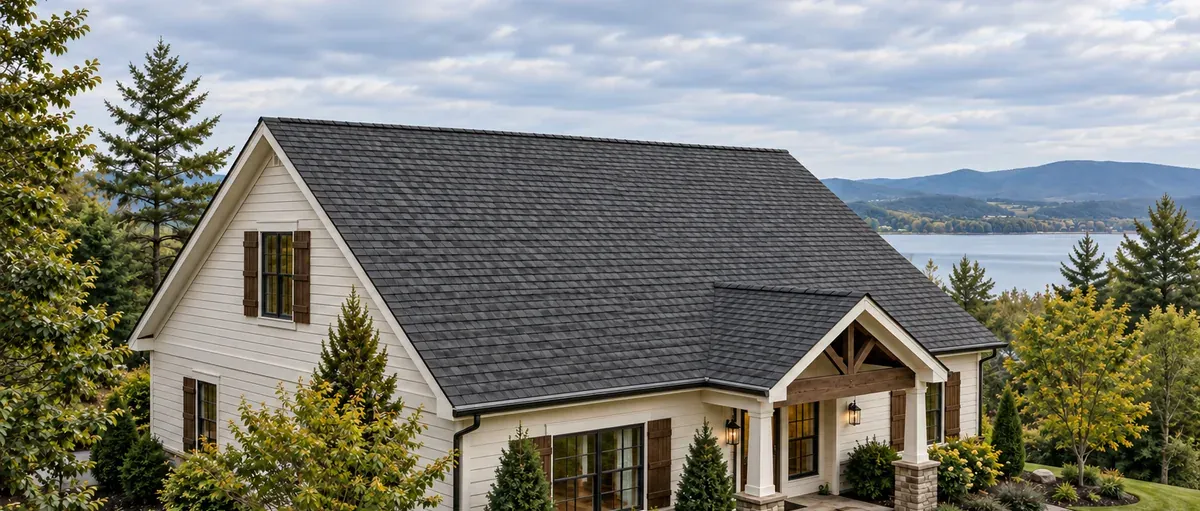
On a simple gable, the slopes meet at a ridge. The illustration shows how to name those areas for a quote. It does not show how to join roofing materials.
Specify what “replacement” includes. Does the proposal remove the existing shingles and underlayment in that area? How will the contractor assess the exposed decking? Which edge materials, vents and flashing are included, retained or excluded?
These questions prevent a comparison between unlike jobs. Replacing a complete slope, patching a damaged area and installing another roof covering over an existing one are different proposals. The quote should say which is being offered.
Ask for evidence about the roof you will keep
The damaged side may draw all the attention. The decision also depends on the condition of every slope that stays.
GAF’s April 2026 repair-versus-replacement guidance identifies age, damage extent, repair history and comparative cost as decision factors. Ask the inspector to connect those factors to your roof, with labeled photos and an explanation of the findings.
Request an answer to: “What supports keeping each of the other slopes?” A useful response describes their condition and any limitations of the inspection. “They look fine” gives you little to compare with a competing recommendation.
Share installation records, prior repairs and leak history. If sections were installed at different times, label those dates on the plan. Ask what the contractor actually inspected and what remains concealed.
Do not turn the roof’s age into a guaranteed number of years left. GAF’s August 2026 replacement guidance discusses several influences on roof condition and calls for professional evaluation of visible sagging or unevenness. A slope-only price should not leave a reported structural concern unexplained.
Pay attention to where the work stops
Have the roofer trace the replacement boundary on the plan. At each ridge, valley, wall, chimney or other opening it reaches, ask what will be disturbed and how that connection will be handled.
A valley is especially useful to discuss because it receives runoff from the roof planes that meet there. GAF’s May 2026 flashing guide explains that role and the protection needed at roof intersections and openings.
The homeowner’s question is not which flashing detail to install. It is whether the proposal accounts for the connection. Ask the contractor to identify the applicable product instructions and explain any work needed beyond the highlighted slope.
For example, a bid might include new roofing on the rear slope but say nothing about the shared ridge. Request a written description of that ridge work before treating the price as complete. The answer could change the work boundary; it should not remain an assumption.
Ask for photos from the contractor. Keep your own observations at ground level, as GAF’s flashing guidance advises, rather than climbing onto the roof to check the details.
Separate appearance from product suitability
“Matching shingles” needs more detail than a color name. Ask the roofer to identify the existing product where possible and name the proposed manufacturer, product line, profile and color.
Then separate two questions: Will the proposed materials work in this particular scope, and are you comfortable with the appearance? Request the technical basis for the first answer and a physical sample or documented comparison for the second.
If someone promises an exact visual match, ask what that promise is based on and how it will be recorded. If they say the existing shingle is unavailable, ask for the product identification and the proposed alternative. Avoid making the decision from a small online color swatch alone.
Do the same for a recommendation to replace everything “so it matches.” Ask whether the reason is appearance, a product requirement or a condition found during inspection. Those explanations lead to different decisions, and the quote should identify which one applies.
Get the warranty boundary in writing
The word “warranty” does not explain what a partial replacement covers. GAF’s updated June 2026 roof-planning guide distinguishes manufacturer coverage for material defects from installer coverage for workmanship. Neither category, by itself, answers which areas of your roof are included.
Ask for the actual documents offered with each quote, then clarify:
- New work: Which products, slopes and installation work are covered, and by whom?
- Retained roof: What existing coverage, if any, remains, and how has that been confirmed?
- Connections: Who will assess a leak reported where new work meets retained materials?
- Terms: What duration, exclusions, registration steps and claim process apply to this scope?
If a bidder says partial work automatically voids a warranty, or promises whole-roof coverage, ask for the provision supporting that statement. Have the manufacturer clarify its own terms when needed. A sales description is not a substitute for the coverage document.
Keep the marked roof plan with the contract and warranty paperwork. It gives everyone the same reference when discussing what was included.
Check local requirements and any insurance scope
Before signing, ask who will confirm the permit and inspection requirements at your address. If a bidder says that working on only one slope avoids a permit, verify that statement with the local building department. Request the applicable requirement rather than relying on an informal percentage rule.
Tennessee’s May 2026 consumer guidance directs homeowners to check applicable licensing and local requirements and to obtain a detailed written contract. Its state-specific rules are not a national standard; use the authority responsible for your property.
If storm damage is involved, ask your insurer to explain its written repair scope and the policy provisions behind it. Keep that discussion separate from the contractor’s explanation of the roof’s condition.
The Texas Department of Insurance’s April 2026 roof-insurance guidance says age or wear alone does not justify an insurance-paid new roof. Do not assume that damage to one slope establishes payment for all the others, or that a contractor’s matching recommendation settles coverage. Ask the insurer about your actual policy and claim.
Compare complete quotes, not fractions of a roof
Request a partial proposal and a whole-roof alternative where the contractor considers both reasonable. Keep the product specification and scope descriptions comparable, and ask why any differences are necessary.
Do not estimate a partial job by dividing a whole-roof total in half. Ask each bidder to price the actual work, including removal, disposal, access, connections and any permit-related work. This guide gives no partial-replacement price band because a marked area alone is not a quote.
Consider this invented comparison. One proposal includes the rear slope, ridge work and an allowance for decking replacement. Another includes rear-slope shingles but lists ridge and wood work separately. Their totals do not yet price the same job. Ask each company for the same complete scope before deciding which offers better value.
For concealed damage, agree on the process before tear-off: what evidence you receive, how extra work is priced and how you authorize it. Our decking and sheathing quote guide explains how to compare wood-work allowances without treating an allowance as proof of damage.
Also discuss the eventual work on the retained slopes. Which parts of today’s job, if any, would need to be disturbed or paid for again? Ask the contractor to identify them. Do not treat a guessed future replacement date or price as a guaranteed saving.
Decide whether the smaller scope is explained well enough
A persuasive partial proposal gives you a marked work area, evidence for keeping the remaining slopes, a connection plan and clear written responsibilities. If those answers are missing, request them before choosing on price.
When recommendations disagree, ask what finding explains the difference. Is one company identifying deterioration elsewhere? Is another unable to offer the proposed product or warranty? Or are the bids simply describing different work?
No damage percentage or repair-cost percentage, by itself, answers those questions. Use the inspection findings and applicable requirements to assess the scope, then use comparable prices to assess the choice.
Compare local roofing listings
Bring the marked roof plan and these questions when comparing companies on Roofer Directory. Verify applicable licensing with the responsible state or local authority and confirm insurance before hiring. Request an estimate from companies you have checked.
For more preparation, read our storm inspection guide, guide to choosing a roofing contractor and FAQ.
Published by RooferDirectory. Learn about our sources and methods, or suggest a correction.