
In this guide
At a glance.
- A roof valley is the inward corner where two roof slopes meet and collect runoff.
- Some valleys show a strip of metal, while others have shingles across the center.
- A leak or visible change needs an inspection before anyone can identify the cause.
Roof valley flashing is metal used to protect the inward corner where two roof slopes meet. Rain from both slopes collects in this corner, called the valley, and runs toward the roof’s lower edge.
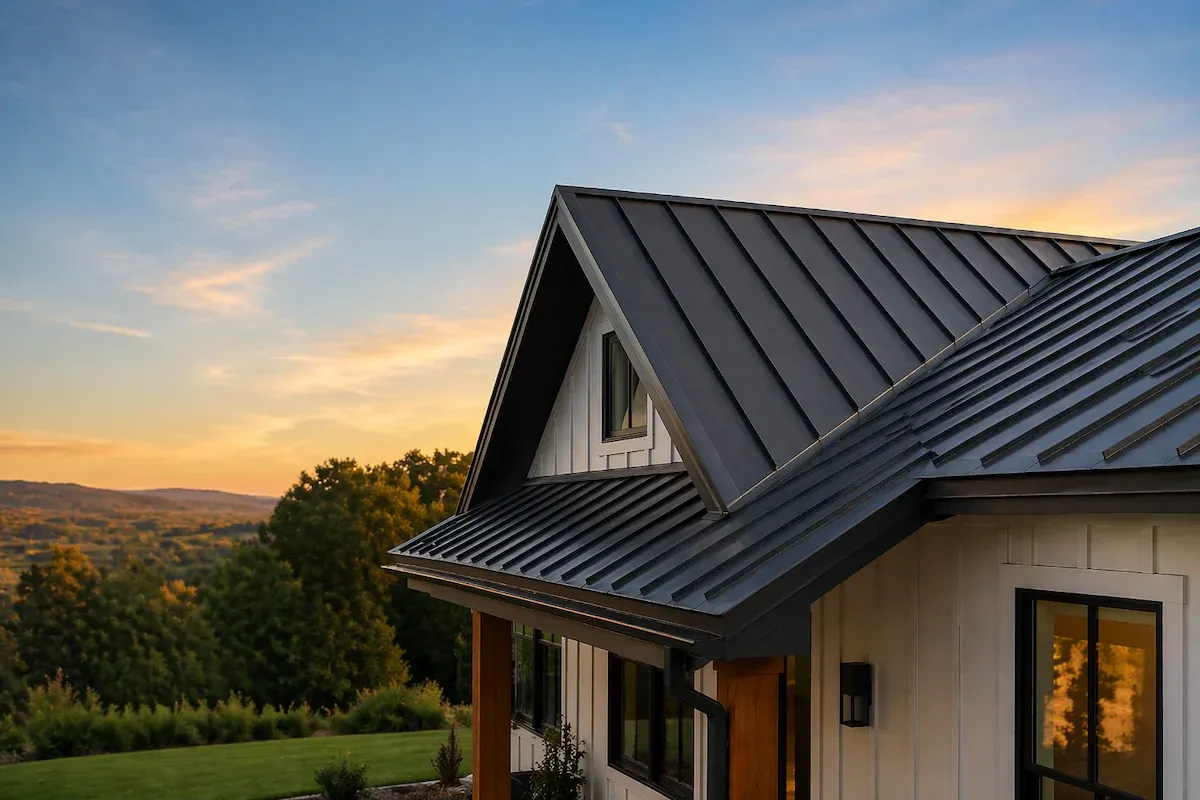
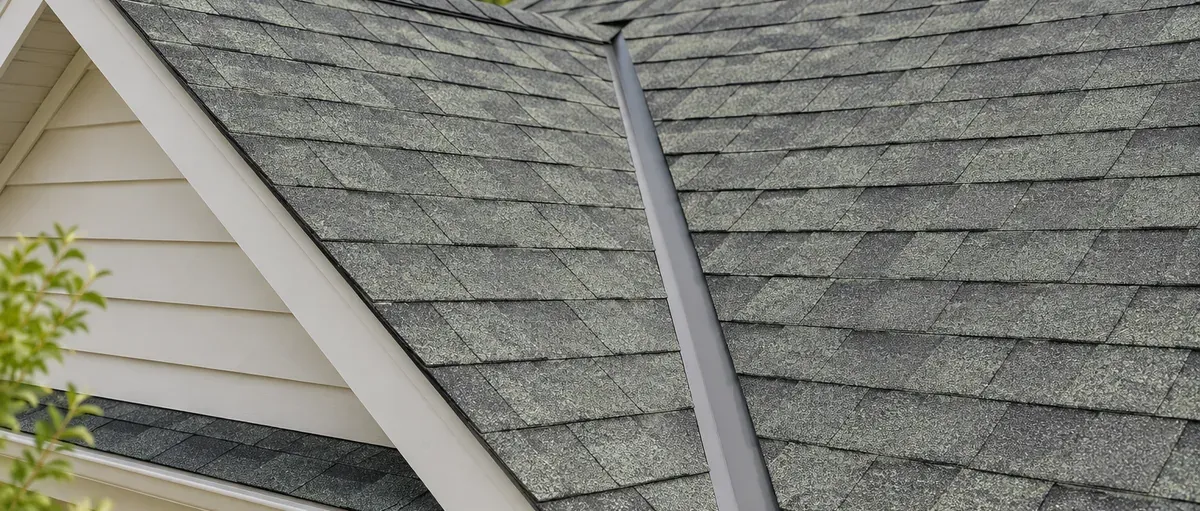
In an open valley, the metal forms a visible channel. In a closed valley, shingles cover the center. A closed valley does not necessarily have metal beneath it: a protective liner can be made from nonmetal roofing material.
The visible surface and the layer beneath it have different jobs. Understanding that difference helps you make sense of your own roof and a roofer’s recommendation.
Two roof slopesEach sends rain toward the inward corner.
One shared pathThe valley carries the collected water downhill.
Where is the valley on a roof?
Look for an inward crease between two roof sections. You might see one where a garage roof meets the main roof, or where two parts of an L-shaped house join.
Imagine rain landing on each of those slopes. Some of that water reaches the shared crease, then follows it downhill. The valley is that shared route. GAF’s guide to roof flashing explains why these meeting points need careful protection.
What does valley flashing do?
Metal valley flashing forms the exposed surface in an open valley. A valley liner is a separate layer beneath the finished roof that adds protection against water. The words “flashing” and “liner” should not be treated as names for the same piece.
Owens Corning’s January 2026 roofing specification distinguishes open-valley metal from the water barrier underneath it. A visible metal strip is only one part of that design.
Think of two views of the same valley: the finished surface from outside, and the layers visible while the roof is being built. The outside view shows the metal channel or shingles. It does not show the liner below. That is why a neat finished valley cannot tell you everything about the work beneath it.
Why some valleys show metal and others do not
An open valley leaves the metal channel exposed. A closed valley brings shingles across the center.
These words describe the finished appearance. They do not mean that an open valley has a hole or that a closed valley has been blocked.
For example, Owens Corning’s July 2026 Duration instructions allow metal and closed-cut valleys, as well as woven valleys, where shingles cross one another. Their closed-cut detail uses a nonmetal liner beneath the shingles.
The practical lesson is to avoid judging your roof by a neighbor’s roof. Imagine your neighbor gets a replacement with a visible metal valley, while yours has shingles across the same kind of corner. That difference gives you a question to ask. It does not give you a diagnosis.
The open or closed appearance is a design choice. It is not a condition report. Either style still needs a closer inspection if you notice damage or a leak.
A strip of metal stays visible.
Shingles cover the center. A liner is hidden below.
What changes are worth having checked?
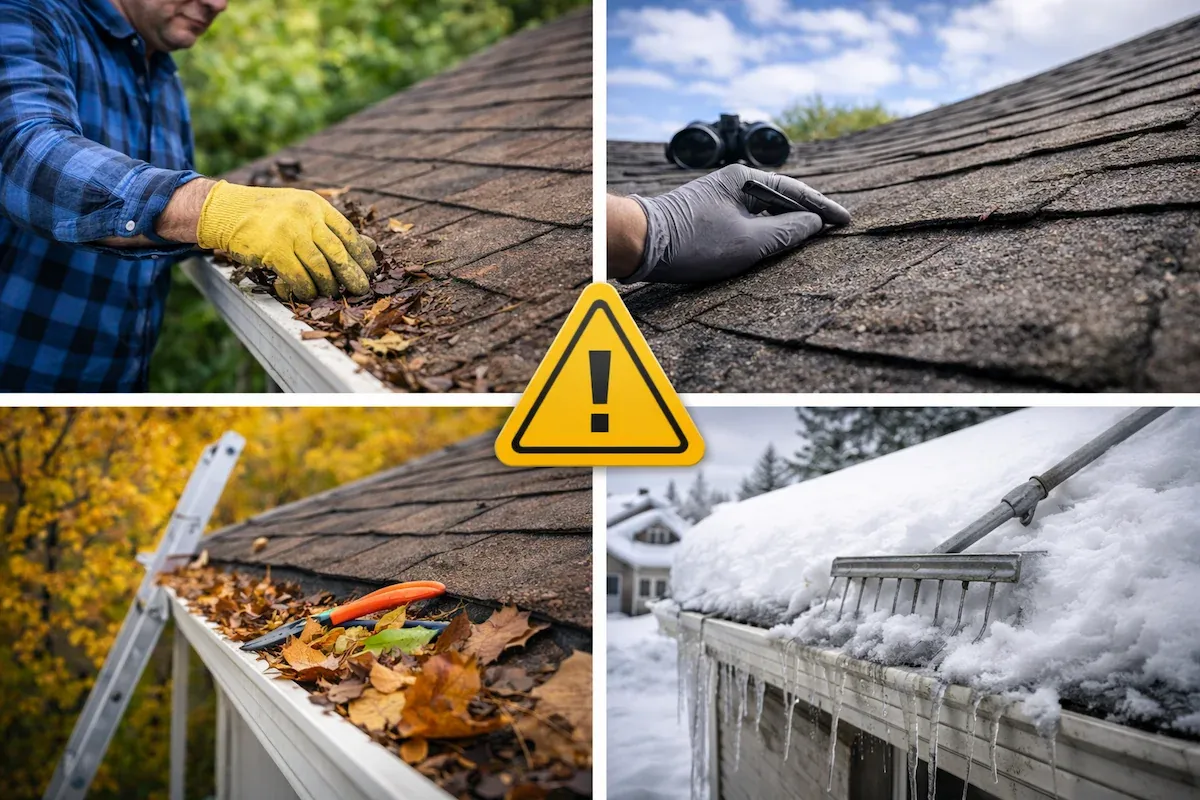
Look from the ground for loose or missing shingles and metal that looks bent or lifted. Indoors, note new water marks or active dripping. Do not climb onto the roof for a closer look.
A stain shows where water became visible indoors. It does not by itself identify the roof entry point. Record when it appeared and arrange an inspection. For example, “a new mark appeared beside the upstairs window during last night’s rain” gives the roofer a useful observation without guessing at the cause.
Arrange help promptly for an active leak. GAF’s leaking roof guide explains that leaks can come from damaged materials or installation problems. The repair should address the cause the roofer finds, rather than assume the valley is responsible.
Our roof maintenance checklist can help you keep observations together. If your concern appears only in certain weather, our guide to roof leaks during heavy rain explains what to note.
Does a valley problem mean you need a new roof?
No, a valley concern does not automatically mean a full replacement. The inspection needs to establish whether the problem is local or part of wider roof damage.
A local repair proposal should say what area and materials it covers. A recommendation to replace the whole roof should explain the wider findings that support it. Those are different scopes of work, even if the original call was about the same ceiling stain.
Our roof repair versus replacement guide can help you compare the options. If a costly recommendation is still unclear, another written opinion may help.
What to check in a roof replacement quote
Make sure the proposal says how the valleys will be handled. If there is existing metal, ask whether it will be replaced or reused. If the new roof will use a different valley style, ask for a photo of that finished look.
It also helps to understand what happens if the crew finds damaged roof boards beneath the old materials. GAF’s roof replacement breakdown highlights the importance of a clear scope and possible additional work.
Imagine one quote says “replace valley metal,” while another says only “new roof.” Before treating the prices as directly comparable, ask the second roofer to explain the valley work. One short clarification may resolve the difference.
When you are ready, browse roofers on Roofer Directory or request a quote. Share a photo of the valley and a short description of your concern to start the conversation.
A few more answers.
What does roof valley flashing do?
Metal valley flashing forms a channel that helps carry runoff off the roof. The liner beneath a valley is a separate protective layer.
Should every roof valley have visible metal?
No. A closed valley has shingles across the center and does not necessarily contain metal underneath.
Are open valleys better than closed valleys?
Neither appearance alone tells you which roof is better. Both can be allowed designs; the materials and method need to suit the shingles being installed.
Does a ceiling stain below a valley prove the valley is leaking?
No. A stain shows where water became visible indoors. It does not identify the roof entry point by itself.
Can valley flashing be repaired without replacing the whole roof?
A valley concern does not automatically mean the whole roof needs replacing. An inspection should establish whether the damage is local or part of a wider problem.
Will new valley flashing be included in a roof replacement?
Check the proposal. It should make clear whether existing valley metal will be replaced or reused and what other valley work is included.
Can I check the valley myself?
You can look from the ground. Leave climbing, lifting shingles, and close inspection of hidden layers to a roofer.
More questions? Browse the roofing FAQ & glossary.
Published by RooferDirectory. Learn about our sources and methods, or suggest a correction.