
In this guide
At a glance.
- Begin with exterior materials that will remain, then decide how much contrast you want from the roof.
- Compare actual samples at your home in different light; a color name or screen image is only a starting point.
- Record the exact manufacturer, product line and color before ordering, including any agreed visible accessories.
Choose roof shingle color by starting with the exterior materials that will stay, deciding how much contrast you want, and comparing actual samples at your house. A color you like on a screen is a candidate. Give it a chance to meet the brick, siding and trim before making it the final choice.
For asphalt shingles, you are choosing a blend and an overall pattern as well as a color name. This guide gives you a practical way to narrow the options, compare them fairly and record the selection before materials are ordered.
The goal is a choice you can explain and recognize again. It does not require finding the one roof color that everyone on the internet agrees with.
Start with what is staying on the house
GAF’s October 2026 color guide recommends looking at fixed exterior materials and their undertones. An undertone is a background color cast: a gray may look warmer, cooler or more neutral beside another surface. Treat those observations as design guidance, not rules that dictate a single matching roof.
Make a short record of the surfaces that will remain. Include masonry, siding, trim, windows and other prominent features. Put planned changes in a separate column, and distinguish a confirmed choice from an idea you may revisit later.
Here is a fictional house with reddish brick, gray mortar and cream trim. The owner might compare a muted brown-gray shingle blend with charcoal. Rather than asking which one “matches brick,” they can decide what they prefer: a quieter connection to the masonry or stronger contrast around the roofline.
Neither preference is a mistake. The useful next step is to put the candidates beside that actual brick and look at the whole combination. A color-family label alone cannot make the choice for this house.
Include anyone who shares the decision at this stage. Agree on the surfaces that are staying and one or two goals, such as a calmer overall look or a roof that stands out more. That gives later sample discussions a shared starting point.
Choose contrast as well as color
Contrast is how different adjacent surfaces look. You might prefer a dark roof that stands apart from light siding, or a gentler difference between them. GAF’s September 2026 design guidance frames that as a choice between making the roof stand out and letting it complement the rest of the house.
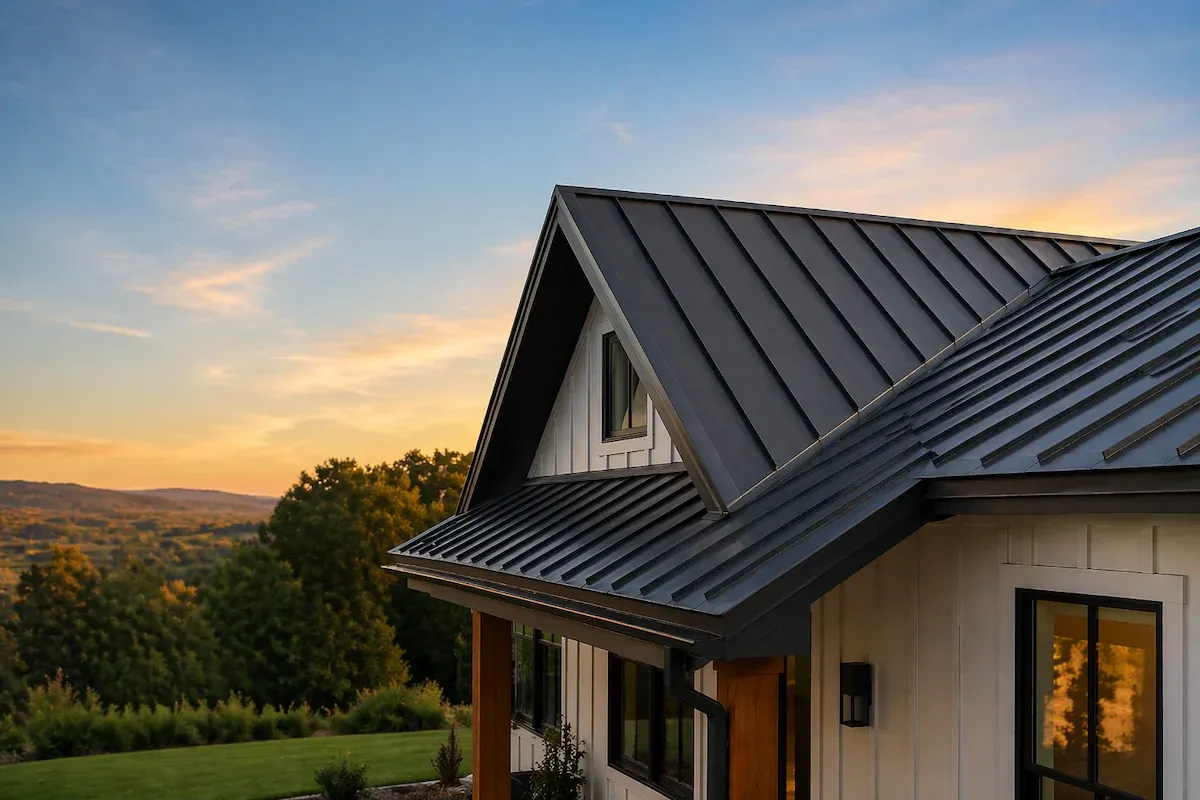
The original drawings below keep the house and roof pattern identical. Only the roof palette changes. They help you discuss a preference; they are not previews of actual shingle products.
Try describing what you like before naming a favorite. “I like how that roof frames the cream siding” is more useful than “dark is better.” It identifies the effect you want to check with a real sample.
You can also separate two disagreements. One person may prefer a warmer color, while another dislikes a busy pattern. Those are different concerns. Looking for a quieter warm blend may be more productive than debating whether the roof should be brown or gray.
Look beyond the name on the sample
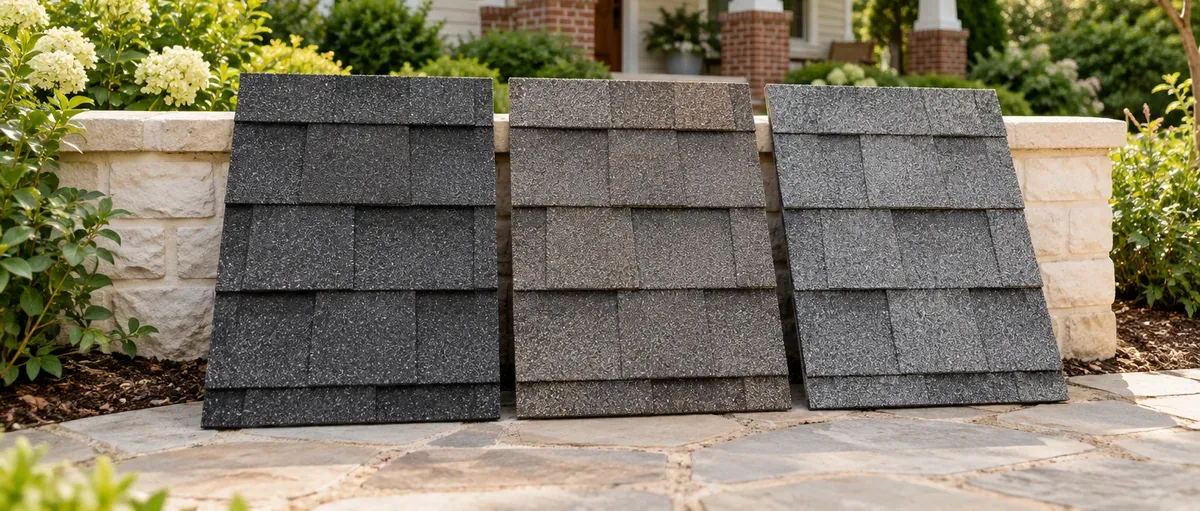
A shingle color name does not describe every tone in the blend. GAF’s Biscayne Blue explanation identifies blue, gray and charcoal within that named product. It is a useful example of why “blue roof” does not mean one flat blue surface.
Pattern matters too. GAF’s February 2026 collection guide describes collections with different visual contrast. Its preview tool can show options on a house photo, which is useful for narrowing candidates.
Use a preview to decide what to investigate, rather than treating it as the final color approval. When you request samples, include the full product line and collection as well as the color. Two labels that sound similar may leave you comparing different products.
Look at the blend as a whole. If one small fleck catches your eye, step back and decide whether you like the overall pattern too. The roof choice should answer your broader design goal, not just repeat a detail you happened to notice up close.
Compare real samples at the house
GAF’s Grand Sequoia RS product sheet warns that reproduced colors can be difficult to match to actual blends and recommends inspecting several full-size shingles. GAF’s September sample guidance also recommends viewing samples in changing daylight, with professionals handling any roof-level placement.
Start with two or three finalists as a practical way to keep the comparison manageable. That is a suggestion for your decision process, not a manufacturer rule. Keep the labels with the samples so you know which exact product you are discussing.
Compare each candidate with the same fixed surfaces and from the same usual viewpoints. Look from the driveway or yard as well as beside the masonry. If one sample is beside the front door and another is around a shaded corner, bring them into a comparable setting before choosing between them.
Have a contractor arrange any on-roof display; evaluate it from the ground. You do not need a ladder to have an opinion about the color.
As the light changes, record what you notice rather than expecting one photograph to settle the choice. Your notes might say “looks quieter beside the brick” or “pattern draws more attention than I want.” Those are useful observations because they connect the sample with your stated preference.
Use a separate copy of this blank record for each finalist.
Give a planned paint change the right weight
Consider another fictional household. The house has cool gray stone that will remain, but the owners are considering new siding paint. They like one shingle with the existing paint and another with a possible future color.
If the paint choice is confirmed, include its actual sample in the comparison. If it is only an idea, label it that way. Otherwise, the owners could choose today’s roof around a change they never make.
They might decide that the retained stone is their first priority and compare both roofs against it. Or they might settle the paint selection before deciding on shingles. Those are practical ways to resolve the uncertainty; neither requires a universal rule about what goes with gray stone.
Apply the same reasoning to smaller details. If the choice works with the house but not a planter you move every season, decide whether that planter deserves to drive the roof selection. Your record of what is staying helps keep the decision in proportion.
Break a tie by returning to your goal
Two samples may both work. Return to the reason you shortlisted them: stronger contrast, a quieter blend or a better relationship with a fixed surface. Which one does the job you wanted?
If the answer remains close, identify the remaining concern rather than reopening every option. Perhaps you need another daylight comparison, clarification of a product name or confirmation that the sample is still available. Resolve that one issue first.
Keep outside opinions specific. If a friend dislikes a candidate, ask which part of the combination bothers them. “Too busy beside the brick” gives you something to inspect. A vote for a completely different house style may not help your decision.
You do not need to keep searching until every alternative looks wrong. Once a confirmed product meets your goals and you prefer its actual sample, record the choice.
Confirm the exact selection before ordering
Keep the manufacturer, product line or collection, color and approved sample together in the final record. GAF’s collection guide illustrates why an older color name or saved project photo may not identify a current option: collections change, and remaining inventory needs confirmation.
Include visible accessories in the conversation. GAF describes coordinating ridge caps for its named blue blend. Ridge caps are the pieces along roof peaks. Ask what is proposed for your selected product instead of assuming every accessory is available in every color.
If heat performance is part of your decision, request the exact product documentation. The Grand Sequoia RS sheet lists reflective granules and a dark Charcoal option. That named example shows why appearance alone cannot establish a product’s heat-related performance. It does not promise energy savings for your house.
Have any proposed substitution brought back to you before ordering. “Similar gray” is not the exact selection you compared. If the product changes, review the new sample and update the record rather than relying on the old approval.
Ask local roofers for the right samples
Browse roofing companies on Roofer Directory, then request an estimate from businesses you have checked. Ask for samples of the exact products being proposed, and verify applicable licensing or registration and insurance yourself.
Our new-roof cost guide, contractor selection guide and roofing FAQ can help you connect the color choice with the rest of the project.
Published by RooferDirectory. Learn about our sources and methods, or suggest a correction.