
In this guide
At a glance.
- Ask for a repair scope that connects the bathroom fan to an outdoor outlet and addresses weather protection at the opening.
- Have existing moisture or material damage assessed separately instead of assuming the exhaust correction resolves it.
- Keep a named completion record; photographs help document work but do not prove airflow or code compliance.
A bathroom fan venting into the attic needs a repair that carries its exhaust outdoors. Have a qualified professional assess the connection from the fan to the exterior outlet, weather protection at the roof or wall opening, and the condition of affected materials. Installing an exterior vent alone leaves an important question: what connects to it?
GAF’s April 2026 bath-exhaust guidance explains that shower moisture discharged into an attic can damage insulation, sheathing and framing. It identifies both roof and sidewall discharge, so a roof exit is not the automatic choice for every house.
Use the following questions to turn an inspection finding into a defined repair and a record of what was completed.
Start with the bathroom, then identify the endpoint
Bring the inspection report or existing photos to the first conversation. Name the bathroom involved, particularly if the house has several fans. Ask the professional to establish where that fan’s duct actually ends and describe what they could inspect.
“The upstairs hall bathroom duct ends inside the attic” is a useful finding. “There is a vent somewhere on the roof” does not establish a connection between the two. Request location labels that let you follow the explanation without entering the attic yourself.
If the report identifies a disconnected section, have the contractor explain what remains beyond it. If an endpoint was inaccessible, keep it marked as unconfirmed. That distinction helps you avoid ordering a new exterior opening before anyone has established what is already there.
Where does this fan’s exhaust go?
Ask what the proposed route includes
Have the contractor explain the chosen outlet location and identify the products and instructions that apply to your house. Leave duct sizing, routing, insulation, clearances and any local requirements to the professionals assessing the project. Request their explanation in the proposal instead of selecting a route from a generic diagram.
Ask whether the work uses an existing outlet, replaces it or creates a new opening. If something will be abandoned, have the proposal describe what happens to it. These questions make the boundary of the job visible before work begins.
If a replacement fan is included, ask what finding supports that choice and whether the estimate also covers the reported discharge problem. Get the proposed fan identified separately from the outlet. If the existing fan will stay, have that recorded too. This keeps a discussion about buying a different fan tied to the repair you originally requested.
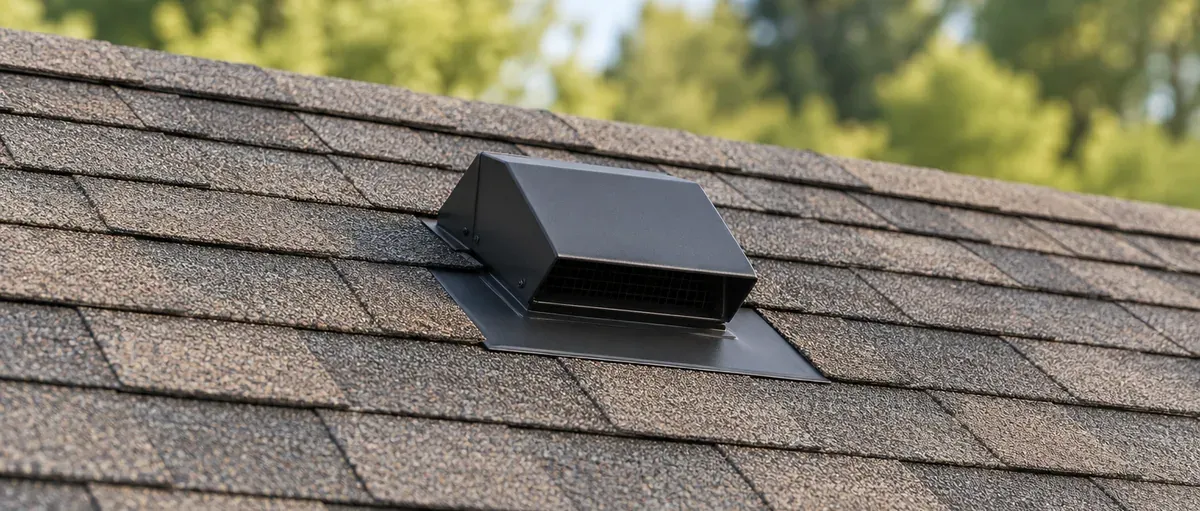
For a roof outlet, ask specifically about the roofing work around it. GAF’s May 2026 flashing explanation describes flashing’s role in directing water at roof openings and intersections. Request the applicable detail and an explanation of how the proposed outlet connects with the roof covering.
For a wall outlet, ask who will handle the exterior opening and its weather protection. A quote that specifies duct work but leaves the exterior work unassigned needs clarification before you compare its total with a complete proposal.
Give existing moisture its own assessment
Ask the assessor to distinguish the exhaust defect from the condition of nearby materials. GAF’s September 2026 attic inspection discussion includes household exhaust ending in the attic, damp or displaced insulation, blocked intake and small leaks among the items professionals check.
A stain should stay an observation until its cause has been investigated. GAF’s June 2026 leak guidance explains that visible damage can be away from the point where water entered. Keep your own observations at ground level and request professional inspection photos rather than climbing onto the roof.
Ask for a short finding on the affected area: what was inspected, what condition was observed, what action is recommended and what remains unknown. If material repair is proposed, request its location and extent. If further assessment is needed, name that next step separately from the exhaust work.
For a recommendation involving roof wood, our decking and sheathing guide helps you read that part of the estimate. A duct correction and a wood-repair allowance should each have an explanation.
Name who finishes each part
When contacting companies, describe the whole finding. Ask which portions they can assess and perform, and whether another trade will be involved. Do not assume that the person installing the exterior outlet is also responsible for the interior connection, electrical changes or material repairs.
Before scheduling, put a company or responsible person beside each agreed task. If separate companies are involved, ask who coordinates access, the sequence of work and the final review. Give both the same description of the intended result.
Consider this hypothetical two-company job: a roofer agrees to install a roof outlet, while another contractor agrees to connect the bathroom exhaust. Ask who confirms that the selected parts suit the proposed connection and who documents the finished path. “The other company will handle that” is a reason to get the handoff described in writing.
Also identify one contact for an unresolved question after the job. You should not have to reconstruct the division of responsibility from separate invoices.
Compare proposals by the work they describe
Read each estimate against the same named bathroom and inspected endpoint. The following invented descriptions illustrate different amounts of information, not recommended specifications or price levels.
| Estimate wording | Clarification to request |
|---|---|
| “Install bathroom roof vent” | Does this include the connection to the named fan and the roofing work around the outlet? |
| “Reconnect existing bathroom duct” | Which outlet does it serve, and what exterior condition was assessed? |
| “Correct exhaust and repair affected area” | Where is the affected area, what findings support repair, and what work is included? |
Tennessee’s May 2026 contractor consumer guidance recommends written contracts covering materials, labor, allowances, changes, warranties, payment and dates. Use those categories to organize the agreement; Tennessee’s legal rules are not nationwide requirements.
For anything left as an allowance or possible extra, ask what would trigger the work and how you will review and authorize a change. Request the offered warranty terms for the actual scope, with the responsible company identified.
Connecticut’s April 2026 hiring checklist advises written estimates and checking current workers’ compensation and liability insurance documents. Ask about applicable credentials with your own state or local authority. Compare the explanations and responsibilities along with the totals.
Build the completion record before work starts
Agree on the record while the scope is still being discussed. Our suggested format below is an organizational tool you can request from the contractor. It is not a technical inspection standard or a substitute for any required approval.
One bathroom, three completion entries
Name the fan, identify its outdoor endpoint and record who checked the completed work.
Identify the outlet, the weather-protection work and the company responsible for it.
Record the assessment, any completed material repair and every unresolved item with its next action.
Missing an answer? Ask the named contact to complete the entry or explain the remaining limitation.
Request location-labeled before-and-after photos with the completion notes, where the contractor can safely obtain them. Ask for the date and a plain-language description of what each photo shows. A close-up without a location can be difficult to match to the original finding later.
Photos do not establish airflow performance or code compliance. Ask the responsible professional how operation was checked, what the check established and whether any required inspection remains outstanding. Keep that written answer with the photos, specified product information, contract and any change orders.
If something could not be inspected or completed, give it its own line rather than accepting a general “finished” note. Record the reason, the next action and who is responsible. This makes a limitation visible without pretending the homeowner can certify the installation.
Close the finding, then keep the record useful
Return to the original report when reviewing the completed job. Does the record address the same bathroom and location? Does it describe the agreed work and explain any changes? Are remaining condition questions assigned to someone?
For example, if the exhaust work is complete but a material assessment is still pending, preserve both statuses. Do not let the second item disappear under the first contractor’s completion notice.
If you later notice moisture again, share the record and describe when and where it appeared. Ask for investigation before assuming the original defect returned or that a different part of the roof has failed. Our heavy-rain leak guide can help organize observations when rainfall is the apparent trigger.
Compare local roofing listings
Bring the inspection finding and proposed work boundary when comparing companies on Roofer Directory. Verify applicable licensing and current insurance yourself, and ask which parts of this repair each company will handle. Request an estimate from companies you have checked.
For more preparation, read our contractor selection guide, seasonal roof maintenance checklist and roofing FAQ.
Published by RooferDirectory. Learn about our sources and methods, or suggest a correction.